

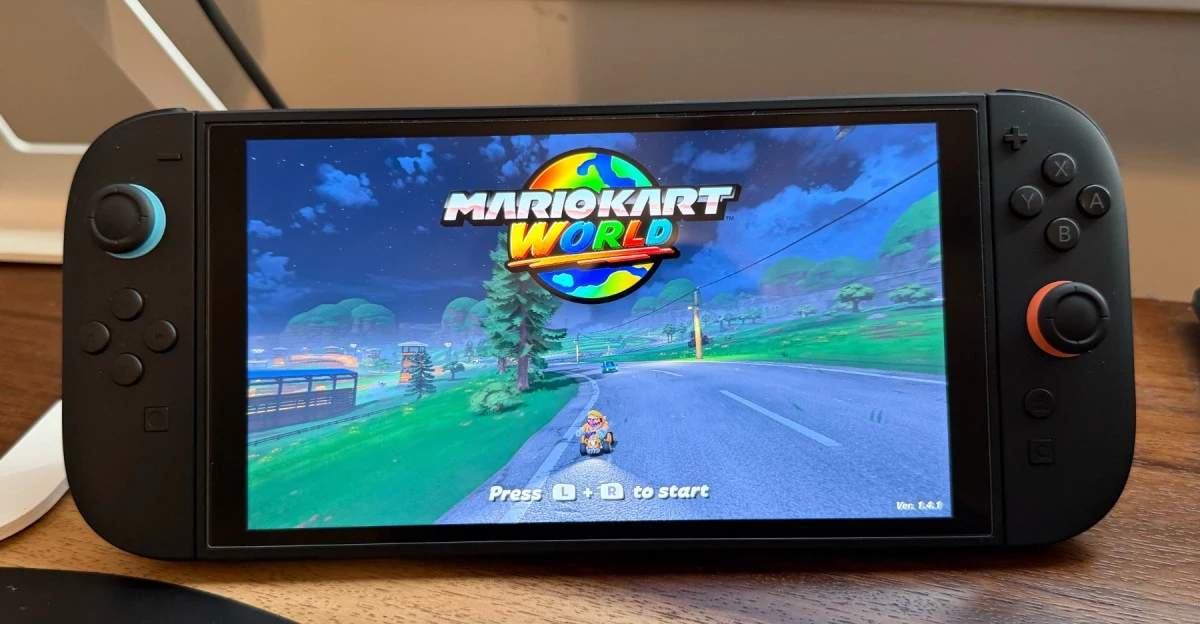

A $50 price hike meets a value-engineered retail counterpunch
Nintendo’s decision to raise the entry price of its next-generation Switch console to $499.99 effective September 1, 2026 is a classic example of a platform holder testing the elasticity of a loyal audience while managing the realities of modern hardware economics. Component costs, advanced R&D, and launch-window supply constraints rarely move in a consumer-friendly direction—yet price increases in the console market carry reputational risk, particularly when buyers are already conditioned to expect long lifecycle value.
Costco’s pre-emptive response—offering a bundle at the *current* price point that includes Switch 2 hardware, a 256 GB microSD Express card, and a one-year Nintendo Switch Online Expansion Pack—functions as a strategic release valve. It preserves the perception of affordability without forcing Nintendo to publicly retreat on MSRP. For Costco, it’s equally calculated: a high-demand console bundle can drive membership renewals, store traffic, and basket expansion, while positioning the retailer as the “smart buy” channel for early adopters.
From a market-structure standpoint, this is less a discount than a reframing of value. The bundle’s “over $100” in combined savings is not merely promotional math; it is a targeted attempt to keep the total cost of ownership psychologically anchored below the new $499.99 threshold—especially for buyers who would have purchased storage and online services anyway.
—
Switch 2 hardware signals a deliberate pivot toward frictionless digital play
Nintendo’s hardware choices—256 GB of onboard storage and a 7.9-inch high-resolution display—read as a pragmatic evolution rather than a speculative leap. The company appears to be optimizing for the dominant behavior of the modern console customer: downloading games, expanding libraries over time, and expecting fast, low-friction access across handheld and docked contexts.
Key implications of the hardware profile include:
- Internal storage as a strategic lever: Shipping with 256 GB reduces the “day-one tax” of immediately needing external storage. That matters because storage is not just capacity—it is a gateway to higher-margin digital sales and faster conversion to recurring services.
- microSD Express as performance signaling: The inclusion of a high-speed microSD Express card in the Costco bundle is notable because it frames storage expansion as a performance upgrade, not a compromise. Faster read/write throughput supports shorter load times and smoother asset streaming—critical as game worlds become larger and more detailed.
- Display upgrades as competitive positioning: A larger, higher-resolution panel narrows the experiential gap with portable PCs and premium mobile gaming. Even if Nintendo does not compete on raw teraflops, it competes on *perceived quality*—clarity, color, and responsiveness are immediate, user-visible wins.
While speculation about the underlying SoC (custom NVIDIA or AMD) will inevitably follow, the more important business signal is that Nintendo is aligning hardware decisions with content delivery efficiency and digital attachment rates—two metrics that increasingly define platform profitability.
—
Subscription bundling turns a console launch into a lifetime value machine
The one-year Nintendo Switch Online Expansion Pack included in the bundle is not a mere add-on; it’s a deliberate effort to convert hardware buyers into ecosystem participants from day one. Subscriptions change the financial profile of a console generation by smoothing revenue volatility and increasing predictability—an advantage in a market where blockbuster release timing can distort quarterly performance.
The Expansion Pack’s value proposition is built on two pillars:
- Utility features that reduce churn risk: online multiplayer, cloud saves, and persistent account benefits make the service feel essential rather than optional.
- A differentiated content moat: access to legacy titles spanning GameCube, N64, and Virtual Boy, plus modern DLC enhancements for flagship franchises like Zelda, leverages Nintendo’s unique strength: IP that is culturally embedded and difficult to replicate.
This strategy also reframes the competitive conversation. Where rivals emphasize breadth through large third-party catalogs (e.g., all-you-can-play libraries), Nintendo leans into curated nostalgia, first-party depth, and franchise continuity. The bet is that emotional attachment and brand trust can substitute for sheer volume—particularly among families and long-time fans.
For investors and industry strategists, the more structural takeaway is that bundling a subscription at launch increases the probability of:
- higher attach rates for digital purchases
- stronger retention after the first year (once habits form)
- improved customer lifetime value (LTV) relative to hardware-only buyers
—
Retail partnerships, price psychology, and the next phase of console competition
The Nintendo–Costco dynamic illustrates how modern console launches are increasingly negotiated across three fronts: MSRP discipline, channel strategy, and ecosystem lock-in. Nintendo can maintain a higher list price to protect margins and brand positioning, while retailers selectively bundle to reduce sticker shock without triggering a public price war.
Several forces make this approach especially timely:
- Macroeconomic sensitivity: Even modest inflation and constrained discretionary spending can amplify resistance to price increases. A bundle that “feels like a deal” can preserve demand without undermining premium positioning.
- Channel leverage: Wholesale retailers thrive on perceived value and limited-time scarcity. Exclusive bundles can become a go-to-market accelerant that traditional electronics retail struggles to match.
- Switching costs by design: When consumers buy into storage, subscriptions, cloud saves, and a growing digital library, the platform becomes harder to leave. That is not incidental—it is the modern console business model.
Nintendo’s broader strategic message is clear: the Switch 2 era is not just about selling a new device; it is about engineering a lower-friction on-ramp into a higher-retention ecosystem. If the company executes on supply, content cadence, and service quality, the $50 price increase may ultimately read less like a barrier—and more like the opening move in a carefully structured, margin-resilient platform cycle.

 By
By
 By
By
 By
By
 By
By

 By
By
 By
By







