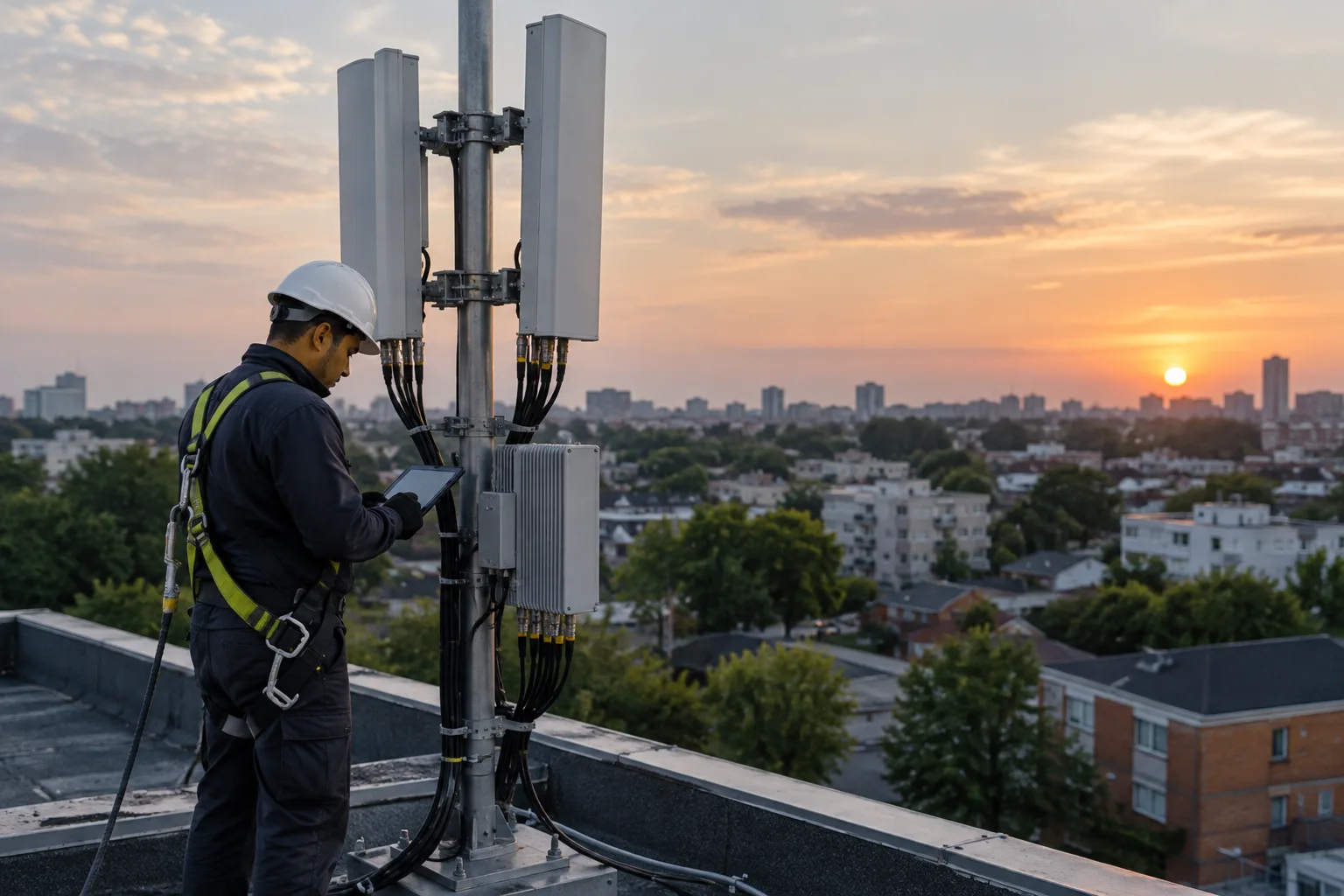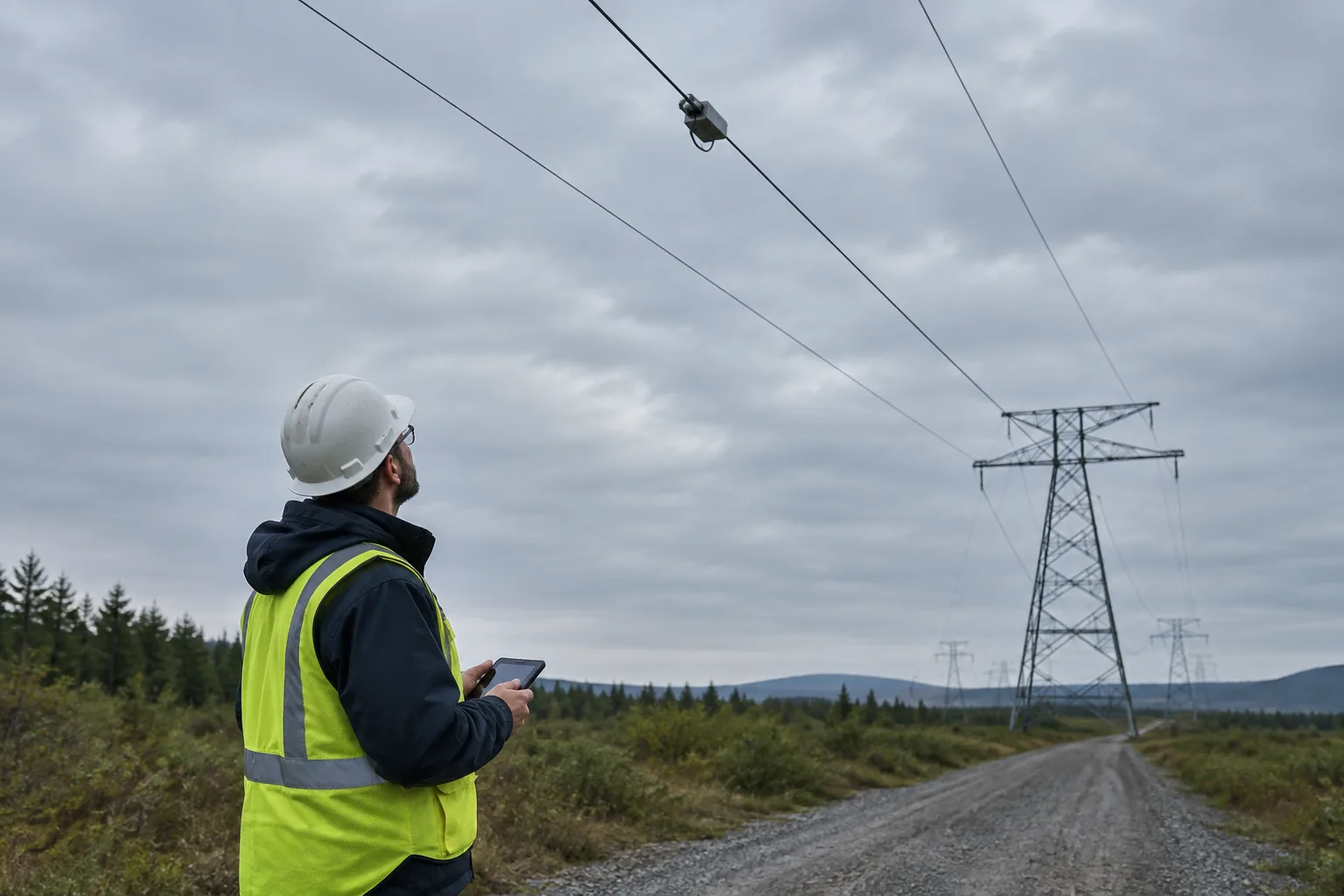

Reykjavík-based Laki Power has raised a €6 million Series A led by the NATO Innovation Fund, with existing shareholder ReykVC also participating. The round matters for more than startup financing: it puts fresh capital behind a specific bet on grid resilience, namely that a device clamped directly onto high-voltage conductors can power itself, watch remote transmission corridors continuously and supply data utilities trust enough to change operations.
That last step is the real question. Plenty of transmission operators already use dynamic line rating and other grid-enhancing tools to squeeze more safe capacity from existing infrastructure. What is not yet clear from Laki’s public material is whether its hardware can move from an intriguing field device to repeatable, utility-grade deployment across fleets of lines, weather conditions and control-room workflows.
Laki says its LKX-MULTI platform mounts on a transmission line and combines cameras, weather and line sensors, onboard compute and satellite communications. The company says its patented power-harvesting system can draw up to 300 watts directly from the line, avoiding solar panels, batteries or other external power. Stated uses include ice buildup detection, wildfire risk monitoring, physical-line security, line monitoring, dynamic line rating and drone recharging along power-line corridors.
The opportunity is real: remote lines are hard to observe
Utilities and transmission operators have a clear reason to care. The long spans between substations are difficult and expensive to observe continuously, yet they increasingly sit at the center of competing pressures: keep the system reliable, avoid wildfire and icing risks, control maintenance costs, protect critical infrastructure and carry more power for electrification and data-center demand.
A conductor-mounted device that powers itself from the asset it is monitoring could solve a practical problem before it solves a data problem. If a unit does not need separate field power, frequent battery swaps or a nearby communications build-out, operators may be able to instrument remote corridors that are otherwise uneconomic to watch in real time. Satellite communications are part of that pitch. So is the promise of having enough onboard power not just for basic sensing but for cameras and local computing.
The wider category is credible. Dynamic line rating is an established grid practice, not a science project. The U.S. Department of Energy identifies wind, ambient temperature, solar radiation, conductor temperature and line current as relevant inputs for estimating how much current a line can safely carry under actual conditions rather than conservative static assumptions. National Grid said in April 2026 that its dynamic line rating rollout helped save £21 million in constraint costs over five years and added more than 16 gigawatts of transfer capacity through a mix of grid-enhancing technologies.
Those results are important context because they show the value of better line awareness. They do not, by themselves, validate Laki’s hardware.
Seeing the line is not the same as changing dispatch
The gap between a sensor on a wire and a utility decision in the control room is where this story becomes harder.
A transmission operator does not adopt dynamic ratings simply because a device reports them. It has to trust sensor placement, conductor and weather models, communications uptime, alarm thresholds and control-room integration. It needs a conservative fallback when data is missing. It needs maintenance access, inspection procedures and a clear understanding of what happens when a device fails, drifts or goes dark.
That matters especially for conductor-mounted equipment because the unit is no longer an external observer. It becomes part of the high-voltage asset’s operational trust boundary. Smoke, heavy icing, lightning, vandalism and cyber compromise are not hypothetical edge cases in transmission environments; they are operating conditions the utility has to plan around. A sensor can inform a rating, but it cannot by itself guarantee conductor safety or replace dispatch controls, protection systems, vegetation management or physical inspection.
Laki says it has deployments with Landsnet in Iceland, Statnett in Norway and Hydro-Québec in Canada. That is meaningful as evidence of operator interest in harsh, remote environments. But the public record supplied with this funding announcement does not include installed-system counts, monitored voltage classes, contract values or independently measured availability. It does not say how often LKX-MULTI enables a higher line rating, how operators validate those readings against engineering models, or how often utilities revert to conservative static assumptions because data is unavailable.
The same applies to the headline power claim. “Up to 300 watts” could be strategically important if sustained in real operating conditions, because it expands what can be powered on the line. But the release does not say whether that figure is peak, continuous or seasonal, nor under what voltage and loading conditions it is achieved.
What NATO Innovation Fund backing does — and does not — settle
The NATO Innovation Fund’s involvement is strategically notable. NIF describes itself as a standalone venture-capital fund backed by 24 NATO allies, with more than €1 billion to deploy into deep tech for defense, security and resilience. This is its first direct investment in Iceland, and the choice signals that transmission visibility is being treated not just as a utility efficiency issue but as critical-infrastructure resilience.
That gives Laki more than money. It potentially gives the company access to a network that thinks about infrastructure in terms of continuity, security and operational robustness. For a grid-hardware company trying to scale across Europe, North America and Australia, that kind of signaling can matter with customers, partners and follow-on investors.
But it is not a utility certification, and it does not imply NATO procurement. The round is scale-up financing, not proof that the company has solved the hard parts of utility adoption.
The most useful way to read the announcement is as a test of whether clever grid-edge hardware can clear a longer procurement checklist. Utilities and infrastructure investors will want answers on electrical and mechanical installation, independent calibration, data ownership, communications availability, outage behavior, cybersecurity architecture, inspection and replacement intervals, insurance treatment and cost per monitored kilometer. They will also want a comparison with alternatives such as solar-and-battery sensors, fiber, substation telemetry and aerial inspection.
Laki says some of the new capital will accelerate LKX-DRONE, a platform aimed at drone recharging along power-line corridors. That is an interesting adjacency, but it carries a different proof burden from monitoring. Charging time, drone compatibility, weather limits, flight safety and regulatory compliance all matter, and the company’s public materials do not yet show LKX-DRONE as a demonstrated commercial service.
So the answer to the reader’s question is a qualified one. Self-powered, conductor-mounted intelligence could make existing lines more observable and, in some cases, more flexible. The financing helps Laki try to prove that at manufacturing and deployment scale. For now, though, installation, data quality, maintenance and utility approval still look like the bottlenecks that will determine whether the company becomes a useful niche supplier or a true grid-platform vendor.

 By
By
 By
By
 By
By

 By
By
 By
By
 By
By
 By
By