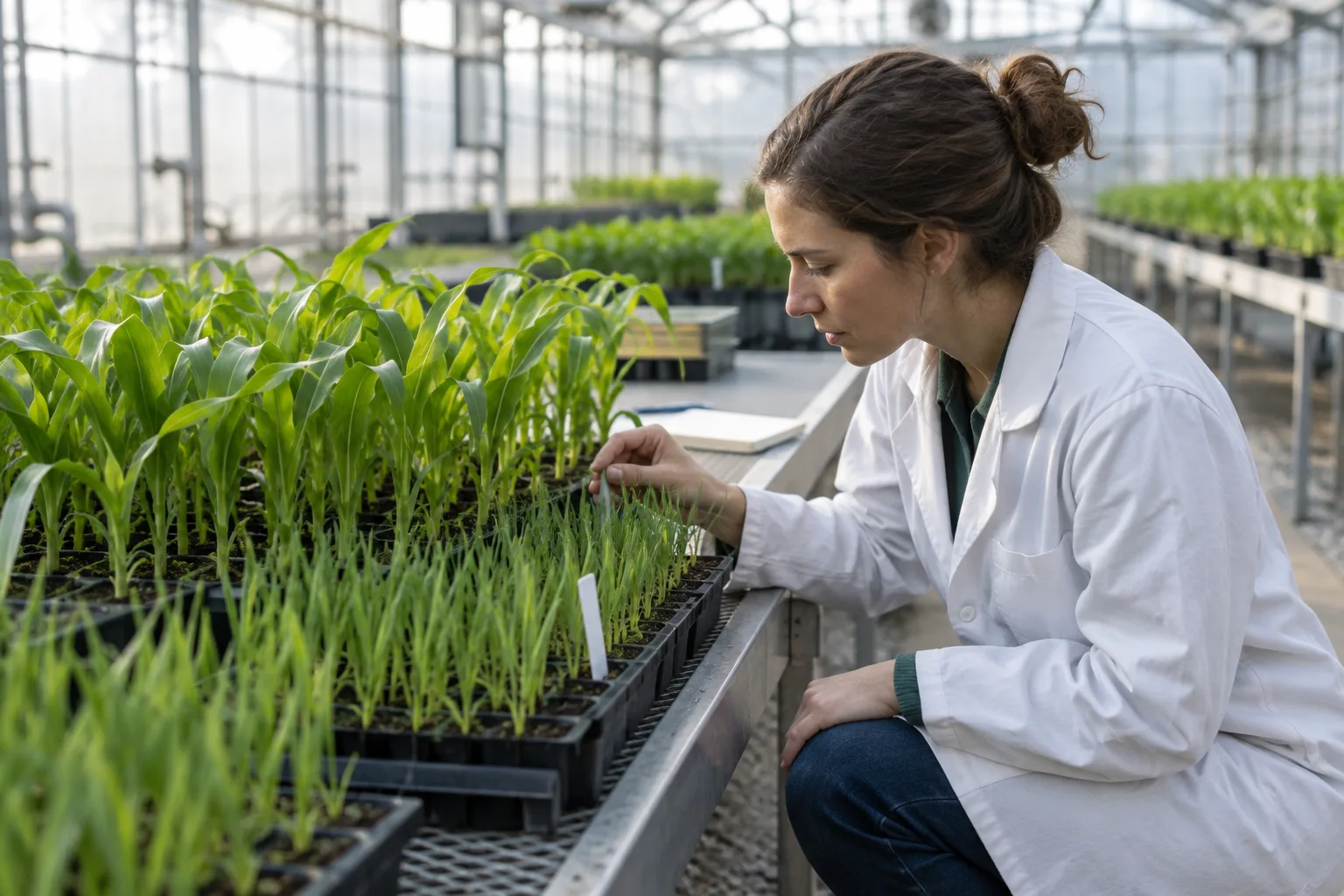

On October 1, Corteva completed the separation of its seed operating segment into Vylor Inc., which began regular-way trading on the New York Stock Exchange under the symbol VYLR. Corteva shareholders of record as of September 24 received one Vylor share for every Corteva share they held, with cash paid for fractional shares. The deal matters because it turns a boardroom restructuring into a live market experiment: can a pure-play seed and genetics company create more value on its own than it could inside a broader agricultural inputs group?
That is the question worth answering now. The spin itself is no longer hypothetical; Corteva’s SEC Form 8-K confirms the one-for-one distribution and Vylor’s independence. What is still unproven is whether a standalone structure makes it easier to fund and commercialize advanced breeding, gene editing, hybrid wheat, and AI-enabled agriculture—or whether it leaves a slow-moving science engine with less diversification to absorb the risk.
Start with the market mechanics
The sharpest early move was in Corteva’s own quote. Once the seed business value moved into VYLR shares, Corteva’s stock was expected to reset lower, and it did. Market reports said the quoted price fell about 84% in morning trading. That looked dramatic, but it was largely the visible arithmetic of the separation. Shareholders now own two stocks instead of one, so the day-one move in Corteva alone was never a clean verdict on either business.
That distinction matters because the launch can easily be misread. A distribution ratio of one Vylor share for each Corteva share does not say what either company is worth on a standalone basis. It only determines how ownership was divided. Price discovery now has to happen across two separate balance sheets, two strategies, and eventually two sets of operating results.
Those first standalone numbers will be more useful than the first-day branding. Before the separation, Corteva’s reported history blended seed and crop protection economics. From here, investors will need a clearer read on debt allocation, overhead, shared services, licensing terms, and separation costs before they can judge whether either company’s margins or returns actually improve.
What Vylor now controls
Vylor is not being launched as a shell around distant science. It inherits the Pioneer seed brand and a global seed and genetics operation built around germplasm and trait technologies. Earlier company materials said that business included more than 4,000 germplasm patents and more than 2,000 biotechnology patents. Those figures describe the company’s claimed intellectual-property base, not a third-party audit, but they do signal that Vylor begins life with a substantial legacy franchise as well as a future pipeline.
Its launch materials put that pipeline at the center of the story. Vylor is highlighting hybrid wheat, next-generation corn, gene editing, biofuels, and digital and AI-enabled agriculture. It also rolled out Vylor Edge before the separation, carrying forward partnerships and investment activity from Corteva Catalyst in areas including gene editing, advanced breeding, protein engineering, artificial intelligence, and digital agriculture.
The roadmap is ambitious and long dated. As RealAgriculture reported, Vylor is targeting a commercial launch of its Xpedite proprietary hybrid wheat in North America in late 2027, seven new corn platforms beginning in 2028, and four soybean platforms through 2035. The corn slate includes what the company describes as an industry-first yield trait and a gene-edited multi-disease-resistant corn platform. RealAgriculture also reported that Vylor puts the value of its technology pipeline at about $19 billion across 12 major platform launches. That figure is best understood as a company-linked estimate of potential, not revenue in hand.
Focus can sharpen incentives, but it cannot shorten biology
The bullish case for the spinout is easy to see. Under the old structure, seed genetics had to compete for capital and management attention with crop-protection chemistry and biologicals. Now Vylor can direct strategy and spending toward breeding cycles, germplasm, traits, licensing, seed multiplication, and digital tools without being one division inside a broader portfolio. New Corteva, meanwhile, can focus on crop protection and biologicals.
A focused structure may also change who wants to own the stock. Some investors prefer a pure-play technology narrative to a diversified farm-inputs story. If Vylor can show that its science translates into differentiated traits and pricing power, a standalone identity could make the business easier to value and easier to benchmark against other agricultural technology bets.
But the main constraints on seed and genetics commercialization are biological and regulatory, not corporate. Traits still have to work in the field. They still have to survive breeding timelines, weather variability, and seed multiplication. They still have to clear regulatory pathways that can differ from country to country, especially for gene-edited crops. And they still have to prove that farmers gain enough yield, resilience, or input savings to justify adoption.
That is why the spinout should be treated as a capital-allocation experiment, not as proof that innovation just accelerated. A new corporate wrapper can improve accountability and strategic clarity. It cannot compress crop cycles or guarantee field performance.
There is a cost side, too. Vylor loses some of the diversification that may have helped finance long-dated R&D inside a larger enterprise. Both companies may face duplicated public-company costs. Until Vylor discloses more about shared-service arrangements, liabilities, licensing economics, and cost of capital, it is hard to know whether independence makes the science easier to back—or merely makes the tradeoffs easier to see.
What the real scoreboard looks like
For investors, the job now is to separate the value of the inherited seed franchise from the probability-adjusted value of future traits. Pioneer and the existing seed business provide today’s commercial base. The hybrid wheat, corn, and soybean platforms may expand that base later, but only if milestones turn into products, approvals, distribution, and cash generation.
For farmers and food-system businesses, the practical questions are even more concrete. Does Vylor’s independence change access to seed, support, pricing, or licensing behavior? Do its upcoming platforms materially improve farm economics? The milestones to watch are not slogans. They are the late-2027 Xpedite target, the corn launches slated to begin in 2028, any regulatory clearances, and evidence that new traits perform under real field conditions.
Corteva has completed the clean part of the separation: the ownership split. Whether Vylor becomes a stronger commercialization engine as a standalone company will be decided later, in the slower and less forgiving sequence from genetics to field results to farmer adoption.
 By
By
 By
By
 By
By

 By
By


 By
By