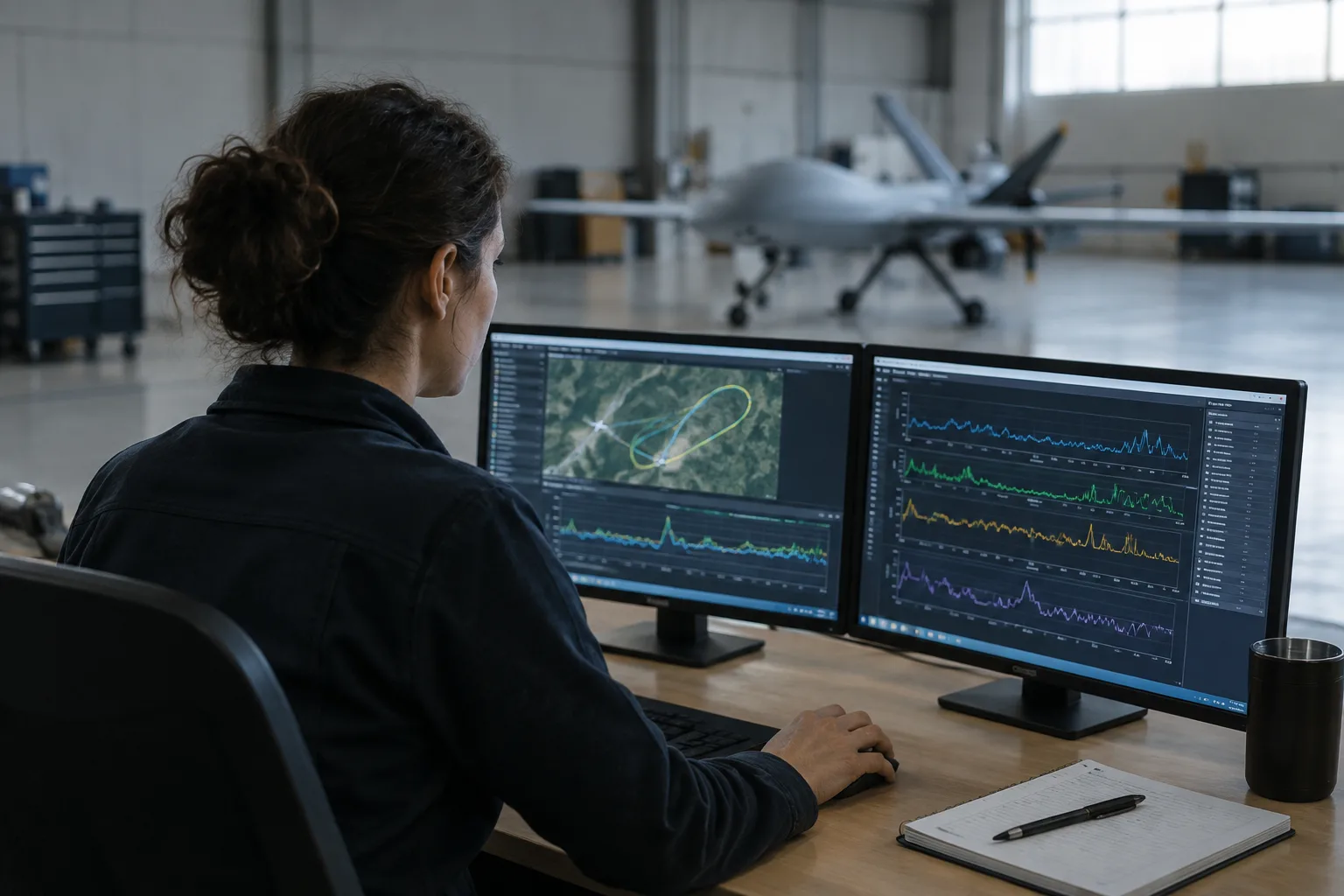

Archer Aviation said on Sept. 24 that the waiting period under the Hart-Scott-Rodino Act has expired for its planned acquisition of Boeing’s Wisk Aero, Insitu and SkyGrid subsidiaries, removing one meaningful obstacle to a deal that would sharply broaden Archer beyond its eVTOL roots. The update matters because the proposed combination reaches across autonomous aircraft, defense drones, airspace software and AI. It does not mean the acquisition has closed. Archer said other regulatory approvals and customary closing conditions still apply, and that it expects the transaction to close by the end of 2026.
The real question for readers is whether this moves Archer’s physical-AI strategy from an ambitious headline into an executable business platform. For now, the answer is narrower: the HSR milestone makes the transaction more actionable, not yet proven. It reduces one category of deal uncertainty, but it does not answer whether Archer can combine revenue, certification work, autonomy software and human accountability across very different aviation businesses.
What changed, and what didn’t
In its Sept. 24 announcement, Archer said the waiting period expired at 11:59 p.m. EDT on Sept. 18, satisfying a key condition to closing. Investing.com separately reported the same milestone and the fact that other approvals remain. That is useful progress. Without it, the companies were still inside a procedural antitrust gate.
But the state of the deal and the state of the platform are not the same thing. Archer did not disclose the remaining approvals, the final list of closing conditions, expected integration costs, ownership dilution, or how it plans to divide capital among commercial eVTOL development, defense unmanned systems, airspace software and AI work. Those omissions do not make the deal unusual; they do mean investors, suppliers and potential customers still have limited visibility into how the combined company would actually operate.
That distinction matters because this is not a simple asset pickup. If the transaction closes, Archer would move from an air-taxi-centered company toward a broader aerospace-and-defense structure. Clearing an external regulatory step is important. It does not simplify the internal challenge of making four quite different businesses reinforce each other instead of merely sitting beside each other.
Why the platform thesis is attractive
The industrial logic is easy to understand on paper. In Boeing’s original August announcement, Wisk brings autonomous eVTOL work, Insitu brings unmanned aircraft systems and a defense business, SkyGrid adds airspace-management software, and Archer contributes its aircraft program and purpose-built ZEE AI foundation model. Boeing said Insitu generated more than $200 million in annual revenue based on current financials and estimates, operated across 35 countries, and that the three businesses together had nearly two million combined flight hours. Boeing is also set to receive a stake in Archer and retain a collaboration and technology-sharing arrangement for Wisk’s core autonomous-flight technology.
That would give Archer something many pre-commercial aircraft companies lack: the prospect of operating scale outside the future passenger-air-taxi market. An established defense business can bring present-day customers, field operations, government relationships and engineering habits shaped by real deployments rather than only development milestones. SkyGrid could help Archer argue that it is not just building aircraft, but also some of the software needed to coordinate them in airspace. Wisk’s autonomy work gives the company a more direct path into the software stack that would matter if Archer wants to sell more than piloted aircraft.
The problem is that breadth cuts both ways. Passenger aviation, defense procurement, unmanned operations and airspace management all have different regulators, buyers, safety cases and budget cycles. A company that spans them may be able to share data, talent and customer access. It may also inherit four separate planning calendars, four separate accountability structures and a larger need for cash just as it tries to certify and commercialize new aircraft.
The tests that matter before and after closing
The first test is cash generation. Insitu’s scale is strategically valuable only if it remains dependable after separation from Boeing and if Archer can show what that business is funding. More than $200 million in annual revenue, as Boeing framed it, is meaningful for a company still developing a new aircraft category. But revenue alone does not reveal margin, durability, integration expense or how much management attention a defense unit will demand. The most useful disclosures after closing would not be broad statements about diversification. They would be operating details that show whether Insitu helps finance Archer’s certification push or simply makes the overall company more complex and harder to read.
The second test is technical integration. The transaction thesis assumes Wisk autonomy, Insitu operating data, SkyGrid airspace intelligence and Archer’s ZEE model can do more together than separately. That requires common interfaces, shared validation methods and a clear boundary between AI assistance and certifiable flight-critical software. Boeing’s nearly two million combined flight-hours figure signals experience across the businesses. It does not, by itself, show that a single autonomy architecture can move cleanly from unmanned operations into passenger service. For Archer, the hard question is not whether these units all touch autonomy. It is whether their software, data and engineering processes can be connected in ways regulators and customers will trust.
The third test is regulatory accountability. A company combining passenger aircraft, military and commercial drones, airspace tools and AI has to answer a basic governance question: when autonomous systems are operating across those domains, who is responsible for what? The answer cannot be identical in a defense mission, an unmanned commercial operation and a future passenger flight moving through managed airspace. Human oversight, fault attribution and safety assurance have to be legible to regulators and customers in each context. That is where platform language often runs ahead of operational reality.
Boeing’s planned collaboration around Wisk’s core autonomous-flight technology could help maintain technical continuity. It does not eliminate the need for Archer to define decision rights, validation standards and product boundaries inside the combined company. Nor do the announcements independently prove that the resulting stack will speed certification, lower costs or deliver reliable autonomous passenger operations.
What to watch next is straightforward. First, whether Archer secures the remaining approvals and closes on its end-of-2026 timeline. Second, whether it gives a clearer view of dilution, integration cost and capital allocation. Third, whether management starts describing the combination in operating terms rather than strategic slogans: which business owns the customer relationship, which software is certifiable, how data is shared across units, and how human oversight is maintained. HSR expiration makes the Boeing transaction more real. It does not yet make Archer’s physical-AI platform more proven.

 By
By
 By
By
 By
By

 By
By
 By
By

 By
By