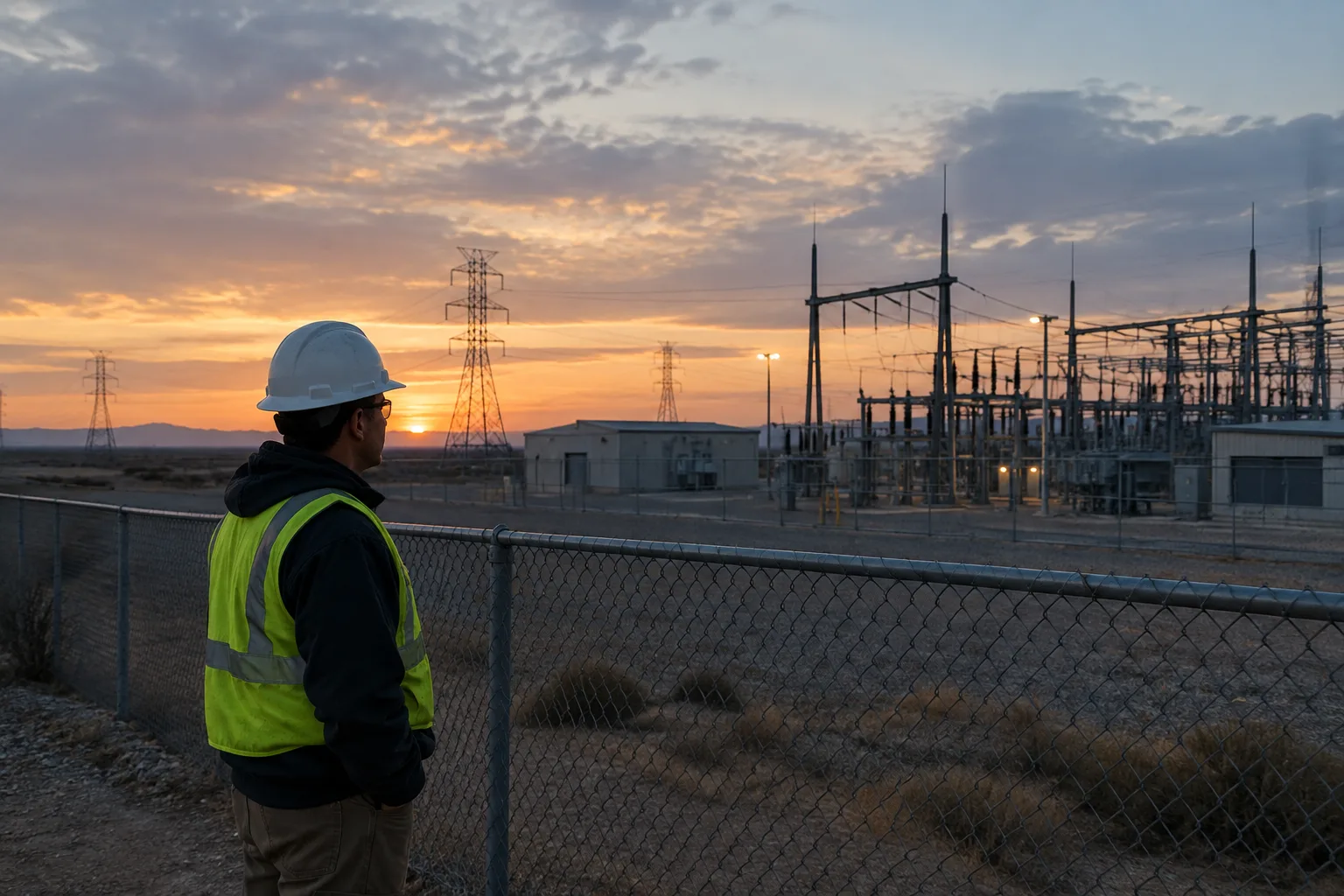

Fervo Energy says Cape Station achieved “First Power”, synchronizing with the grid and exporting electricity from its Utah site on Sept. 24. That matters because Cape Station is not another small geothermal pilot. It is Fervo’s attempt to turn enhanced geothermal systems, or EGS, into utility-scale infrastructure just as utilities and hyperscalers are searching for power that can run through the night without burning fuel.
The real question for buyers and investors is straightforward: does first export mean EGS is becoming bankable for AI-era demand, or is this still a one-project demonstration? The best answer, for now, is that it is a consequential operating milestone but not yet commercial proof. First power removes one layer of technical uncertainty. It does not settle the harder questions of sustained output, uptime, drilling cost, reservoir performance, interconnection execution, or the economics of long-term power contracts.
Why Cape Station matters beyond geothermal
Cape Station sits in Beaver County, Utah, where Fervo is building Phase I as roughly 100 megawatts split into three 33-megawatt “GeoBlocks.” Only the first block has reached first power so far. Fervo expects that unit to hit its contractual commercial-operations date by Oct. 1, 2026, with the other two scheduled to be commissioned and reach contractual COD by Jan. 1, 2027. Reuters, republished by Investing.com, independently reported the synchronization and timetable. An additional 400-megawatt phase is under construction, with expected commercial operation in 2028.
That development arc is why the project has drawn attention well beyond geothermal circles. A smaller Fervo project, Project Red, has supplied electricity to the grid since 2023, according to the company and Reuters. Cape Station is the larger greenfield scale-up: the test of whether EGS can move from technically credible to something a utility, lender, or hyperscaler can underwrite as firm supply.
The timing is unusually favorable. U.S. electricity demand is rising as data centers, manufacturing projects, and other large loads compete for capacity. Wind and solar remain central to new generation, but their output varies with weather and time of day, and interconnection queues can take years. A geothermal plant that can produce around the clock could therefore enter procurement discussions now dominated by natural gas, nuclear, hydropower, and renewable-plus-storage combinations.
That helps explain Google’s role. Fervo announced a 396-megawatt power purchase agreement for Cape Station on Sept. 1, and Data Center Dynamics reported that the first-power milestone is tied to that deal. The agreement is strong evidence that large buyers want firm, low-carbon alternatives. It is not proof that Google is already taking the full 396 megawatts, or that every commercial term needed for project finance is public.
What first power proves — and what it does not
EGS is appealing because it aims to manufacture a geothermal asset where nature did not provide an easy one. Instead of relying on a naturally productive geothermal reservoir, developers drill wells into hot rock and engineer an underground heat-exchange system. Fervo says it adapts horizontal drilling techniques from oil and gas, allowing multiple wells from one pad. Heat from the subsurface is converted into electricity at the surface, with the goal of continuous output rather than weather-dependent generation.
Getting that system to the point of grid synchronization is a real achievement. It means Cape Station is no longer only a drilling story or a financing story. It is an operating power plant, at least at the level of one 33-megawatt unit ramping toward commercial service. That matters for regulators, suppliers, and customers who have been waiting to see EGS cross from field development into actual export.
But the bankability test starts after synchronization, not before it. The public disclosures still leave out the metrics that determine whether first electrons turn into durable infrastructure: the GeoBlock’s net output, availability, operating hours, maintenance profile, delivered cost per megawatt-hour, and long-run reliability under contract. The same is true underground. Outside investors still do not have public evidence on reservoir decline rates, water consumption in commercial operation, induced-seismicity performance over time, or drilling cost per well at this scale.
Those are not academic gaps. A project can synchronize and still miss the economic mark if the wells are expensive, the reservoir underperforms, the plant needs frequent maintenance, or replacement power becomes costly when output slips. The difference between “grid-connected” and “bankable” is whether those risks can be measured, priced, and contracted with enough confidence for repeat financing.
That is especially important because much of the headline capacity is still forward-looking. Fervo says Cape Station has about 900 megawatts of contracted offtake and more than 4 gigawatts of capacity in development. Those figures signal demand and ambition, but they are not the same as 900 megawatts in operation, or even 900 megawatts tied to identical, financeable contracts. The 400-megawatt next phase is under construction, not online.
The diligence checklist for buyers and lenders
For utilities and hyperscalers, the useful takeaway is not that EGS is solved. It is that EGS has advanced far enough to deserve serious diligence alongside other firm-power options. That diligence will look different from a standard solar or battery procurement because the core risk is partly underground and harder to inspect from the fence line.
The key questions are practical. How many net deliverable megawatts does each GeoBlock provide at the point of delivery? What availability guarantees back the PPA, and what happens during outages or ramp events? How is curtailment handled? Who bears the cost of replacement power if reservoir output or plant performance lags the contract? What are the water-management and induced-seismicity plans, and how do they change as the site expands? How far along are the interconnection milestones relative to the drilling schedule?
Lenders and public-market investors, meanwhile, should watch whether the next dates hold. If the first GeoBlock reaches contractual COD by Oct. 1 and the other two follow by Jan. 1, Fervo will have converted a milestone announcement into a sequence of completed obligations. After that, the signal to watch is repetition: drilling times and costs, not just one successful export event; steady production data, not just nameplate targets; operating revenue from contracted offtake, not just signed announcements.
That is where Cape Station could change the competitive map. Gas plants remain the default answer for firm power because their operational behavior is well understood. Nuclear offers low-carbon firmness but with long development cycles. Renewable-plus-storage can serve many load shapes, but not every 24/7 requirement without more capacity and complexity. Geothermal’s pitch is that it can deliver firm low-carbon power with no fuel combustion and a compact surface footprint. Its challenge is proving that the subsurface can become as predictable to financiers as the turbines, pipes, and switchyard above it.
Cape Station’s first exported electricity is the most important U.S. EGS operating milestone yet because it turns that argument into something measurable. The next few quarters will show whether Fervo can make it repeatable enough that buyers stop treating enhanced geothermal as an intriguing exception and start buying it as infrastructure.

 By
By
 By
By


 By
By
 By
By

 By
By