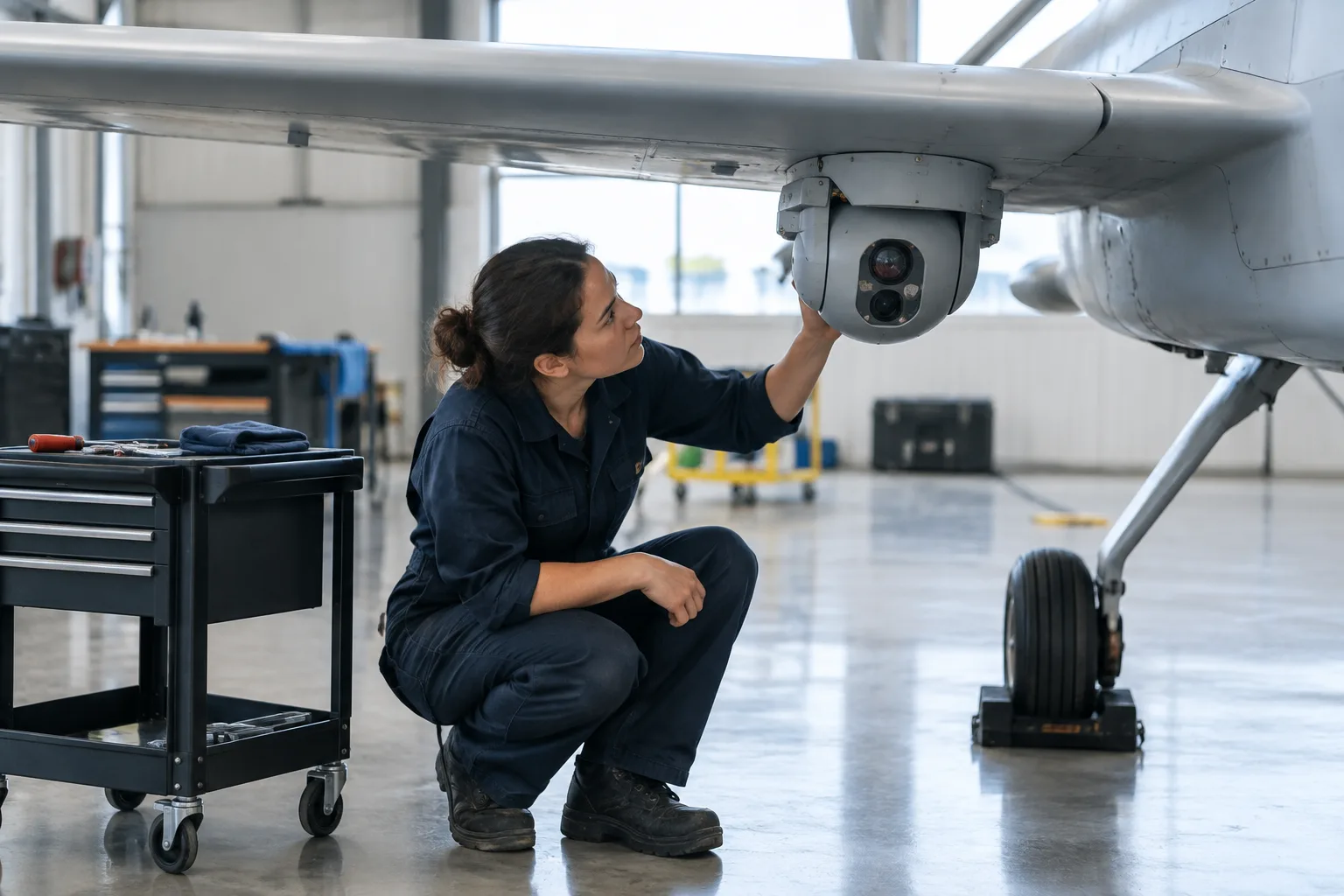

TEKEVER said on September 23 that it had reached the first close of a $580 million Series D round at a reported $6.4 billion valuation, led by UC Investments and Baillie Gifford. On its own, that would already rank as a large financing for a European autonomous-systems company. What makes it more consequential is timing: a week earlier, the UK moved to bring TEKEVER’s AR5 surveillance drone into British Army service under a contract framework worth up to £400 million over ten years.
That combination is why this round matters beyond startup theater. The real question is not whether TEKEVER can attract capital. It is whether the company can turn battlefield feedback, government demand, and private money into something far harder: steady factory output, dependable field support, and autonomy that remains accountable under military procurement rules.
Why this round matters beyond the valuation
The financing announcement deserves careful reading. TEKEVER described the deal as a first close, not a completed round, and said additional closings are expected in the coming months. The $6.4 billion figure is a private valuation, not a public-market test. No revenue, margins, backlog, burn, or dilution details were disclosed.
Even with those limits, the round stands out because of what the capital is meant to do. TEKEVER said the money will fund international expansion, industrial and technology capabilities, strategic acquisitions, and further development of AI-powered autonomous systems. In ordinary software, fresh capital often mainly buys hiring runway and sales capacity. In defense technology, it also has to buy manufacturing space, supplier qualification, cybersecurity, testing, compliance, and the people needed to keep systems operating after delivery.
That is where TEKEVER’s model becomes strategically interesting. The company presents itself as a vertically integrated aerospace and technology business, spanning aircraft, sensors, communications, autonomy software, satellite communications, and digital services. Its public portfolio includes the AR3 and AR5 unmanned aerial systems, the ARX family, and the ATLAS mission and autonomy platform. For defense buyers, that is not just a product story. It is a sovereignty and sustainment story: governments want platforms they can field, support, update, and control over time.
The investor mix reflects that logic. UC Investments is making its first direct investment in Europe, Baillie Gifford is renewing support, and Merlyn Advisors brings a defense-oriented strategic backer. This is not capital chasing a consumer app growth curve. It is capital positioning around a supplier that could benefit from Europe’s push for sovereign defense capabilities if it can execute.
What the UK contract really proves
The strongest evidence behind the round is not the valuation headline but the procurement path. The UK Ministry of Defence said on September 16 that it had awarded TEKEVER a contract worth up to £400 million to bring the AR5 long-endurance surveillance drone into British Army service. The initial order is for six aircraft, with numbers potentially rising to 24 by 2029 as the system replaces Watchkeeper.
That is a meaningful validation point because it ties TEKEVER to a named modernization program with visible milestones. The government has also said the program should support more than 1,000 highly skilled UK jobs by 2030. The AR5 can carry up to 50 kilograms of cameras and sensors, and the ministry said the system has been used by Ukraine against Russia.
Still, the contract does not settle the argument in TEKEVER’s favor. “Up to £400 million” is a ceiling over a decade, not guaranteed revenue. The initial six-aircraft order is more concrete than the headline value, and the ceiling of 24 by 2029 is clearer than many defense announcements, but key economics remain undisclosed. Investors do not yet know, from public information, how the spending will be phased, what portion is aircraft versus support, or how much of the ceiling will be realized.
That distinction matters because procurement selection and industrial scale are different achievements. A government can choose a platform and still face delays in production, integration, training, or sustainment. For TEKEVER, the UK deal is best read as proof that the company has crossed from promising vendor to serious program contender, not proof that it has already mastered large-scale delivery.
The bottleneck is throughput, not vision
The bullish case is straightforward. Operational use can generate better telemetry, maintenance knowledge, and software refinement. A government customer can create a reference account and predictable demand. New funding can then expand factories, engineering teams, supply chains, and acquisitions. That is the loop TEKEVER is trying to build: fielded systems inform product improvement, which supports procurement wins, which justify more capital and capacity.
The risk is that every link in that loop can break. Defense customers buy availability, operator training, logistics, and cyber resilience as much as they buy an airframe. Software updates that improve autonomy must still fit inside certification, export approval, communications security, and human-control requirements. In contested surveillance missions, resilience to jamming, spoofing, and maintenance stress can matter more than a funding headline.
This is also where the public discussion needs precision. TEKEVER is talking about AI-powered autonomous systems and surveillance platforms. That is not the same thing as demonstrating independent target selection or lethal action without human oversight. The practical accountability test here is whether the company can show reliable human control, secure communications, strong support performance, and measured mission availability while updating its systems fast enough to stay useful.
The next milestones are therefore more important than the current valuation. Readers should watch how much of the round ultimately closes, whether the first six AR5 aircraft are delivered on time, how quickly UK production capacity expands, whether orders outside the UK materialize, and whether TEKEVER can build recurring support and software revenue around deployed fleets. Export approvals, sustainment performance, and transparent evidence on cybersecurity and operator oversight will matter at least as much as headline drone numbers.
So does this financing mark the emergence of a repeatable European defense-tech scale-up model? Possibly, and TEKEVER is further along that path than many peers because it has all three ingredients at once: operational feedback, a major government procurement route, and unusually large private backing. But the model is not proven by a first close or by a contract ceiling. It will be proven only if TEKEVER can convert those advantages into repeatable throughput and accountable autonomy without losing speed, reliability, or political trust along the way.

 By
By
 By
By


 By
By
 By
By

 By
By