
Grain Management said on October 8 that it has a definitive agreement to sell its nationwide 800 MHz spectrum portfolio to SpaceX, a move that would give Starlink Mobile control of a scarce low-band asset that reaches farther and penetrates buildings better than higher-frequency spectrum. The deal covers up to 14 MHz of paired spectrum, carries undisclosed financial terms, and still needs Federal Communications Commission approval.
Why it matters is straightforward: this is not just more spectrum for SpaceX. It is a missing layer in the company’s mobile strategy. Satellite-to-phone service can extend coverage into dead zones, but it has limits on indoor performance and dense-market capacity. Low-band terrestrial spectrum offers a way to put radios on towers and rooftops, serve ordinary consumer devices, and use satellites where ground coverage is weak. That makes SpaceX a more credible would-be wireless competitor than it was a week ago.
The harder question is whether that credibility turns into a working, affordable network. On that front, the agreement looks more like a route than an arrival.
Why low-band changes the story
In wireless, low-band spectrum is prized because physics does some of the work. Signals in the 800 MHz range generally travel farther and penetrate walls better than mid-band or high-band alternatives. For SpaceX, that matters because Starlink Mobile’s original story has centered on space-based coverage. The Grain portfolio adds a ground layer that can improve indoor reach and fill in the places where satellite-only service is a poor substitute for a cellular network.
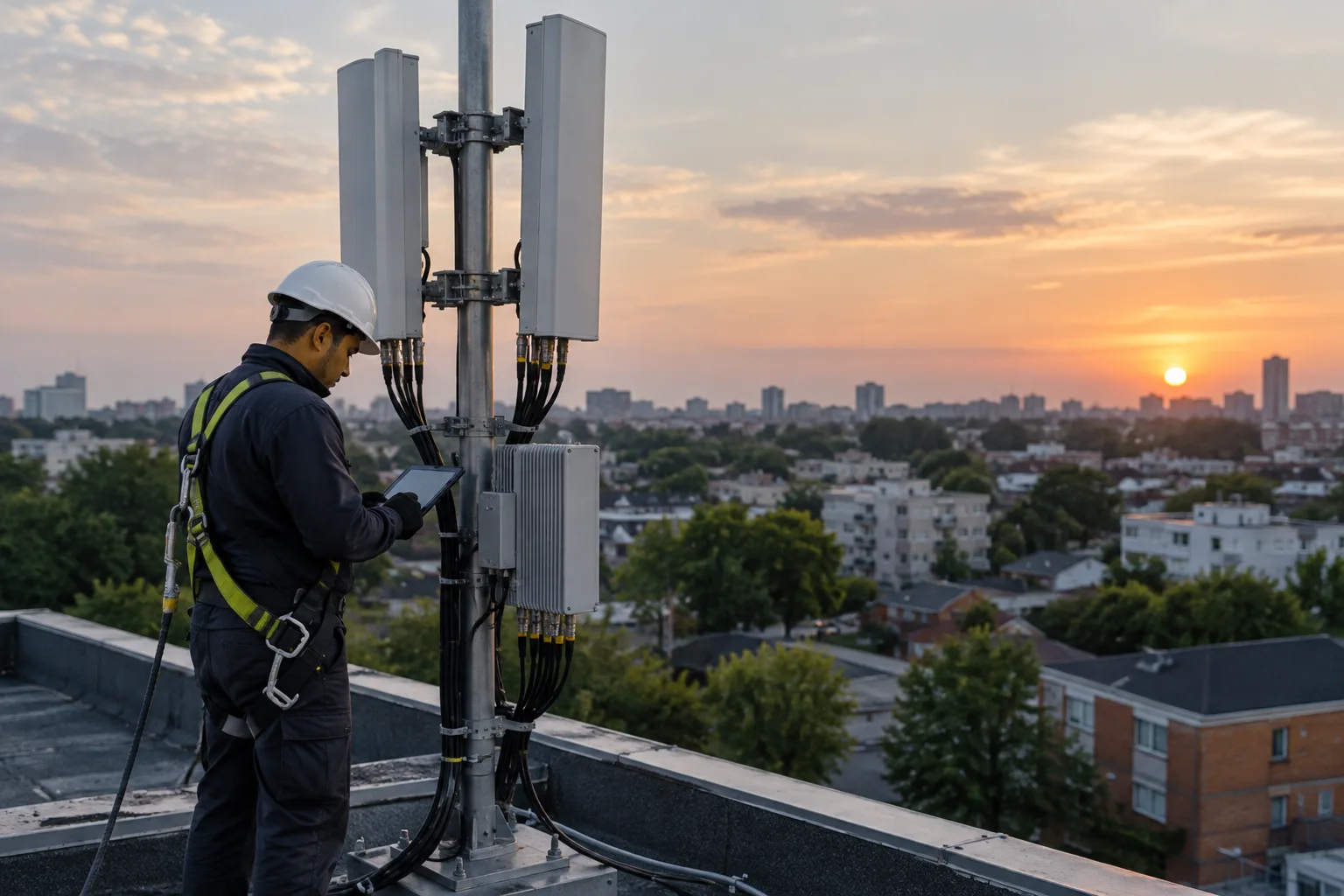
SpaceX’s FCC filing makes that architecture explicit. The company describes terrestrial broadband radios feeding sectorized antennas on towers, rooftops, and other structures, using the 800 MHz licenses for local coverage while satellites extend service where terrestrial coverage is thin. In practical terms, that is a shift from an orbit-only backup narrative to a hybrid-network buildout.
The portfolio is also broad. As Ars Technica reported, the licenses cover roughly 100% of the U.S. population geographically, with county-level holdings ranging from 4.85 MHz to 14 MHz. That does not mean SpaceX would instantly serve the whole country. It does mean the company would control a national low-band footprint instead of assembling one market by market.
That distinction is important for business readers. Grain turned a financial infrastructure asset into something SpaceX can slot into a vertically integrated stack of satellites, launch capacity, consumer distribution, and, potentially, terrestrial radios. Owning the licenses could reduce the bargaining time and dependency that often slow network assembly.
A hybrid network, not a replacement for the carriers
The 800 MHz deal sits inside a broader mobile push. SpaceX is separately buying 65 MHz of nationwide mid-band spectrum from EchoStar in a $17 billion transaction that the FCC approved in May 2026. It also has a U.S. relationship with T-Mobile involving leased spectrum for satellite coverage. Add the Grain portfolio, and the outline becomes clearer: mid-band for added capacity, low-band for coverage and indoor performance, satellites for rural gaps and remote routes.
That combination is why incumbent carriers have reason to pay attention. AT&T, Verizon, and T-Mobile still hold much larger deployed networks and broader spectrum portfolios, and nothing in this transaction changes that overnight. But SpaceX may not need to replicate every tower grid immediately to matter. If it aims first at rural coverage gaps, enterprise connectivity, emergency-response use cases, and supplemental service, a hybrid design could let it compete at the edges before it competes everywhere.
For mobile subscribers, the immediate benefit is optionality rather than a new plan to buy tomorrow. For rural communities and enterprise buyers, the appeal is more concrete: a provider that can combine terrestrial reach with satellite extension might cover routes, job sites, warehouses, farms, and remote communities that do not justify dense conventional buildouts. For tower owners, rooftop landlords, and backhaul suppliers, the filing hints at future demand if SpaceX moves quickly from licenses to equipment orders.
The expensive part still lies ahead
The case for the deal is strongest at the architecture level. The case becomes less certain when it reaches execution.
Spectrum is necessary, but it is not a network. SpaceX still needs the transfer approved, then has to secure sites, radios, antennas, backhaul, compatible network equipment, and enough operational capacity to make the service usable in the real world. Grain’s announcement did not disclose the purchase price, financing, closing timetable, deployment priorities, equipment suppliers, capital spending, or service commitments.
The spectrum itself has limits. Up to 14 MHz of paired low-band airwaves is meaningful coverage spectrum, but it is relatively narrow compared with what nationwide incumbents operate across multiple bands. Low-band can solve reach; it does not by itself solve dense urban capacity. That is the central difference between “national licenses” and “national service.”
Satellite readiness is another gate. The FCC approved SpaceX’s application this week to launch up to 15,000 next-generation Starlink satellites, but that authorization is not the same thing as a working mobile network. Ars reported that SpaceX has launched about 650 current direct-to-device satellites and has said next-generation launches and service could begin in late 2027. Timing, device compatibility, and the handoff between terrestrial and satellite layers remain open questions.
Regulatory risk is also real, even if the industrial logic is easy to see. The FCC’s July 2026 order approving Grain’s purchase of the 800 MHz portfolio from T-Mobile recognized that the licenses could support terrestrial service, satellite-to-mobile service, or both. But a permitted use is not the same as a guaranteed transfer, and the record still leaves room for challenges from smaller carriers or public-interest groups worried about concentration or buildout terms.
What this acquisition does, then, is not turn Starlink Mobile into a finished national carrier. It makes SpaceX harder to dismiss as a serious entrant. The company now has a clearer path to combine low-band coverage, mid-band capacity, satellite reach, launch control, and an existing consumer brand under one roof.
Whether that becomes a durable business will hinge on four things that licenses alone cannot answer: FCC approval, terrestrial deployment, next-generation satellites, and a capacity-and-pricing model that works outside a press release. If SpaceX clears those gates, the Grain deal will look like the moment its mobile ambitions became structurally plausible. If not, it may prove to be a valuable supplemental layer that still falls short of a true carrier challenge.
 By
By
 By
By
 By
By
 By
By


 By
By