

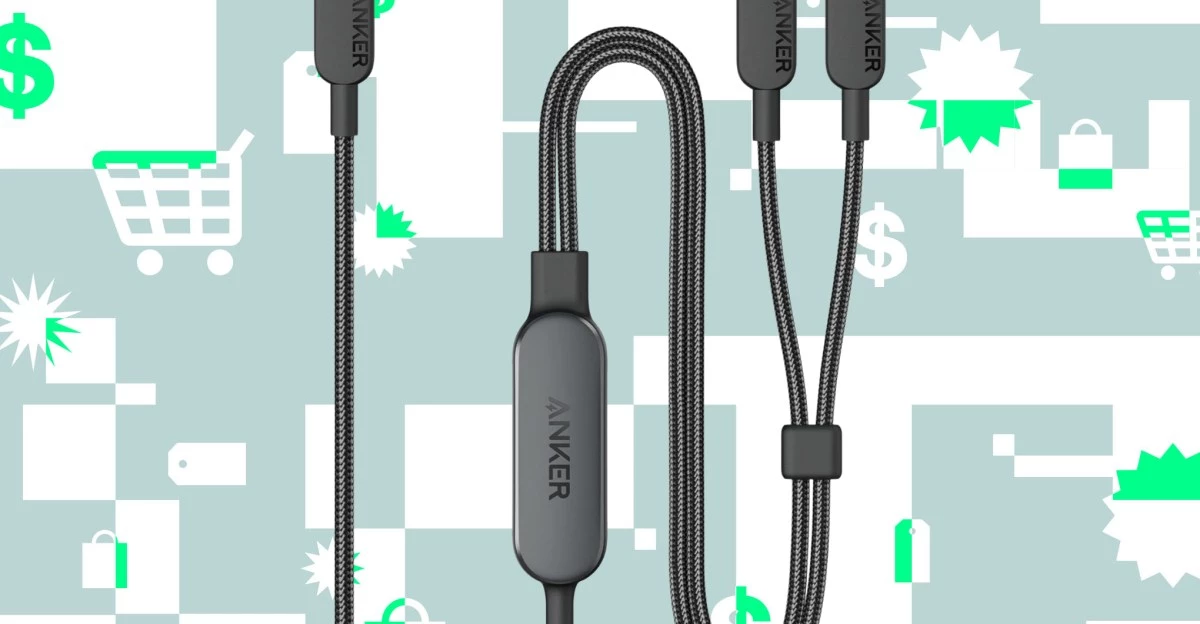

The Dual-Headed USB-C Cable: A Lens on the New Power Paradigm
In the subdued retail hum that precedes Presidents Day, Anker’s six-foot, dual-USB-C braided cable—now retailing at $15.99—might seem like a mere footnote in the endless scroll of tech accessories. Yet, this unassuming product is a prism through which the tectonic shifts in the consumer electronics landscape are refracted. The cable’s technical prowess—supporting USB-C Power Delivery 3.1 at up to 140 watts—serves as a microcosm of a market in flux, where the accessory has ascended from afterthought to strategic centerpiece.
The cable’s dual-headed design, capable of either two-device charging or single-port power surges, is not just a feat of engineering but a response to the new rituals of modern life. In the hybrid-work era, where the average U.S. household juggles more than thirteen connected devices, the home has become a battleground for “charging real estate.” Multi-port, high-wattage cables are no longer a luxury; they are a necessity for families and professionals navigating an ecosystem of laptops, tablets, AR glasses, and power banks.
Regulatory Tailwinds and the USB-C Mandate
The rise of USB-C as the de facto charging standard is not merely a product of market consensus but the result of coordinated regulatory pressure. The European Union’s “common charger” directive, now in force, has set the tone for a global transition, with India and Latin America following suit. Apple’s migration to USB-C with the iPhone 15 was a watershed moment, expanding the total addressable market for high-wattage cables beyond the realm of MacBooks and select PCs. What was once a fragmented accessory universe is consolidating around a single protocol, with profound implications for both consumers and manufacturers.
This regulatory harmonization is more than bureaucratic tidiness—it is a catalyst for innovation. Power Delivery 3.1, paired with gallium nitride (GaN) semiconductors, enables chargers that are not only more powerful but also slimmer and cooler, sustaining premium price points even as competition intensifies. The Anker cable’s 140-watt ceiling is emblematic of this new era, where charging speed is no longer bottlenecked by legacy standards.
Accessory Monetization and the Economics of the “Post-In-Box” Era
Perhaps the most significant shift, however, is economic. As major OEMs—Apple, Samsung, Google—systematically remove power bricks from their flagship devices, they are not just cutting costs or appeasing environmental regulators. They are redrawing the lines of profit and influence. The accessory market, once a peripheral concern, is now the locus of margin growth and brand differentiation. Third-party vendors like Anker and Belkin have emerged as quasi-tier-one suppliers, often enjoying higher average selling price (ASP) growth than the devices they serve.
- Accessory Monetization: With device bundles stripped to their bare essentials, the opportunity for upsell and cross-sell has migrated to the accessory aisle.
- Brand Equity and Safety: Certifications from UL and USB-IF have become key differentiators as the market floods with white-label entrants and private-label pushes from retail giants.
- Supply Chain Resilience: While cables sidestep the worst of semiconductor shortages, volatility in copper prices and reliance on China-centric assembly add layers of complexity. Anker’s ability to maintain sub-$20 pricing in the face of an 18% year-over-year increase in copper costs is a testament to strategic hedging and volume contracting.
The Road Ahead: Smart Cables, Regulatory Scrutiny, and the Next Accessory Frontier
The accessory market is not static; it is evolving in anticipation of both technological and regulatory currents. The next generation of charging cables will likely embed power-negotiation chips and telemetry, enabling dynamic charging profiles and even SaaS-based fleet management for enterprise IT. Firmware updatability, once the domain of high-end devices, will become table stakes in the accessory world.
For device OEMs, the specter of e-waste regulation may prompt a return to modular “voucher” models, allowing consumers to redeem chargers or cables of their preferred specification—a move that could disrupt the current third-party attach rate. Retailers, meanwhile, are discovering that secondary holidays like Presidents Day are fertile ground for accessory promotions, acting as “micro-Black Fridays” that optimize inventory turns without cannibalizing peak-season margins.
Investors should keep a close watch on adjacent plays in GaN, silicon carbide, and copper-aluminum hybrids, as elevated wattage levels drive demand for advanced materials and intellectual property in power electronics.
As the dust settles on the Presidents Day promotion, it becomes clear that Anker’s discounted dual-USB-C cable is not just a deal—it is a signal. The fast-charging accessory, once overlooked, now sits at the nexus of hardware monetization, regulatory compliance, and the evolving choreography of daily digital life. Those who grasp the strategic centrality of the humble cable will be best positioned to navigate the next wave of consumer technology.

 By
By
 By
By

 By
By
 By
By


 By
By







