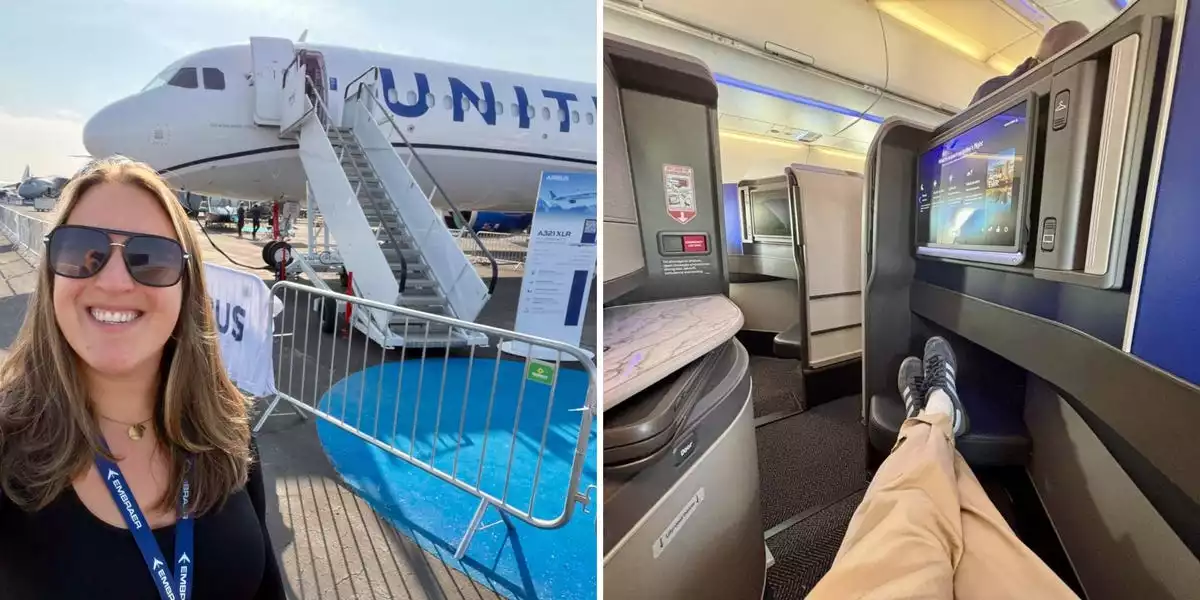

A narrowbody with widebody ambitions: why United’s A321XLR debut matters
United Airlines’ unveiling of the Airbus A321XLR at the Farnborough International Airshow is more than a cabin reveal—it is a signal of where long-haul aviation economics are heading. The A321XLR sits in a strategically valuable space: a single-aisle aircraft with a published range of roughly 4,700 nautical miles, capable of operating missions that historically required larger widebodies or aging “long, thin route” workhorses like the Boeing 757.
For United, the timing is pointed. Transatlantic demand has proven resilient, but it is increasingly fragmented across secondary cities, seasonal peaks, and niche origin-and-destination flows. In that environment, the A321XLR becomes a tool for precision capacity—right-sizing supply to demand without surrendering the revenue upside of premium cabins. The airline’s stated intent to use the aircraft on transatlantic and thinner long-haul routes—including potential markets such as northern Italy and West Africa—underscores the strategic bet: profitability can be engineered not only through scale, but through network granularity.
Entry into service is expected later this year, with inaugural routes still unannounced—an omission that keeps competitors guessing while United finalizes the commercial math: airport constraints, slot availability, premium demand depth, and partner feed.
Cabin strategy as a revenue engine: three classes, sharper segmentation
United’s configuration—150 seats across three cabins—reads like a deliberate blueprint for yield management in an era where airlines increasingly monetize comfort, privacy, and convenience as distinct products rather than incremental perks.
Key elements include:
- 20 Polaris business-class suites featuring sliding doors and lie-flat beds, bringing a widebody-style premium proposition to a narrowbody footprint. This is not merely aesthetic; privacy and “suite-ification” have become measurable drivers of corporate and high-yield leisure preference.
- An enhanced Premium Plus section positioned as a true intermediate tier, with no middle seats, deeper recline, larger screens, and upgraded meals—features designed to justify a durable price premium even when macroeconomic conditions pressure discretionary spend.
- A reworked economy experience that includes a self-service snack bar and extra-legroom seats with blocked middle seats in select rows, effectively creating micro-tiers within economy that can be packaged, priced, and targeted.
What stands out is the way United appears to be translating consumer electronics expectations into aviation product design: Bluetooth audio, integrated charging, and large (19-inch) displays are not just amenities—they are part of the airline’s attempt to reduce the perceived gap between narrowbody and widebody long-haul comfort. In competitive terms, this is brand defense against both legacy rivals upgrading premium cabins and low-cost carriers expanding into longer missions with simplified service models.
The operational calculus: replacing 757 economics with XLR flexibility
United’s A321XLR move is also a fleet and cost story. The Boeing 757 has long been prized for performance and range, but it is increasingly difficult to justify as maintenance costs rise and fleet complexity becomes a drag on operational resilience. The A321XLR offers a path to:
- Lower fuel burn per seat versus widebodies on lightly trafficked routes, improving route-level margins where demand does not support larger aircraft.
- Reduced maintenance burden compared with aging aircraft types, with downstream benefits for dispatch reliability and spare-parts planning.
- A more modern platform for connectivity and cabin systems, which increasingly influence customer satisfaction and repeat purchase behavior on long flights.
Equally important is the network optionality. With an aircraft like the A321XLR, airlines can experiment with routes that would be uneconomic with a widebody—then scale up, down, or exit with less financial penalty. That flexibility supports a “hub plus” approach: maintaining the power of hubs while selectively bypassing them to capture point-to-point demand.
United’s emphasis on modular interior architecture—standardized shells and interchangeable cabin modules—adds another layer of operational discipline. Faster reconfiguration cycles and more predictable maintenance can translate into higher utilization, and utilization is often where narrowbody economics are won or lost.
Competitive and industry implications: Airbus momentum, Boeing pressure, and the new long-haul baseline
United’s high-profile presentation of the A321XLR inevitably lands in the broader Airbus vs. Boeing narrative. Airbus has built a commanding position in the long-range narrowbody segment, and each marquee deployment reinforces the idea that the “middle of the market” is being served—at least for many missions—by extended-range single-aisles rather than a clean-sheet aircraft.
For the competitive landscape, several dynamics are likely to follow:
- Route chess on thin transatlantic markets: Once United announces initial A321XLR routes, incumbents may respond with targeted fare actions, schedule changes, or selective up-gauging to defend share—especially where joint ventures and alliance feed can be mobilized.
- Premium product escalation: Sliding-door suites and strengthened premium economy offerings raise expectations. Competitors may accelerate cabin retrofits or adjust premium cabin density to protect yields.
- ESG and regulatory messaging: Newer aircraft types provide a clearer platform for sustainability narratives and, in some jurisdictions, a stronger posture as environmental scrutiny tightens around aviation growth.
The deeper takeaway is that the A321XLR is not simply a new aircraft in United’s fleet—it is a lever for network experimentation, product monetization, and cost discipline at the same time. If the airline can match the cabin promise with reliable operations and smart route selection, the A321XLR could become a defining instrument of the next transatlantic cycle—one where profitability is increasingly built route by route, cabin by cabin, and seat by seat.

 By
By
 By
By

 By
By
 By
By
 By
By
 By
By