

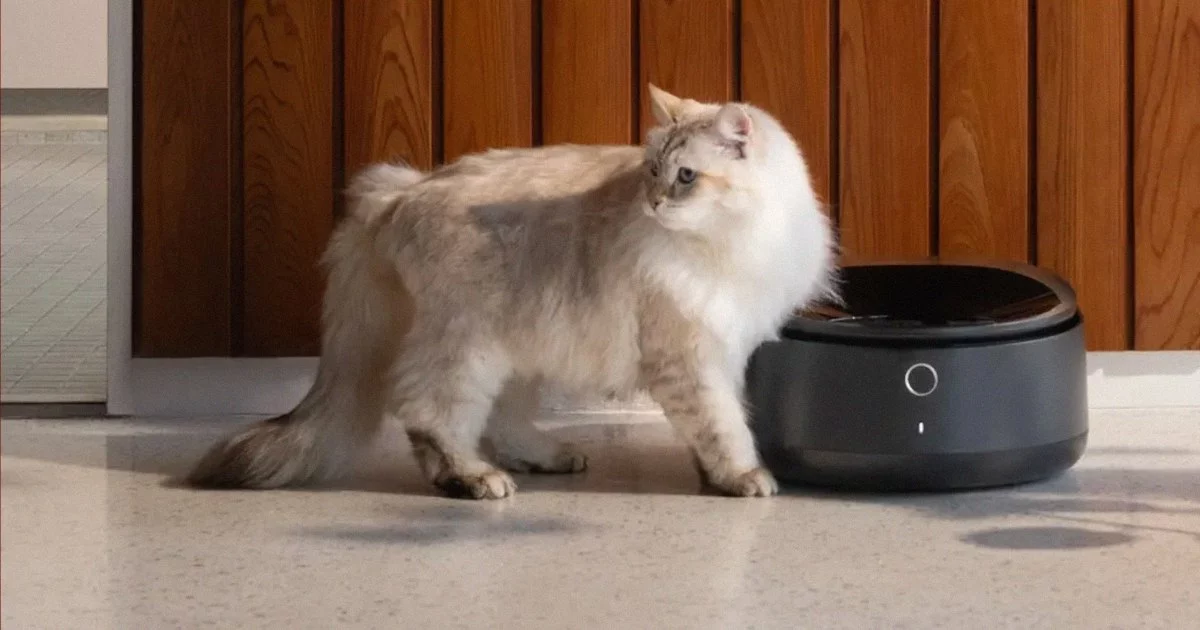

When “Smart” Becomes a Single Point of Failure in the Connected Home
Petlibro’s August 11 cloud-service outage landed in a uniquely sensitive corner of consumer technology: devices entrusted with animal welfare. For users of the company’s smart pet feeders, the disruption reportedly disabled automatic dispensing and cut off remote monitoring—an abrupt reminder that many “smart” appliances are, at their core, service-dependent endpoints. The practical consequence was immediate and emotionally charged: owners described cats left unfed, while the app layer—designed to provide reassurance—became a source of uncertainty.
Petlibro’s CEO, York Wu, acknowledged both “primary” and “secondary” faults and promised deeper investigation and improved customer support. Yet the public response illustrates a recurring pattern in the Internet of Things (IoT) market: the technical outage is often only half the crisis. The other half is the perception that a company’s communications are delayed, overly polished, or insufficiently specific—especially when the product’s purpose is essential rather than merely convenient.
This episode is not just a brand story. It is a case study in how cloud architecture choices, edge-device autonomy, and customer communications combine to define reliability in the modern smart-home economy.
Cloud Convenience vs. Edge Autonomy: The Design Tension Exposed
Petlibro’s feeders were marketed as “offline-capable,” but the outage revealed what many consumers only discover during failure: offline-capable does not always mean offline-resilient. In IoT design, the distinction is decisive. A device may technically function without the cloud in narrow circumstances, yet still rely on cloud services for scheduling, state synchronization, authentication, or diagnostics—dependencies that can cascade into full operational stoppage.
At the engineering level, the incident spotlights a broader industry tradeoff:
- Edge-first autonomy: Core functions (scheduled feeding, safe defaults, local timekeeping, minimal logging) run on-device even when connectivity is lost.
- Cloud-anchored operation: The cloud becomes the “brain,” enabling rapid feature iteration and centralized analytics, but increasing the risk that an outage disables essential behavior.
In industrial IoT—where downtime carries contractual and safety consequences—architectures commonly include geo-redundant services, local fallbacks, and heartbeat-based self-healing. Consumer IoT, by contrast, has often optimized for cost and speed-to-market, producing systems that behave “fail-open” (stop working when the service fails) rather than “fail-safe” (retain baseline functionality).
The Petlibro outage also underscores a less visible dimension: data integrity and trust. Smart feeders are not only actuators that dispense food; they are sensors that infer routines and behavior. When cloud connectivity breaks, the data stream can fragment, leaving owners unsure whether a pet ate, whether a schedule executed, or whether the device state is accurate. As AI-driven pet monitoring expands—nutrition insights, anomaly detection, behavioral analytics—offline logging and replay mechanisms will increasingly be viewed as table stakes rather than premium features.
Brand Equity, Support Load, and the Business Cost of Downtime
In service-oriented hardware, reliability is not a feature; it is the product. Outages that threaten pet welfare represent a worst-case reputational scenario because they compress the timeline between failure and emotional backlash. In a market with low switching costs—where alternatives range from competing smart feeders to analog dispensers—trust can erode faster than it can be rebuilt.
From a business and operations standpoint, the incident highlights three compounding pressures:
- Consumer confidence and churn risk: When a connected appliance fails at a critical moment, customers reassess not only the brand but the entire category of connectivity-dependent devices.
- Support scalability and cost: High-volume disruptions stress customer service capacity, inflate warranty reserves, and expose brittle support models—particularly those reliant on outsourced scripts or chatbot-first triage.
- Competitive differentiation through reliability: As the smart-pet market matures alongside adjacent categories like smart cameras and home hubs, uptime and transparency become defensible differentiators that can justify premium pricing.
Petlibro’s communications, as described by customers, became part of the controversy: users criticized messaging as delayed and PR-oriented, and questioned whether the company fully grasped the stakes. In IoT, the “incident response” is not merely technical remediation; it is also real-time expectation management. When users lack authoritative updates, they default to social platforms—where narratives harden quickly and nuance is rare.
What the Petlibro Outage Signals for the Future of Smart Pet Tech
The most durable lesson from this outage is that cloud services should augment essential functions, not anchor them. For smart feeders and other welfare-adjacent devices, the baseline must be dependable under degraded conditions. That implies a shift toward edge-first design, paired with clearer product promises and more rigorous operational discipline.
Several forward-looking moves stand out as both technically credible and commercially strategic:
- Architect for local continuity: On-device scheduling, safe fallback routines, low-bandwidth event logging, and resilient timekeeping reduce the chance that a cloud outage becomes a feeding outage. Edge platforms (such as AWS Greengrass or Azure IoT Edge) can accelerate hybrid designs, but the principle matters more than the vendor.
- Operationalize transparency: A public status page, app-level push notifications, and a defined escalation path can prevent the information vacuum that drives reputational damage.
- Adopt measurable reliability reporting: Publishing uptime metrics, incident postmortems, and remediation milestones signals a shift from reactive messaging to reliability engineering.
- Clarify capability through packaging: A hybrid business model—where a basic mode guarantees uninterrupted offline feeding and a premium tier adds cloud analytics—can align expectations with reality and reduce perceived bait-and-switch.
Petlibro’s outage is a sharp illustration of where consumer IoT is headed: toward a market in which “smart” is no longer synonymous with “connected,” but with resilient, accountable, and transparent. As households delegate more essential routines to devices, the winners will be those that treat reliability as a first-class product requirement—engineered at the edge, reinforced in the cloud, and communicated with the urgency that real-world dependence demands.

 By
By
 By
By
 By
By
 By
By

 By
By

 By
By







