


When Asteroids Meet Atoms: A New Era for Planetary Defense and Space Commerce
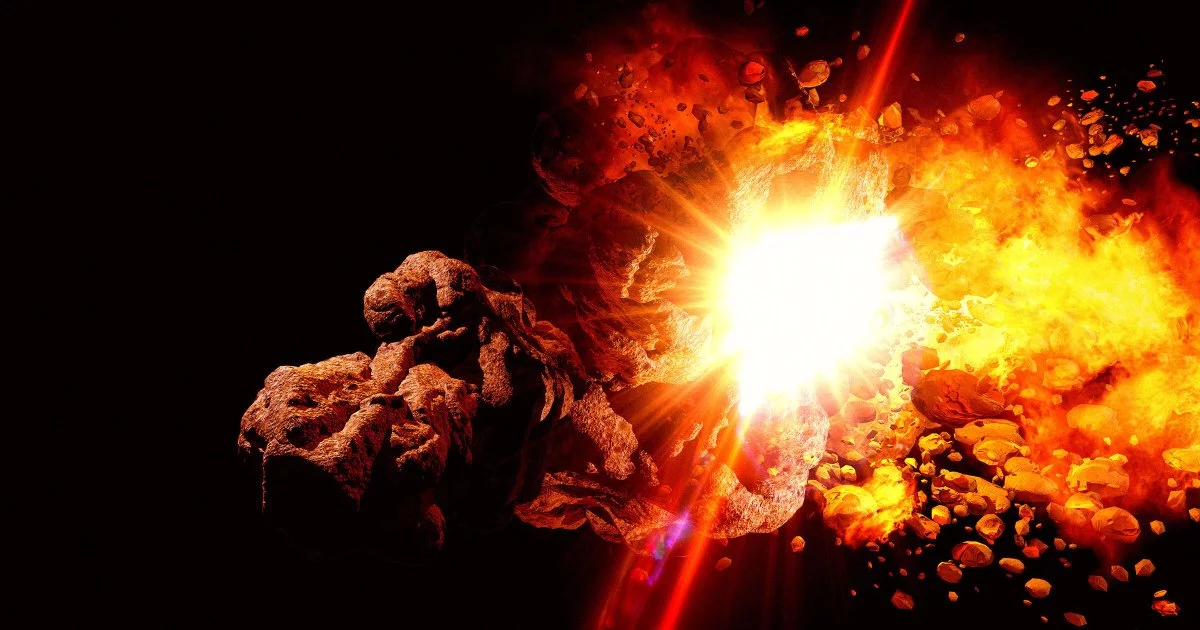
In a development that reads like speculative fiction but lands squarely in the realm of scientific fact, a collaboration between CERN and the University of Oxford has upended long-held assumptions about the mechanics of asteroid deflection. The team’s experiments—bombarding metal-rich meteorite samples with 400 GeV proton pulses at CERN’s Super Proton Synchrotron—have revealed that, under nuclear-level shock, these cosmic boulders do not shatter into dangerous debris as previously feared. Instead, their internal structure reorganizes, becoming mechanically stronger and more fault-tolerant.
This revelation is not a mere academic curiosity. It fundamentally alters the calculus for planetary defense, raising the threshold for how powerful a nuclear device might be safely deployed in a last-ditch effort to avert a catastrophic impact. The implications ripple outward, touching the commercial, regulatory, and geopolitical fabric of the emerging space economy.
—
High-Energy Physics: From Fundamental Science to Planetary Insurance
The CERN–Oxford findings mark a rare convergence of high-energy particle physics, advanced materials science, and dual-use space technology. CERN’s evolution from a pure research institution into a contract R&D powerhouse mirrors a broader trend: national laboratories worldwide are opening their doors to commercial and defense innovators. The ability to simulate extreme environments—ranging from nuclear detonations to atmospheric re-entry—without resorting to full-scale weapons tests is now a coveted service.
Key technological insights from the study include:
- Self-Stabilizing Materials: Shock-induced lattice reordering in metal-rich asteroids hints at new models for engineered alloys, with direct applications in aerospace, defense, and energy.
- Digital Twins and Simulation: The algorithms developed to predict asteroid cohesion under stress are equally applicable to turbine blades, armor, and rocket components. Petascale, interoperable simulations will become a decisive competitive edge for original equipment manufacturers.
- Dual-Use Space Infrastructure: The line between planetary defense and strategic deterrence blurs as nuclear deflection becomes technically plausible. Launch providers and satellite operators must now navigate a landscape where “nuclear-ready” payloads are not just hypothetical.
The commercial sector is already moving to capitalize. Companies like Outer Solar System Company (OuSoCo) are integrating classified nuclear expertise, AI-driven trajectory optimization, and modular propulsion into turnkey “mission kits.” The upcoming Apophis flyby in 2029 is poised to serve as a proving ground for these technologies, sensors, and policy frameworks.
—
Capital, Catastrophe, and the New Space Insurance Paradigm
The economic ramifications are profound. Historically, planetary defense has been an underfunded afterthought—global budgets have hovered around $300 million. That is set to change. As the technological risk narrows, legislators in the U.S. and EU are poised to allocate billions toward deterrent capabilities, potentially rivaling early missile-defense programs.
This influx of capital will reshape the insurance and reinsurance landscape:
- Insurability of Planet-Killer Events: With credible mitigation on the table, actuaries can finally model probabilities and losses for near-Earth object impacts. This paves the way for parametric insurance products and catastrophe bonds, akin to those in hurricane risk.
- Supply Chain Chokepoints: The need for nuclear-grade tritium, radiation-hardened electronics, and ultrafast detonators places strategic leverage in the hands of a few nations. At the same time, advances in additive manufacturing could democratize access, intensifying calls for updated non-proliferation treaties.
For institutional investors, the emergence of planetary defense as a bona fide market—complete with sovereign customers, insurable risk, and technological spillovers—signals a new era of space as infrastructure, not just exploration.
—
Governance, Power, and the Next Decade of Space Security
The strategic context is equally fraught. The 1967 Outer Space Treaty is silent on the use of nuclear devices for planetary defense, leaving a regulatory vacuum that multilateral bodies like COPUOS must urgently address. The deployment of nuclear deflection systems would set precedents with far-reaching implications for arms control, verification, and humanitarian law.
Great-power competition looms large. The ability to deliver megaton-class payloads across astronomical distances is as much a demonstration of global logistics as it is of planetary stewardship. As China’s Long March 9 heavy-lift program comes online, the Indo-Pacific security calculus will be forced to adapt.
Meanwhile, the high-fidelity data generated by these experiments will permeate adjacent sectors: from carbon-capture materials in climate tech to fusion containment in energy and critical-minerals extraction. The question of open scientific collaboration versus proprietary defense IP is set to become a flashpoint.
For industry leaders, the message is clear. Those who treat planetary defense as a pillar of resilience and dual-use innovation—integrating AI, advanced materials, and autonomous systems—will not only shape the future of the space economy but also wield disproportionate influence over the rules and risks of a rapidly changing world.

 By
By
 By
By


 By
By

 By
By
 By
By







