
A New Hampshire flashpoint reveals the new politics of digital infrastructure
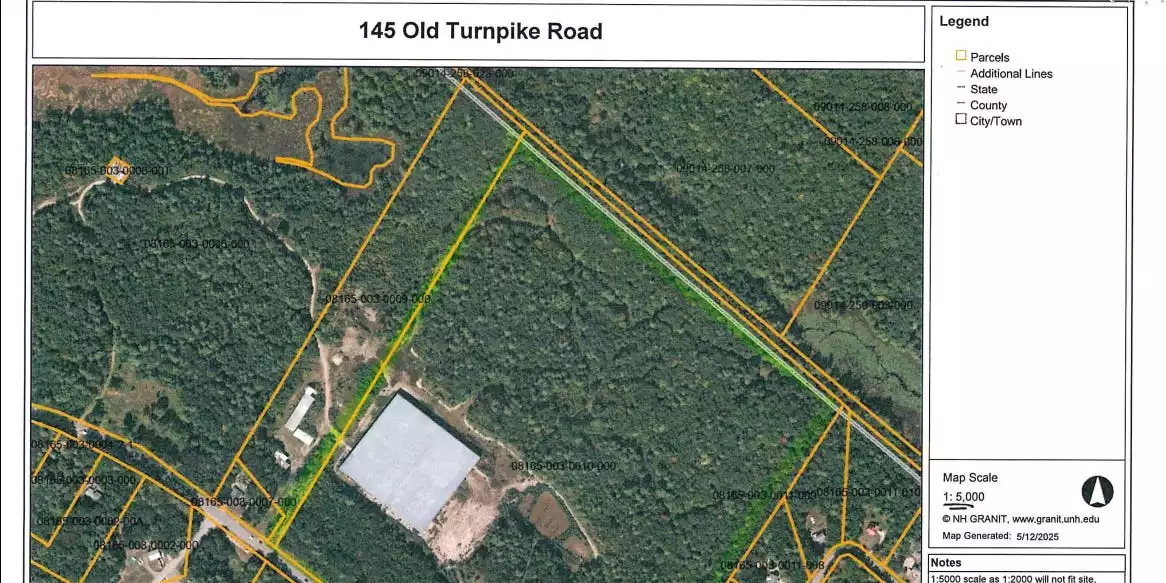
The withdrawal of a proposed data center in Nottingham, New Hampshire is more than a local zoning dispute—it is a clear signal that the buildout of cloud and AI-era infrastructure is entering a new phase of public scrutiny. Local developer Thomas Moulton had aimed to repurpose existing farm structures and add a new four-acre facility positioned as a regional data hub. Instead, the project became a lightning rod for anxieties that increasingly surround data centers: water use, energy demand, noise, land-use change, and the erosion of rural character.
The scale and speed of the backlash were notable. A Change.org petition exceeding 25,000 signatures indicates not just neighborhood concern, but a broader, networked form of civic mobilization—one that can quickly reframe a project from “economic development” to “industrial intrusion.” Moulton’s characterization of the project as a municipal “lottery ticket” for tax revenue captured the fiscal appeal for small towns with limited commercial bases. Yet the intensity of opposition—reportedly including personal threats—also underscores a hardening reality: the social license to operate is becoming as decisive as land acquisition, fiber routes, or interconnection agreements.
For the data center industry, Nottingham reads like an early warning system. Communities are no longer passive hosts for digital infrastructure; they are increasingly active gatekeepers, demanding proof that the benefits are real, the risks are mitigated, and the trade-offs are fairly distributed.
Water, power, and noise: why “invisible” cloud infrastructure feels tangible on the ground
Data centers are often described as clean, quiet, and largely automated—an image that can clash sharply with the lived experience of nearby residents. Nottingham’s concerns map onto the sector’s most persistent siting challenges, especially in regions facing drought stress and heightened environmental sensitivity.
Key friction points are becoming predictable:
- Water intensity and drought exposure
Cooling demands can translate into significant water withdrawals unless designs rely on closed-loop systems or advanced liquid cooling. In drought-prone periods, even the perception of competition for water—between households, agriculture, and industry—can become politically decisive. This elevates the importance of hydrological risk assessments, transparent reporting, and credible conservation commitments.
- Electricity demand and grid impacts
While not always the headline issue in local debates, power draw is often the underlying constraint. Communities may worry about grid upgrades, reliability, and the downstream effects of higher demand—especially if the energy mix is not clearly tied to renewables or firm low-carbon supply.
- Noise and the rural soundscape
Mechanical systems—chillers, cooling towers, backup generators, and periodic testing—can introduce a continuous industrial hum into areas accustomed to low ambient noise. The Nottingham episode highlights how acoustic modeling and enforceable noise mitigation plans are no longer “nice-to-have” engineering details; they are central to community acceptance.
- Land-use identity and “industrialization by stealth”
Repurposing farm structures may sound adaptive and low-impact, but the addition of a large new facility can still be interpreted as a permanent shift in a town’s identity. For rural communities, the perceived loss is not only aesthetic—it can touch property values, heritage tourism, and a sense of place that residents feel cannot be replaced by tax receipts.
Collectively, these issues are pushing the industry toward a more explicit bargain: if communities are asked to host critical digital infrastructure, they increasingly expect measurable local benefits and verifiable environmental safeguards, not just projections.
The economics of opposition: tax upside meets ESG scrutiny and reputational risk
The Nottingham proposal surfaced a central tension in data center development: the sector can offer substantial tax base expansion with relatively few direct jobs, but the costs—environmental, social, and political—are often felt locally and immediately.
From a business perspective, three dynamics stand out:
- Incentives are losing their persuasive power
Across the United States, jurisdictions compete for data centers with abatements and infrastructure support. Nottingham suggests that incentives alone may not overcome concerns about water, noise, and rural character. The new differentiator is not the size of the tax package, but the credibility of the developer’s community plan.
- Opposition has a calculable price tag
Delays, legal challenges, redesigns, and reputational damage can erode returns quickly. For developers and investors, early-stage community conflict is no longer a soft risk—it is a material one that can affect timelines, financing terms, and tenant confidence.
- ESG and capital markets amplify local disputes
Institutional investors and hyperscale customers increasingly evaluate projects through environmental, social, and governance (ESG) lenses. A project that becomes synonymous with community backlash can trigger deeper diligence, raise the cost of capital, or complicate tenant commitments. In that context, transparency and stakeholder engagement function as risk controls, not public relations.
Nottingham also reflects a broader national pattern: grassroots activism against data centers is scaling rapidly through social platforms and petition tools, compressing the time developers have to shape narratives and build trust.
What the Nottingham withdrawal suggests about the next generation of data center strategy
Moulton’s decision to withdraw—paired with a stated intent to conduct deeper research and pursue greater transparency—aligns with where the industry is heading. The next wave of data center development is likely to be defined by design adaptation, portfolio diversification, and negotiated community value.
Strategic implications that are gaining urgency include:
- Community co-creation as a site-selection requirement
Developers may need to treat stakeholder engagement as a first-order input, not a late-stage permitting task. Tools such as community benefit agreements (CBAs)—covering water stewardship, broadband improvements, job training, or public amenities—are becoming more common as a way to formalize reciprocity.
- Technological mitigation as competitive advantage
Investment in closed-loop cooling, liquid cooling, heat reuse, and on-site renewable integration can reduce water withdrawals, lower noise profiles, and ease grid concerns. These features increasingly differentiate projects in contested markets.
- A shift toward distributed and modular architectures
As siting large centralized campuses becomes more contentious, the industry may accelerate deployment of edge facilities and containerized modular data centers, particularly in locations with existing industrial footprints or brownfield redevelopment potential.
- Regulatory tightening and zoning evolution
Expect more municipalities and states to revisit land-use rules, noise ordinances, and water permitting—potentially adding pre-approval hurdles such as environmental disclosures and operational monitoring requirements.
Nottingham’s story is ultimately about alignment: the digital economy’s physical backbone is expanding, but the communities asked to host it are demanding a clearer accounting of costs, benefits, and safeguards. Data centers may power the modern world quietly from a network perspective, but on the ground, they are becoming one of the most visible—and contested—symbols of the AI and cloud buildout.


 By
By
 By
By
 By
By
 By
By

 By
By