

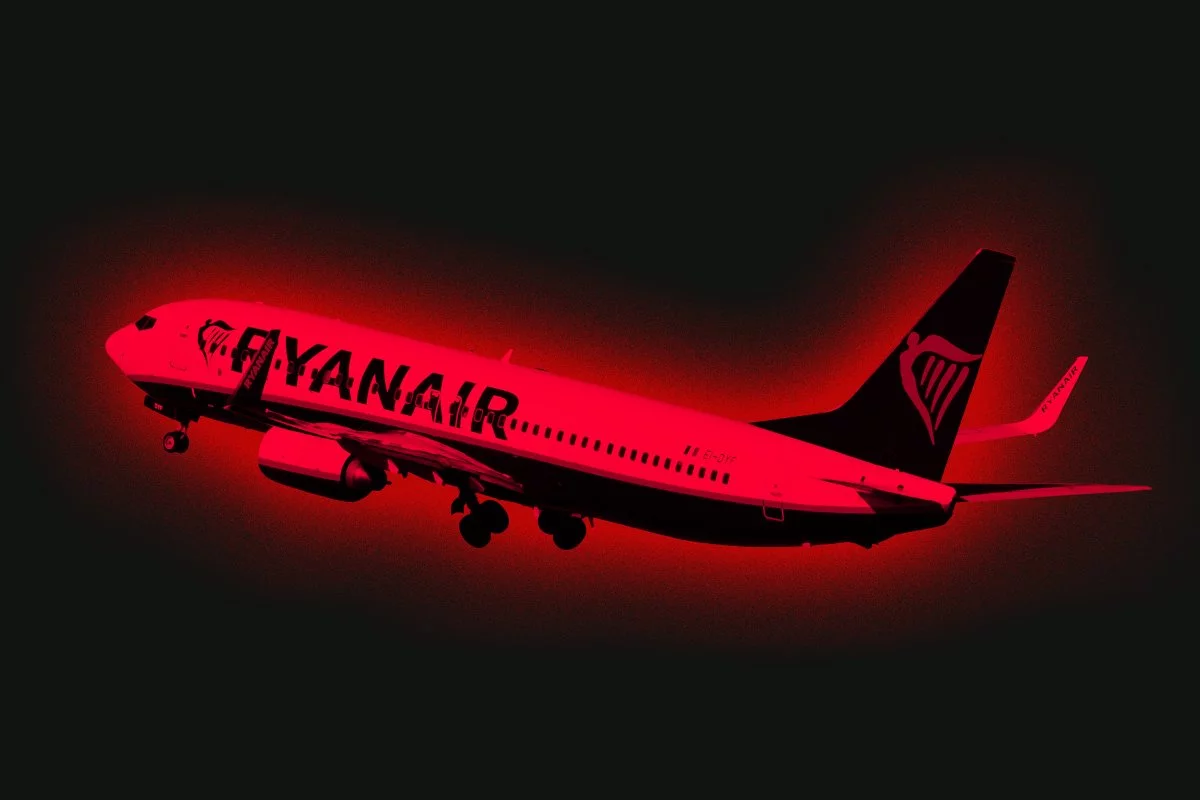

A decompression event that spotlights the thin line between routine operations and structural vulnerability
The Ryanair Boeing 737 Next Generation (737 NG) incident on the Thessaloniki–Memmingen route reads like a stark reminder of aviation’s unforgiving physics: rapid cabin decompression is not merely an uncomfortable anomaly—it is a systems-level stress test that compresses engineering, maintenance discipline, and crisis management into a few violent seconds. According to the account under investigation, engine debris struck the fuselage and compromised a passenger window, dislodging it and triggering a sudden pressure loss. A Serbian passenger was reportedly partially ejected, surviving largely because the seatbelt remained fastened and nearby travelers intervened quickly.
From an airworthiness standpoint, the episode is notable not only for its dramatic human dimension, but for what it implies about impact tolerance, containment assumptions, and aging-airframe resilience. Modern commercial aircraft are designed to withstand a range of bird strikes, hail, and localized impacts, yet the combination of engine-originating debris and a window structural failure suggests a chain of events that regulators and engineers will treat with particular seriousness. The aircraft’s safe return and landing underscores that redundancy and crew training still work as intended—but it also raises the question the industry cannot avoid: how close did this come to a different outcome?
Aging 737 NG fleets, component fatigue, and the next frontier of airworthiness technology
The 737 NG remains one of the most widely operated narrowbody aircraft families in Europe, and many frames are now deep into high-cycle service. That matters because pressurization cycles, vibration, and repeated loading gradually erode structural margins. A window assembly is not just a pane; it is a tightly engineered interface involving fasteners, seals, frames, and surrounding fuselage structure—all of which must remain within tolerance under fluctuating pressure differentials.
This incident also reframes a familiar debate: fleet age is not inherently unsafe, but it increases reliance on inspection quality, parts traceability, and timely replacement. The technical themes likely to dominate the investigation and subsequent industry discussion include:
- Component lifecycle stress and cumulative fatigue: High-utilization short-haul operations accelerate cycle counts, intensifying wear on fuselage interfaces and attachment points.
- Engine debris pathways and containment expectations: If debris can reach and puncture a window area, investigators will scrutinize engine condition, failure mode, and whether protective assumptions held.
- Inspection depth versus inspection frequency: Traditional scheduled checks may miss emerging micro-defects unless paired with advanced non-destructive testing (NDT) and targeted inspection regimes.
- The limits of today’s real-time monitoring: The event highlights the absence of widespread, standardized structural health monitoring for window integrity and localized impact detection.
The forward-looking opportunity—already gaining momentum across the sector—is the shift from calendar-based maintenance toward predictive airworthiness. Airlines and maintenance, repair, and overhaul (MRO) providers are increasingly experimenting with:
- IoT sensor networks for vibration, pressure anomalies, and structural strain
- Digital twins that model fatigue accumulation and forecast risk hotspots
- Machine-learning anomaly detection that flags deviations before they become incidents
- Unified digital maintenance records that reduce latency between field events and fleet-wide corrective action
For Boeing, operators, and regulators, the strategic question is no longer whether these tools work in pilots and prototypes, but how quickly they can be scaled into routine compliance without creating fragmented standards or data silos.
Cost discipline meets safety investment: the operational economics behind the headlines
Ryanair’s business model—like other low-cost carriers—depends on high aircraft utilization, fast turnarounds, and disciplined unit costs. That model has reshaped European aviation, but it also magnifies the tension between operational intensity and the capital required for next-generation inspection and retrofit programs. When a decompression event becomes global news, the cost equation expands beyond maintenance budgets into insurance pricing, regulatory burden, and brand elasticity.
Several second-order effects are likely:
- Insurance and liability pressure: Rapid decompression incidents can elevate perceived risk, influencing premiums for airlines and lessors and increasing scrutiny of maintenance documentation.
- Regulatory response and compliance load: European Aviation Safety Agency (EASA) and national authorities may consider airworthiness directives or expanded inspection guidance—particularly around window assemblies, fuselage attachment points, and engine-related debris risks.
- Schedule reliability and grounding risk: Even targeted inspections can disrupt fleet availability, creating knock-on effects for punctuality, customer satisfaction, and revenue protection.
- MRO market implications: Demand may rise for providers with advanced capabilities in digital NDT, debris-impact forensics, and structural analytics, potentially accelerating consolidation toward tier-one specialists.
This is where the economics become strategic. The airlines that treat advanced inspection and data-driven maintenance as a competitive differentiator—not merely a compliance cost—may reduce unscheduled downtime while strengthening their standing with regulators and passengers alike.
Communication standards and industry trust in the shadow of recent 737 scrutiny
The public narrative around any Boeing 737 incident now unfolds in a landscape shaped by prior crises and heightened sensitivity—particularly after widely reported events such as the Alaska Airlines 737 MAX 9 door-plug blowout in 2024. Even though this Ryanair case involves a 737 NG and a different failure mechanism, the reputational gravity of the broader 737 ecosystem affects how quickly concerns spread and how intensely stakeholders demand transparency.
Ryanair’s measured public posture may be designed to avoid speculation while investigations proceed, but the industry has learned that silence can be interpreted as minimization. In today’s information environment, credibility is built through:
- Prompt acknowledgment of known facts without overreaching beyond verified findings
- Clear passenger support protocols, including medical follow-up and compensation pathways
- Regular investigative updates aligned with regulator guidance
- Demonstrable corrective actions, such as inspection campaigns or procedural changes
Ultimately, the Thessaloniki–Memmingen decompression incident is less a singular anomaly than a signal: as fleets age and utilization remains intense, aviation’s safety advantage will increasingly depend on predictive maintenance maturity, cross-industry data sharing, and communication discipline. The carriers and manufacturers that operationalize those capabilities—at scale, and ahead of mandates—will define the next baseline for trust in short-haul air travel.

 By
By
 By
By

 By
By
 By
By

 By
By
 By
By







