


Google’s AI Search Moment: When a “Best” Recommendation Becomes a Moving Target
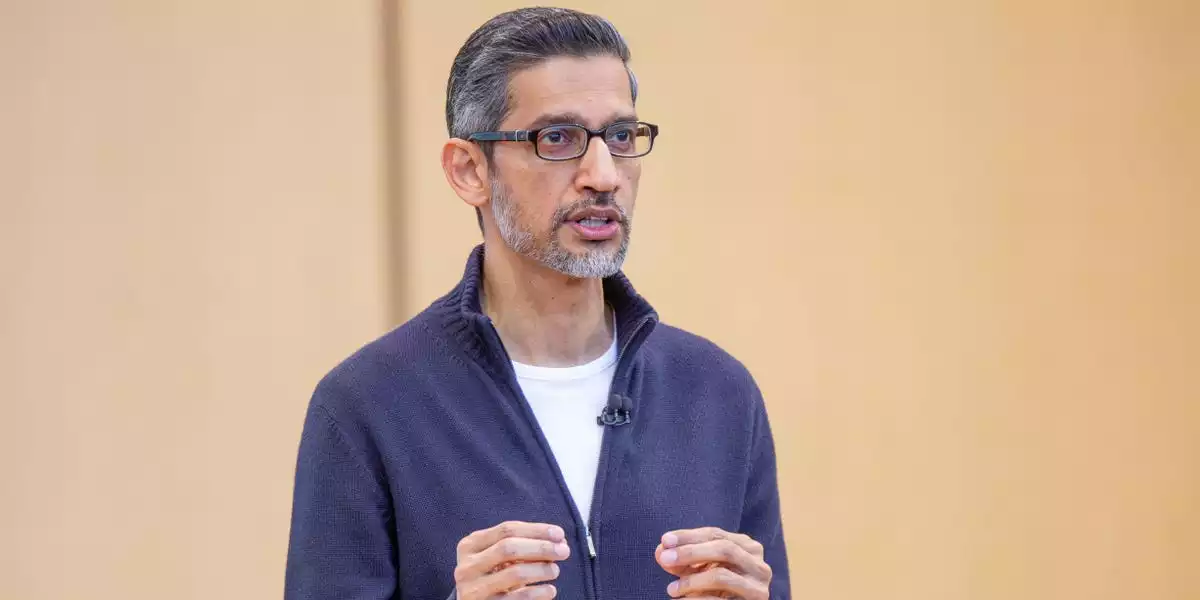
Sundar Pichai’s public admission that Google Search has “scope for improvement” in its AI-driven results is notable not because search quality debates are new, but because the critique now lands on a different surface: the AI Overview, where Google increasingly answers first and links second. The live example—an AI Overview recommending the Acer Chromebook Plus Spin 714 while the top organic result (from Reddit) pointed to a different model—captures the central tension in generative search: a synthesized recommendation can feel like an opinion, even when it is assembled from many sources.
Google’s explanation that personalization signals may drive discrepancies is technically plausible and strategically revealing. Search has long been personalized—location, device, language, prior queries, and inferred intent all shape rankings. But when personalization influences a single, authoritative-sounding summary, the user experience changes. A ranked list implicitly invites comparison; an AI-generated “best choice” can read as a verdict. That shift raises the stakes for accuracy, neutrality, and explainability.
Google’s response—showing more external links within AI Overview—signals an attempt to preserve the web’s connective tissue while still delivering the convenience of an answer. It is also a tacit acknowledgment that trust in AI summaries is partly borrowed from the visibility of sources. In a world where users increasingly skim, the presence, prominence, and diversity of citations become a form of accountability.
The Technical Tightrope: Blending PageRank Logic with Generative Synthesis
Google’s historic advantage has been its ability to rank the web at scale, using link analysis and relevance signals to approximate collective judgment. Generative AI introduces a different capability: compression—turning many pages into a single response. The challenge is that compression can inadvertently introduce:
- Normative framing (“best,” “top,” “recommended”) where the underlying evidence is mixed
- Overconfident phrasing that masks uncertainty or trade-offs
- Source imbalance, where certain communities, retailers, or review formats dominate the training and retrieval signals
- Context loss, where a “best laptop” depends on budget, workload, durability, repairability, or ecosystem preferences
Pichai’s mention of personalization adds another layer. Personalization can increase relevance, but it can also make outcomes harder to audit. Two users may receive different “best” answers for the same query, not because the web changed, but because their profiles did. That is a meaningful departure from the traditional expectation that search is a broadly shared reference point.
The upcoming summer rollout—follow-up query support and “information agents” that autonomously conduct searches—pushes this evolution further. Follow-ups move search toward conversation; agents move it toward delegation. If an agent can browse, compare, and decide what to surface, Google becomes not just an index of the web but an active intermediary shaping what is seen, what is skipped, and what is summarized.
The Open Web Economy Under Pressure: Traffic, Ads, and the Gatekeeper Question
Critics’ concerns about an AI-centric search experience are fundamentally economic. The open web has been financed for decades through a bargain: publishers create content, search engines send traffic, and advertising or subscriptions monetize attention. AI Overviews risk rewriting that bargain by satisfying intent without the click.
For publishers and e-commerce sites, the immediate questions are practical and urgent:
- Will AI Overviews reduce referral traffic for informational queries and product research?
- Will citations in AI summaries meaningfully compensate for fewer clicks?
- How will brands measure performance when the user journey is increasingly contained within the results page?
Advertisers, too, will press for clarity. If AI Overviews become the primary interface, the ad market will demand new inventory definitions and metrics—not just impressions and clicks, but influence within the answer itself. That creates incentives for Google to innovate ad formats that coexist with generative responses, a delicate balancing act given user sensitivity to perceived bias in “recommended” outputs.
At the macro level, this is arriving amid broader economic headwinds and accelerating enterprise AI adoption. Organizations modernizing internal search and knowledge management will watch Google’s consumer experience as a bellwether. If Google can make AI search reliable, auditable, and monetizable at internet scale, it strengthens the case for similar architectures inside companies and public sector institutions. If it cannot, enterprises may favor more controllable, domain-specific systems.
Strategic Implications: SEO Becomes “Answer Optimization,” and Regulation Looms Larger
The near-term playbook for businesses is shifting from classic SEO toward visibility within AI-mediated retrieval. That does not eliminate traditional ranking, but it changes the target: content must be both rankable and summarizable—structured, authoritative, and unambiguous enough to survive compression.
Key moves emerging for brands, publishers, and platforms include:
- Optimize for AI citation and snippet inclusion: clear headings, concise definitions, transparent sourcing, and schema markup
- Design content for follow-up questions: modular pages that anticipate “which one should I buy?” and “why?” sequences
- Diversify acquisition channels: newsletters, communities, direct apps, partnerships, and alternative search ecosystems to reduce single-platform dependency
- Invest in measurement: track “share of answer,” citation frequency, and downstream conversions rather than relying solely on organic clicks
- Engage policy and standards efforts: as personalization, transparency, and competition concerns intensify, regulatory scrutiny will increasingly shape product design
The deeper issue is governance: who gets to be the narrator of the web. AI Overviews and autonomous information agents concentrate interpretive power—deciding not only what ranks, but what is said. Google’s move to include more links is a meaningful signal that it recognizes the legitimacy of the concern. Whether that proves sufficient will depend on how consistently AI Overviews reflect plural sources, disclose uncertainty, and preserve pathways to the broader web.
Pichai’s candid acknowledgment of imperfections reads less like a one-off concession and more like a marker of transition: search is no longer just about finding pages—it is about deciding what the web means on the user’s behalf, and that is a far more consequential promise to get right.

 By
By
 By
By
 By
By


 By
By
 By
By
 By
By







