


Geopolitics, consumer hesitation, and the new “late-booking” summer
Europe’s summer travel market is entering a familiar but newly intensified pattern: demand is not disappearing so much as it is being delayed. The geopolitical uncertainty linked to the Iran war has pushed many holidaymakers into a “wait-and-see” posture, deferring commitments until the perceived risk—whether security, cost, or disruption—becomes clearer. For airlines, this is not a minor behavioral quirk; it reshapes revenue management, staffing, and fleet utilization decisions week by week.
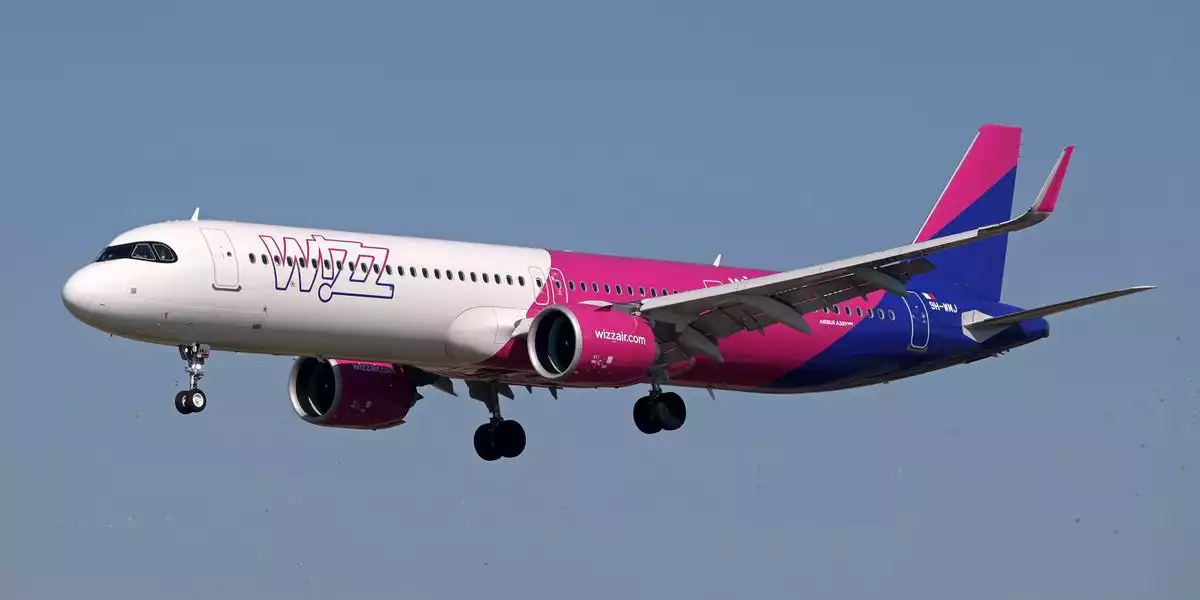
Wizz Air, now widely recognized as Europe’s third-largest low-cost carrier, has signaled that early April bookings softened before showing signs of gradual recovery. That arc matters because it suggests the market is still functioning, but with a shorter planning horizon. The commercial implication is straightforward: airlines must increasingly compete in a world where travelers decide later, compare more aggressively, and expect optionality.
Several forces are reinforcing this “book late, decide soon” dynamic:
- Real-time news cycles that amplify perceived risk and shorten consumer confidence windows
- Price transparency that encourages travelers to monitor fares rather than lock in early
- Travel insurance and flexible booking norms that make postponement feel rational rather than costly
- Geopolitical risk premia that can appear suddenly in fuel prices, routing, and operational reliability
Against this backdrop, Wizz Air’s decision to lean into demand stimulation—rather than retreat—reads as a deliberate bet that price and availability can pull forward hesitant leisure travelers, particularly to stable, high-volume destinations.
Fuel hedging and pricing power: why Wizz is cutting fares while others raise them
The most strategically revealing element in this episode is the contrast between Wizz Air’s fuel-risk posture and the approach seen among some U.S. carriers. While several airlines with limited hedging have moved to raise fares to offset fuel exposure, Wizz is taking the opposite tack: cutting ticket prices to stimulate demand—enabled by the fact that it has hedged roughly 70% of its summer fuel needs.
In airline economics, this is more than a treasury footnote. Fuel is often the single most volatile cost line, and hedging can effectively convert an unpredictable expense into a more stable planning input. That stability can be weaponized commercially:
- Lower fares without immediately destroying margins, because a large portion of fuel costs are locked in
- More confident capacity deployment, since unit economics are less hostage to spot-market spikes
- Stronger competitive signaling, pressuring rivals that must choose between margin protection and market share
Wizz’s posture also highlights a broader industry shift: risk management is becoming a customer-facing capability. When an airline can credibly hold or reduce fares during a shock, it gains a reputational advantage with price-sensitive leisure travelers and can shape booking behavior in its favor.
At the same time, the strategy is not risk-free. Hedging reduces exposure to spikes, but it can also limit benefit if prices fall. The more important point is that Wizz appears to be treating hedging as an integrated component of its commercial system—paired with dynamic pricing and network agility—rather than as a standalone financial instrument.
Network agility and Spain’s pull: reallocating capacity in real time
Operationally, Wizz Air’s emphasis on Spain as a standout destination—and its move to underpin seven new London–Spain routes for the summer—illustrates how low-cost carriers increasingly behave like real-time allocators of aircraft assets. When discretionary leisure demand rebounds faster than other segments, the airline that can redeploy capacity quickly tends to win the season.
This is where modern airline technology and operational design become decisive. Wizz’s willingness to cut base fares amid demand softness suggests a yield-management engine tuned to fast-changing booking curves and sentiment. In practice, that means:
- Dynamic pricing calibrated to elasticity, accepting lower yield per passenger when needed to protect load factors
- Route planning that prioritizes high-volume leisure corridors, where price stimulation can convert hesitation into bookings
- High aircraft utilization discipline, since idle capacity is often more damaging than discounted seats
Spain, in this context, functions as a demand anchor: a destination perceived as accessible, familiar, and resilient in the face of geopolitical noise. For Wizz, shifting aircraft toward such markets is a way to keep the network productive while other routes may experience more pronounced booking delays.
This flexibility is also a reminder that the low-cost model’s advantage is not only cost—it is speed of reallocation. The carrier that can pivot capacity fastest can often smooth volatility that would otherwise show up as empty seats and earnings shocks.
Markets, margins, and credibility: resilience tested under investor scrutiny
Despite carrying 63 million passengers last year and holding more than €2 billion in cash reserves, Wizz Air’s share price is down sharply year-to-date and remains heavily shorted. That divergence—operational scale and liquidity on one side, market pessimism on the other—captures the current investor mood around airlines: high sensitivity to fuel, geopolitics, and earnings volatility.
Wizz has warned of a potential €50 million earnings hit from the conflict, a notable shift versus prior guidance that pointed to up to €25 million in net profit. For equity markets, that kind of swing reinforces the view that airline profitability can be highly dispersive during shocks, even for operators with strong balance sheets.
Meanwhile, the International Energy Agency’s concerns about Europe’s roughly six-week jet-fuel inventory add another layer of uncertainty. Wizz Air’s CEO has dismissed fuel-shortage rumors as media sensationalism—an assertion that may reflect confidence in supply contracts, diversified sourcing, or operational planning. Yet the underlying issue remains: Europe’s aviation system is structurally exposed to energy disruptions, and perception alone can move prices and sentiment.
What emerges is a company attempting to project operational resilience while markets price in macro fragility. If Wizz’s hedging, pricing, and network shifts succeed, it may demonstrate a playbook for navigating intertwined shocks: stimulate demand while insulating costs, pivot capacity toward resilient leisure markets, and use liquidity as a buffer rather than a trophy. The summer season will test whether that model merely contains volatility—or turns uncertainty into a competitive advantage that rivals are forced to chase.

 By
By

 By
By
 By
By
 By
By


 By
By







