

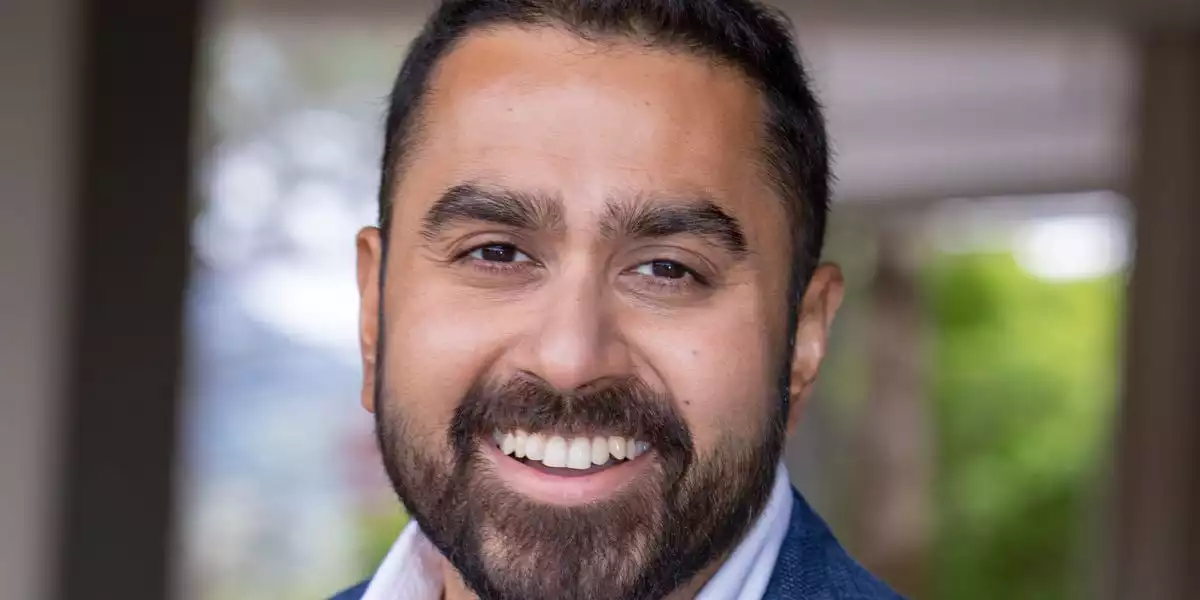

From Nvidia product design to purpose-led entrepreneurship: what the pivot signals
Antons Davis’s transition from a decade in big tech—most recently as a product design lead at Nvidia, with earlier experience at Nokia and eBay—into coaching and entrepreneurship is more than a personal reinvention. It reads as a case study in a widening professional recalibration across the technology sector, where conventional achievement markers (compensation, equity upside, title, stability) are increasingly being weighed against meaning, human connection, and long-term personal agency.
Davis’s story is notable not because it is rare, but because it is becoming legible: a high-performing operator reaches the summit of corporate validation and discovers the view is incomplete. The late-2022 decision to leave a successful track—underwritten by the liquidation of Nvidia equity to create a runway—highlights a pragmatic reality about modern entrepreneurship: many “nontraditional” startups are financed not by venture capital, but by wealth effects created during bull cycles in public markets. That capital conversion becomes a bridge from institutional certainty to the ambiguity of solopreneurship.
The strategic throughline is clear. Davis is not rejecting technology; he is redirecting it toward a domain that has historically resisted scale: human development.
—
Touch of Humane and the return of “social infrastructure” in a hybrid world
Launched in January 2024, Touch of Humane positions itself as an in-person life-coaching studio focused on cultivating empathy, creativity, and interpersonal fluency. That emphasis is timely. The post-pandemic workplace has normalized distributed teams, but it has also exposed what remote efficiency often erodes: the informal, low-stakes interactions that build trust, identity, and psychological safety.
In many organizations, “culture” has been reduced to artifacts—Slack channels, quarterly offsites, engagement surveys—while the daily micro-interactions that sustain belonging have thinned. Davis’s studio model implicitly treats human connection as something that can be designed, not merely hoped for. For employers, this points to a potential new category of partnership: external providers that deliver repeatable, facilitated social experiences as part of leadership development, team effectiveness, or retention strategy.
Key business implications of the in-person studio approach include:
- Experience economy dynamics: Coaching is framed less as remediation and more as an aspirational, skill-building experience—akin to boutique fitness, but for communication and emotional intelligence.
- Soft-skills premium: As AI automates routine cognitive tasks, differentiation shifts toward capabilities that remain stubbornly human: conflict navigation, persuasion, empathy, creativity, and resilience.
- Hybrid-work friction as demand driver: The more work becomes location-agnostic, the more valuable structured, high-quality human interaction becomes—especially for managers and cross-functional leaders.
Touch of Humane also surfaces a subtle organizational truth: people often miss not the company, but the camaraderie—the sense that someone sees them, understands them, and can challenge them constructively. That is a product requirement as much as it is a cultural one.
—
Osmo and the platformization of coaching: AI that scales judgment rather than replacing it
In 2025, Davis extended the thesis with Osmo, an AI-augmented coaching platform designed to systematize and scale the tacit expertise of professional coaches. This is where the story intersects directly with enterprise technology trends: the next wave of AI adoption is increasingly about human-AI collaboration, embedding models into workflows to amplify expert judgment rather than substitute for it.
Osmo’s strategic bet aligns with patterns seen in other professional domains:
- Telemedicine turned episodic care into continuous, data-supported engagement.
- Legal-tech modularized research and drafting while keeping accountability with practitioners.
- HR-tech shifted talent processes from intuition-heavy to instrumented systems.
Coaching has long remained bespoke—high-touch, expensive, and difficult to evaluate. Osmo aims to convert that craft into a platform: repeatable workflows, measurable outcomes, and potentially network effects as more coaches and clients contribute data and patterns.
If executed well, AI-augmented coaching could unlock three enterprise-grade capabilities:
- Codification of tacit know-how: turning what great coaches “just know” into structured prompts, interventions, and learning pathways.
- Operational scalability: enabling a broader population to access coaching-like support without linear increases in headcount.
- Outcome visibility: creating a shared language for progress that can be tracked over time.
This is not merely a product story; it is a reframing of coaching from an artisanal service into a measurable human-capital system.
—
The measurable ROI question—and the governance risks that will define winners
The most consequential battleground for AI-enabled coaching will be measurement. Corporate learning and development budgets are under pressure, and CFOs and CHROs increasingly demand evidence that programs move business outcomes. By translating qualitative growth into quantifiable signals, platforms like Osmo could make coaching legible to procurement and leadership teams accustomed to dashboards and KPIs.
Potential metrics that enterprises may seek include:
- Behavioral change indicators (manager feedback loops, 360 deltas, communication effectiveness)
- Retention and mobility signals (internal movement, attrition risk reduction)
- Performance-linked outcomes (goal attainment, team health measures, productivity proxies)
Yet the same data that enables ROI also introduces governance complexity. AI-driven personal development will intensify scrutiny around:
- Privacy and consent for sensitive self-reflection data
- Bias and fairness in recommendations and benchmarking
- Outcome attribution—what changed because of coaching versus context, management, or workload
- Trust and psychological safety, especially if employer-sponsored coaching is perceived as surveillance-adjacent
The competitive advantage will accrue to platforms that treat ethics and governance as product features, not legal afterthoughts—clear data boundaries, transparent model behavior, and rigorous controls over how insights are shared.
Davis’s arc—from Nvidia equity to a coaching studio to an AI-augmented platform—captures a broader market signal: as automation expands, the premium shifts to the human layer, and the most valuable technologies may be the ones that help people relate, lead, and grow with greater clarity. The next category-defining companies in “wellness tech” and human capital may not be built by outsiders to Silicon Valley, but by veterans who know exactly what scale looks like—and decide to apply it to the inner lives that scale has often neglected.

 By
By
 By
By

 By
By
 By
By
 By
By

 By
By







