



A new map of American “lifestyle value” is taking shape beyond legacy hubs
Emily Hart’s cross-country survey of all 50 states surfaces seven municipalities—Santa Fe, Jackson, Carmel-by-the-Sea, Kennebunkport, Savannah, New Orleans, and Park City—that collectively illustrate a shifting calculus in where people choose to live and, increasingly, where knowledge work can happen. The connective tissue is not a single industry cluster or a traditional downtown skyline. Instead, these places compete on a blend of distinct cultural identity, outdoor access, walkability, and creative vitality, forming an emergent geography of place-based lifestyle value.
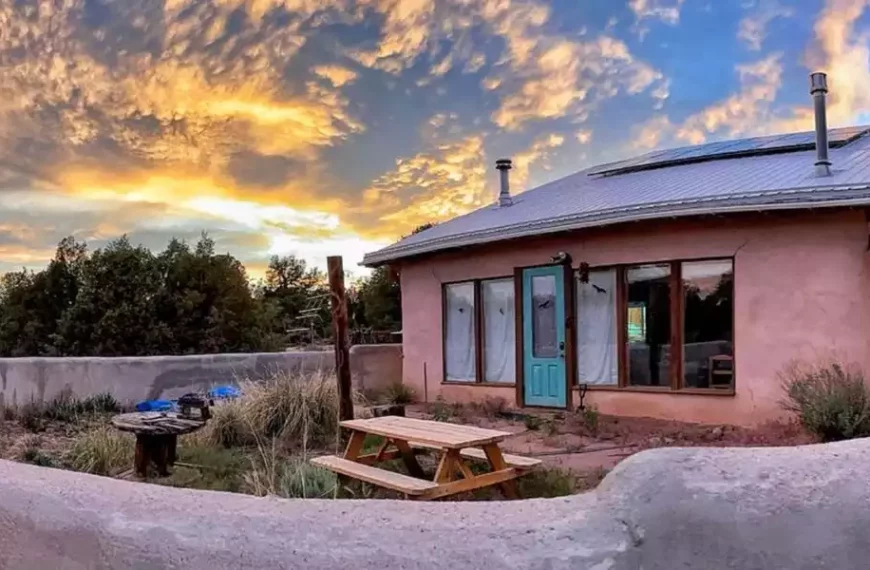
What stands out is how these destinations translate “quality of life” from an abstract preference into a tangible economic proposition. Adobe-lined streets and gallery districts in Santa Fe, the cinematic and festival infrastructure of Park City, and the music-and-heritage engine of New Orleans are not merely amenities; they function as economic flywheels. Meanwhile, the coastal charm of Carmel-by-the-Sea and Kennebunkport, the historic fabric of Savannah, and the mountain vistas of Jackson demonstrate how natural endowments and built character can anchor long-term demand—often with real estate and infrastructure consequences that ripple far beyond tourism.
For business and technology leaders, Hart’s list reads less like a travelogue and more like a signal: talent mobility is increasingly driven by lived experience, and the markets that can package authenticity with connectivity are becoming credible alternatives to traditional urban agglomeration.
Remote work, broadband, and the rise of amenity migration as an economic force
Hart’s ability to evaluate locations primarily through lifestyle—rather than local job density—reflects the maturation of remote-first and hybrid work models. The practical enabler is digital infrastructure: broadband expansion, supported by public funding and private fiber investment, has reduced the coordination costs of distributed teams. As more employers normalize flexibility, the labor market becomes less tethered to headquarters geography, accelerating what many analysts describe as amenity migration—the movement of workers toward places with high experiential value.
In this context, the seven highlighted municipalities share a critical baseline: sufficient connectivity to support full-time telecommuting. That matters because it turns what were once “vacation towns” or “seasonal destinations” into viable year-round nodes for the knowledge economy. The implication is structural:
- Talent attraction and retention increasingly hinge on community identity, outdoor access, and cultural offerings—not only compensation.
- Secondary and tertiary markets can become durable employment centers without hosting major corporate campuses.
- Local policy choices—permitting, infrastructure investment, and housing supply—can determine whether growth is inclusive or exclusionary.
This is not a wholesale replacement of major metros; it is a redistribution of optionality. The more work becomes location-flexible, the more “where to live” becomes a strategic decision for households—and a strategic constraint for employers competing for scarce skills.
Creative economies as durable infrastructure, not just tourism
Several of Hart’s selections underscore how creative-economy clusters can operate as growth levers with spillover effects. Santa Fe’s galleries, New Orleans’ live-music ecosystem, and Park City’s film festival circuit exemplify cultural platforms that extend beyond seasonal visitor spending. When these ecosystems are nurtured, they can generate:
- Ancillary hospitality and services (boutique hotels, culinary ventures, event production, specialized legal and accounting services)
- Entrepreneurial density (studios, maker spaces, digital content production, small-batch manufacturing)
- Brand equity for place that attracts both visitors and long-term residents
Local governments and development agencies are increasingly treating cultural intellectual property—festivals, heritage districts, arts institutions—as a form of economic infrastructure. The playbook often involves public-private partnerships, targeted incentives, and zoning that preserves character while enabling adaptive reuse. For technology firms and investors, these environments can also serve as innovation testbeds: smaller municipalities can pilot community-scale solutions (energy management, mobility platforms, citizen engagement tools) with less friction than large cities.
Yet the same cultural magnetism that drives demand can also strain the very authenticity that makes these places competitive. If growth outpaces governance capacity, creative districts risk becoming curated backdrops rather than living ecosystems—an outcome that can erode long-term differentiation.
The hard constraints: housing inflation, climate risk, and seasonality economics
Hart’s list also highlights the constraints that accompany amenity-rich growth. Jackson and Carmel-by-the-Sea exemplify the supply-demand imbalance common in high-desirability markets: limited land availability, stringent zoning, and preservation priorities can push residential and commercial prices into premium territory. For corporate real estate strategists, this creates a dual challenge—supporting talent preferences while maintaining cost discipline—and encourages more nuanced, tiered location strategies. Markets such as Savannah and Kennebunkport may offer comparatively moderate entry points, but they are not immune to the same pressures if demand accelerates.
Climate resilience is the other non-negotiable. Outdoor-oriented communities face heightened exposure to environmental risk:
- Wildfire and smoke in mountain regions
- Coastal storms and flooding in seaside towns
- Water scarcity and heat stress in the Southwest
For companies, investors, and insurers, site selection increasingly requires environmental risk modeling—wildfire maps, flood projections, and water-stress indices—paired with adaptation commitments such as decentralized energy systems, water recycling, and green-building standards. In amenity markets, resilience is not only about safety; it is about protecting asset value and operational continuity.
Finally, tourism-driven economies—visible in places like New Orleans and Carmel-by-the-Sea—must manage the volatility of seasonality. Here, technology becomes a stabilizer: dynamic pricing, visitor analytics dashboards, and demand forecasting can help businesses align staffing, inventory, and marketing to smooth boom-bust cycles. The municipalities that pair destination branding with data-driven operations will be better positioned to convert visitor interest into sustainable, year-round prosperity.
The deeper takeaway from Hart’s seven-city snapshot is that America’s next phase of growth may be less about where the biggest towers rise and more about where communities can balance connectivity, culture, affordability, and resilience—turning lifestyle into a durable economic asset without pricing out the people who give these places their meaning.
 By
By
 By
By
 By
By
 By
By


 By
By








