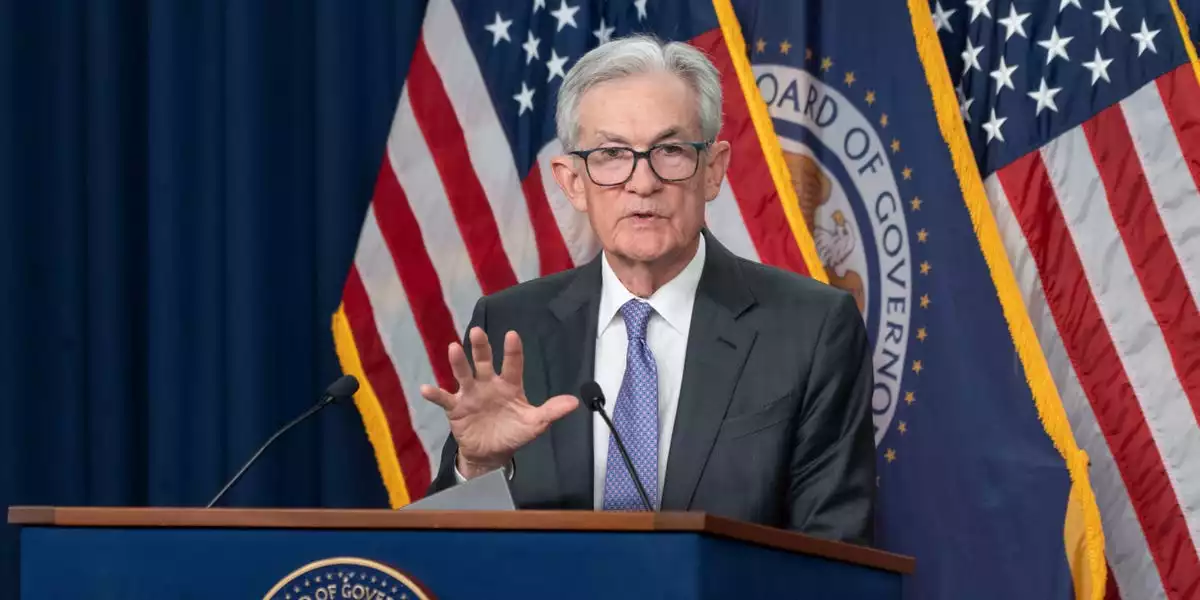

The Federal Reserve’s January 2026 Crossroads: Monetary Policy Meets Political Turbulence
The Federal Reserve’s January 2026 meeting arrives at a moment of rare confluence: economic lethargy, political spectacle, and a recalibration of risk that reaches from Wall Street trading desks to the boardrooms of multinational corporations. The central bank’s expected decision to hold rates steady—ostensibly a technocratic pause—now reverberates far beyond the usual confines of macroeconomic debate, as the specter of political interference and institutional fragility becomes an explicit market variable.
Labor Market Chill and the New Economics of “Growth Without Hires”
The U.S. labor market, long the engine of post-pandemic recovery, has downshifted into what might be called a “low-fire, low-hire” regime. With only 584,000 net new jobs created in 2025—the weakest non-recessionary performance in over two decades—businesses are demonstrating a new preference for margin defense over headcount expansion. This is not simply a cyclical pause; it is an echo of the mid-2010s “jobless growth” era, but with a profound technological twist.
- Consumer demand is stagnating under the weight of persistent shelter, grocery, and healthcare inflation. Wage growth, once a bulwark against rising prices, has decelerated, yet services inflation remains stubbornly sticky.
- Corporate strategy is shifting: automation capex is on the rise, with investments in generative AI, edge analytics, and autonomous logistics supplanting traditional hiring. The result is a labor market that is both cooler and more technologically leveraged, as enterprises seek “growth without hires.”
This dynamic is further complicated by the looming refinancing cliffs for leveraged firms, as borrowing costs remain well above pre-pandemic norms. The timing of any future rate cut—now potentially delayed until mid-2026—has become a tactical lever for CFOs, who must weigh the benefits of deferring major investments against the risk of missing out on favorable supply contracts.
The Politics of Central Banking: Independence as a Market Risk
Rarely has the integrity of the Federal Reserve’s independence been so openly contested. Chair Jerome Powell, facing a Department of Justice perjury probe and overt pressure from the Trump administration as his term nears its end in May, finds his institution’s credibility at the center of both political and financial turbulence.
- DOJ probe risk injects a new form of political-risk premium into U.S. assets. Even the hint of a formal indictment—or a protracted legal battle—could erode global confidence in the Fed, raising the term premium on Treasuries and, by extension, the cost of corporate capital.
- Succession uncertainty looms large. Should Powell depart amid the heat of a presidential campaign, the nomination process risks becoming a partisan battleground, amplifying volatility in rates and currency markets. For multinational CFOs and treasurers, this means scenario planning must now explicitly account for political, not just economic, shocks.
The result is a market environment where Fed independence is no longer an abstract constitutional safeguard, but a quantifiable input into capital-allocation models and FX hedging strategies.
Strategic Capital Flows: Tech’s Ascent, Commodities’ Crosswinds
The interplay between monetary policy, technology investment, and global capital flows is more intricate than ever. The Fed’s static policy rate has stabilized discount-rate assumptions for long-duration tech cash flows, fueling cautious optimism in megacap AI and semiconductor equities—even as more cyclical sectors lag. Yet, the global context is anything but benign.
- Divergent central bank cycles—with the ECB still tightening—have widened the policy gap and buoyed the dollar. But any perceived crack in Fed independence could invert this dynamic, sending capital surging toward emerging-market tech exporters.
- Commodity tailwinds and headwinds are reshaping the competitive landscape. Rising gold and silver prices, a classic haven signal, also inflate input costs for semiconductor packaging and EV batteries. Firms with long-term offtake agreements for critical metals are poised to outperform, while others face margin pressure.
For technology executives, the strategic calculus is clear: delay major capex until financing costs ease, but secure supply contracts now. Meanwhile, the imperative to extract more productivity from existing talent—through AI-driven tools and low-code platforms—has never been stronger.
Executive Playbook: Navigating an Era of Politicized Monetary Policy
The January 2026 Fed meeting, far from a routine policy checkpoint, is a strategic inflection point for business leaders. The convergence of slowing labor growth, sticky inflation, and escalating political risk demands a new level of agility and foresight.
- Balance-sheet resilience requires stress testing for politically driven rate spikes and considering pre-funding capex ahead of possible leadership transitions.
- Portfolio strategy should embrace optionality—structuring deals with contingent value rights tied to post-rate-cut performance, and remaining alert to M&A opportunities as market narratives shift.
- Operating models must accelerate the deployment of productivity-enhancing technologies, anticipating a hiring freeze mentality that could outlast the current rate cycle.
- Regulatory vigilance is essential, as legislative moves to tether the Fed’s mandate more tightly to employment could fundamentally alter the sequencing of future rate moves—and, by extension, the timing of capital allocation.
As the boundaries between monetary policy, politics, and business strategy blur, the most resilient organizations will be those that treat central bank independence as a living, breathing risk factor—one that demands not just attention, but action. In this new era, agility, foresight, and a keen sense for the shifting winds of Washington may prove as valuable as any quarterly earnings beat.

 By
By
 By
By
 By
By
 By
By
 By
By


 By
By