


A commencement stage becomes a referendum on AI’s social contract
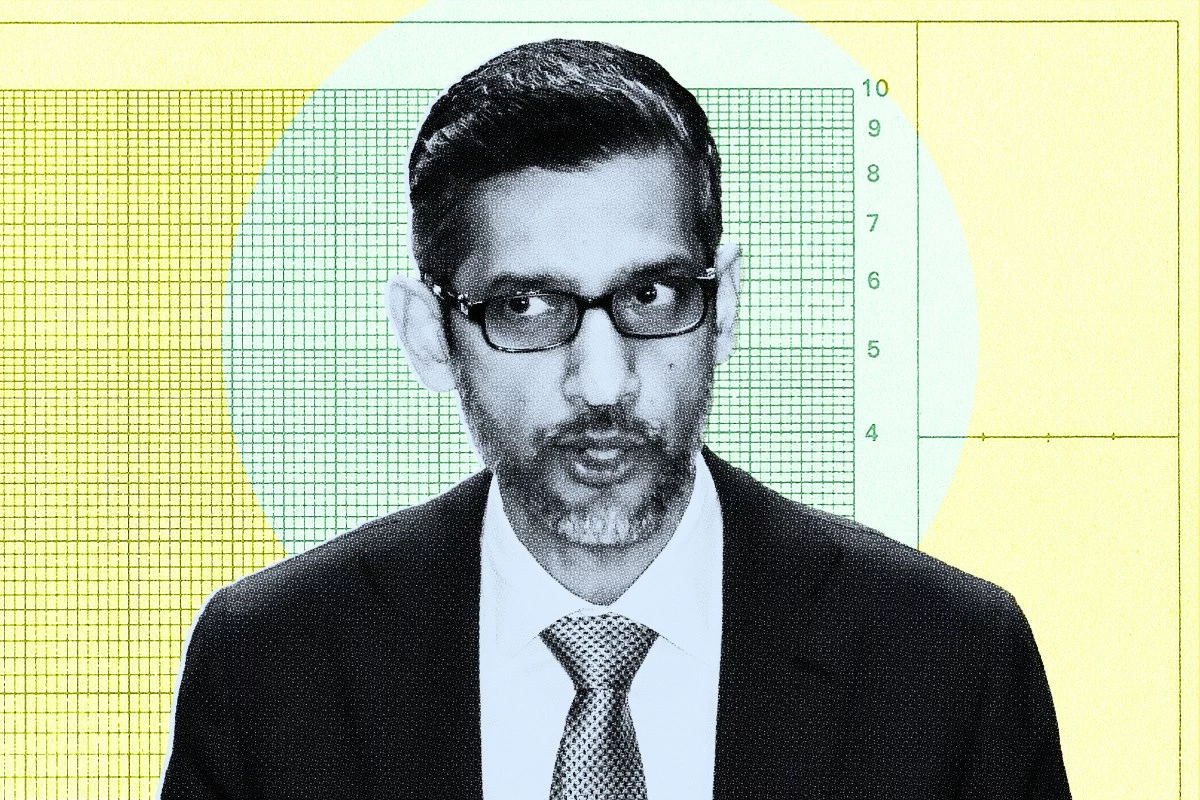
When Google CEO Sundar Pichai steps to the podium for Stanford University’s commencement address, the moment will carry far more weight than the customary rites of academic celebration. Across recent graduation ceremonies, a recognizable pattern has emerged: audible student backlash when speakers pivot to artificial intelligence—boos, jeers, and a visible impatience with what many graduates perceive as rehearsed optimism from the technology sector.
This reaction is not merely performative dissent. It signals a widening gap between AI’s accelerating deployment—from generative models and large language systems to automated decision tools—and the public’s sense that the rules, safeguards, and accountability mechanisms are lagging behind. Commencement audiences, especially at elite institutions, are a concentrated preview of the next decade’s stakeholders: future engineers and founders, policy staffers and regulators, journalists and investors, and employees who will decide which companies deserve their labor and loyalty.
In a recent interview on the “Hard Fork” podcast, Pichai acknowledged the tension while offering broad framing: graduates as both shapers and stewards of the next phase of AI. Yet he declined to preview substantive details of his remarks. That restraint may be tactical—preserving flexibility and avoiding a pre-speech controversy cycle—but it also raises the stakes. In an environment where audiences are primed to detect corporate varnish, vagueness can read as evasion, even when it is simply caution.
Why student skepticism is rising even as AI capability surges
The student response to AI talk at commencements is best understood as a collision between technological inevitability narratives and human-centered anxieties that feel immediate, personal, and under-addressed. For many graduates, AI is not an abstract future; it is already shaping how they learn, how they apply for jobs, and how they imagine their careers will unfold.
Several forces are converging:
- Employment and bargaining power concerns: Graduates entering knowledge-work fields see AI as both a productivity tool and a potential lever for wage compression, deskilling, and job redesign. Even when net employment effects are uncertain, the distributional impact—who gains, who loses, and who absorbs transition costs—feels uneven.
- Identity, authorship, and merit: In academic settings, generative AI blurs boundaries around originality and effort. That ambiguity can translate into broader concerns about what counts as human contribution in an AI-mediated economy.
- Privacy and surveillance spillover: AI’s appetite for data—paired with targeted advertising and platform analytics—reinforces fears that innovation is being financed through extraction of personal information and opaque profiling.
- Trust deficits in Big Tech governance: Students have grown up through repeated cycles of platform harms, from misinformation to data misuse. Against that backdrop, assurances that “we’re being responsible” can sound like a familiar refrain rather than a verifiable commitment.
Commencement speeches, traditionally designed to inspire, now function as a kind of public proof point: a live test of whether a company’s narrative about AI aligns with the lived experience and moral intuitions of a generation that expects clearer lines around ethics, accountability, and power.
Google’s business incentives collide with a tightening regulatory climate
For Google, the AI narrative is not peripheral—it is central to market positioning. The company’s future growth is increasingly tied to AI-enhanced search, cloud AI services, and advertising automation, all unfolding amid intense competitive pressure from Microsoft, Amazon, Meta, and a fast-moving ecosystem of model developers and infrastructure providers. In that context, public sentiment is not just reputational; it is strategic.
At the same time, the regulatory perimeter is hardening. The EU AI Act, U.S. congressional scrutiny, and global debates over intellectual property, training data, and model accountability are converging into a compliance reality that can reshape product timelines and risk calculations. Today’s student skepticism can become tomorrow’s policy momentum—especially because universities are incubators for the very people who will draft rules, staff agencies, and litigate precedent.
This creates a dual exposure:
- Economic exposure: AI is a growth engine, but also a cost center—compute, talent, safety testing, and compliance all scale quickly.
- Legitimacy exposure: Without credible guardrails, AI expansion risks being framed as unilateral deployment rather than shared progress, undermining the social license to operate that large platforms increasingly depend on.
Pichai’s Stanford appearance therefore sits at the intersection of capital markets logic and civic legitimacy. Investors want confidence and momentum; students and regulators want candor, limits, and enforceable responsibility.
The communications challenge: moving from reassurance to verifiable commitments
The most difficult task for a CEO in this setting is to avoid two traps: jargon-heavy triumphalism that triggers backlash, and over-apology that signals a lack of conviction or control. The audience is not necessarily anti-technology; it is increasingly anti-handwaving. What plays well now is specificity—clear trade-offs, measurable actions, and an acknowledgment that AI’s benefits are not automatic.
If Pichai aims to convert skepticism into engagement, the speech will likely need to do more than celebrate innovation. It will need to articulate how Google intends to earn trust in practice. Commitments that tend to resonate in this climate include:
- Transparent model evaluation and audits: Not just internal claims of safety, but repeatable testing standards, third-party assessments, and clearer disclosures about limitations and failure modes.
- Concrete investment in AI literacy and workforce transition: Partnerships with universities for micro-credentials, upskilling pathways, and open educational tooling that give students agency rather than passive exposure.
- Support for independent research ecosystems: Funding structures that protect academic independence—such as ethics fellowships, compute grants with governance safeguards, and public-interest research collaborations.
- A principled stance on data governance and IP: Clearer positions on training data provenance, opt-out mechanisms, and the boundaries of acceptable use—areas where ambiguity fuels distrust.
Stanford’s commencement will be read less as a ceremonial address and more as a signal: whether Google’s leadership can speak about AI in a way that treats the audience as partners in governance rather than recipients of progress. In a year when AI is rewriting competitive dynamics across business and technology, the most valuable currency may not be novelty—it may be credibility, earned in public and backed by actions that can be checked.

 By
By


 By
By
 By
By
 By
By

 By
By







