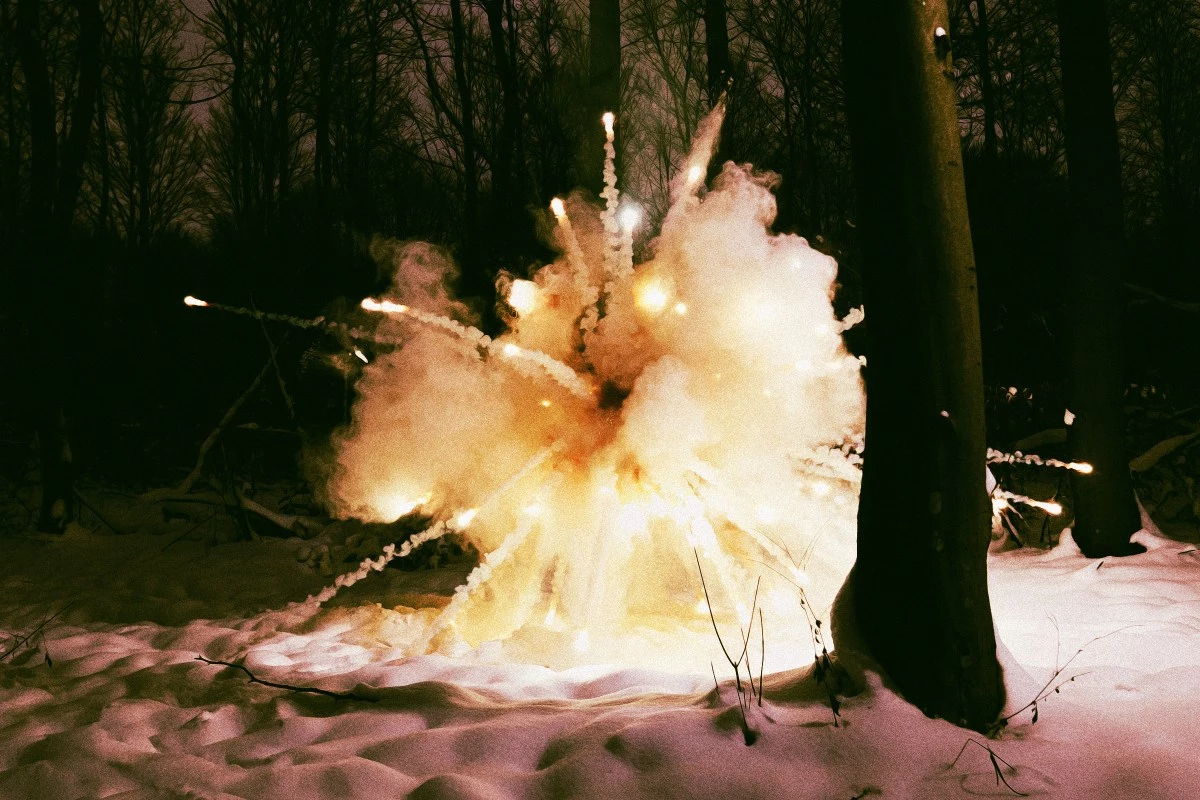

Arctic Extremes and the Unlikely Drama of “Exploding Trees”
As a vast winter storm barrels across the United States east of the Rockies, the nation’s attention is fixed not only on the familiar specters of snowdrifts, icy roads, and power outages, but also on a curiously cinematic hazard: the so-called “exploding trees.” This phenomenon, propelled into the public imagination by meteorology influencer Max Velocity, has ignited a viral discourse—one that blends the arcane with the urgent, and brings to light the intricate interplay of physics, forestry, and digital amplification.
The Science Behind Frost Cracks and Arboreal Catastrophe
At the heart of this spectacle lies a subtle but powerful interplay of thermal and mechanical forces within living wood. When Arctic air descends with ferocity, temperatures can plummet faster than a tree’s ability to conduct heat inward. The result is a dramatic pressure differential: the outer bark contracts and stiffens, while the sap-laden core lags behind, remaining relatively warm and fluid. In certain species—particularly those with high moisture content or ring-porous xylem, such as red oak and silver maple—this can create internal pressures exceeding 30 bar, enough to rupture bark and, in rare cases, split wood fibers with a sound reminiscent of rifle fire.
While the full “explosion” of a tree trunk is exceedingly rare, the more common occurrence is the formation of “frost cracks”—vertical fissures that can shed limbs and, occasionally, compromise the structural integrity of the tree. Forestry datasets, now increasingly sophisticated, allow for localized risk modeling, identifying stands most vulnerable to these rapid freeze events. Such modeling is not merely academic: it underpins the operational strategies of utilities and timber producers alike.
Viral Meteorology and the Challenge of Risk Perception
Yet, in the era of algorithm-driven information, the physical rarity of exploding trees is no barrier to their digital ubiquity. Social platforms, ever attuned to the visually dramatic and the statistically anomalous, have elevated this phenomenon into a trending topic, distorting public risk perception in the process. Emergency managers and utility communicators now face the dual challenge of addressing genuine hazards while countering the amplification of fringe events.
This is not a trivial problem. The viral spread of weather sensationalism can erode public trust, complicate emergency messaging, and even influence consumer behavior. The need for real-time sentiment analytics and authoritative, agile counter-messaging has never been greater. Organizations that can pair authoritative data streams—such as NOAA feeds or proprietary analytics—with rapid, credible communication protocols will be best positioned to shape public understanding and minimize operational friction.
Infrastructure, Markets, and the Economics of Cold
Beneath the social-media spectacle lies a matrix of tangible economic and infrastructural implications. Frost cracks and falling limbs, though individually minor, collectively impose a non-trivial burden on power grids and telecommunications networks, especially in northern service territories. Incremental branch breakage adds to storm-response budgets, while the specter of mass “exploding” events, however improbable, justifies investment in proactive measures.
- Advanced vegetation management—using lidar, drones, and AI-driven risk mapping—now offers utilities a cost-competitive alternative to reactive dispatch.
- Timber and insurance markets face their own volatility: localized salvage operations can tighten lumber supply, while insurers may see a marginal uptick in claims from property damage—claims that, though often below deductibles, aggregate across portfolios.
- Investors would do well to monitor regional lumber futures and the emergence of parametric micro-covers tied to cold-weather indices.
For executives, the lesson is clear: climate volatility is no longer a tail risk but a recurring design constraint. Capital planning for utilities, railroads, and logistics fleets must now incorporate extreme cold as a baseline scenario. The integration of distributed acoustic sensing and IoT accelerometers, already underway in smart-grid initiatives, enables near-instant detection of tree-strike events—turning every frost crack into a data point for resilience.
Navigating the New Landscape of Climate, Data, and Narrative
The “exploding tree” episode is more than a curiosity; it is a microcosm of the broader risk landscape confronting business and society in the climate era. Rare technical hazards, when amplified by high-velocity information networks, can generate outsized economic and reputational consequences. Executives must treat advanced meteorology, data governance, and narrative management as interdependent competencies.
As insurers and regulators sharpen their focus on cold-weather perils, and as public appetite for influencer-mediated weather content continues unabated, organizations that invest in real-time analytics, authoritative communication, and adaptive infrastructure will define the next frontier of operational resilience. In this new climate, the boundaries between science, technology, and narrative are not just blurred—they are the very terrain on which strategy must be built.

 By
By
 By
By

 By
By
 By
By

 By
By
 By
By