

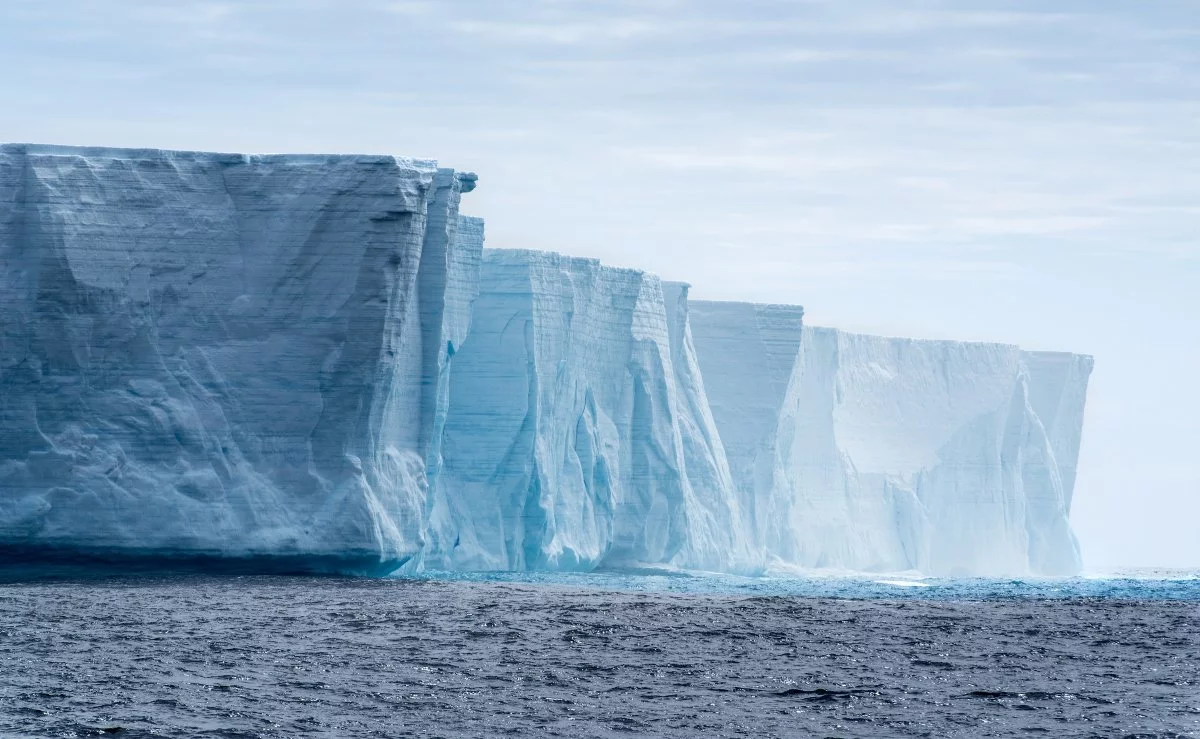

A New Era of Climate Intelligence: The Thwaites Glacier Mission and Its Far-Reaching Impacts
As a multidisciplinary team sets sail from New Zealand toward the forbidding expanse of the Thwaites Glacier—ominously dubbed the “Doomsday Glacier”—the world stands at the threshold of a profound reckoning. This is not merely a scientific expedition; it is an urgent, high-stakes probe into the mechanics of planetary change, with implications that ripple through global finance, infrastructure, and geopolitics. The mission’s innovative fusion of glaciology, edge computing, and biosensing technology signals a paradigm shift in how humanity confronts the accelerating realities of sea-level rise.
Seal-Borne Sensors and the Internet of Animals: Redefining Data Collection at the Edge
At the heart of this expedition lies an audacious experiment: leveraging wild seals as living, self-guided data collectors. Outfitted with cutting-edge sensor arrays, these marine mammals traverse treacherous waters beneath the glacier’s floating tongue—zones that have long defied access by autonomous underwater vehicles or human divers. This approach transforms the seals into nodes of a nascent “Internet of Animals,” a distributed, self-navigating network that dramatically expands the reach of scientific observation.
- Precision and Coverage: The volume and granularity of data harvested by these bio-assets rival, and in some cases surpass, what traditional robotic platforms can achieve. The result is a leap in both the speed and reliability of climate model validation—a process that has historically lagged behind the pace of environmental change.
- Technological Spillover: The seal-sensor model exemplifies a broader trend toward “symbiotic sensing,” where nature itself becomes an active partner in environmental monitoring. This could catalyze new applications across agritech, supply-chain provenance, and even urban infrastructure, as industries seek cost-effective, distributed sensing networks.
The mission’s operational backbone draws inspiration from agile software development, with glaciologists deploying rapid prototyping, continuous iteration, and layered contingency strategies. Advances in satellite uplink bandwidth and edge analytics allow for near-instantaneous pivots in research focus—capabilities with direct analogues in offshore energy, mining, and disaster response.
Global Finance on the Floodplain: Economic and Strategic Stakes of a Melting Glacier
The consequences of Thwaites’ accelerated melt are not confined to the Antarctic. Should the glacier’s retreat continue unchecked, the resulting two feet of sea-level rise would fundamentally alter the risk calculus for nearly $15 trillion in global coastal real estate and port infrastructure. A more extreme, yet plausible, scenario—collapse of the West Antarctic Ice Sheet—would render swathes of megacities like Mumbai, Shanghai, and New York uninsurable and force a wholesale reevaluation of sovereign credit ratings for low-lying nations.
- Insurance and Capital Markets: Insurers and reinsurers are already tightening flood-risk exclusions and raising capital reserve requirements. This will inevitably drive up premiums, with knock-on effects for municipal bond yields and commercial lending.
- Supply Chain Realignment: Over 80 free-trade zones and manufacturing hubs sit within one meter of current sea level. Rising waters will accelerate the reshoring and near-shoring trends, as companies seek to safeguard logistics against climate shocks.
- Data-Driven Compliance: The demand for high-resolution cryospheric data is spurring a new wave of climate-intelligence SaaS offerings and M&A activity among satellite analytics and risk-modeling firms. Regulatory bodies, from the SEC to EIOPA, are drafting disclosure rules that hinge on the fidelity of such datasets, binding scientific frontiers ever more tightly to corporate governance.
From Antarctic Proving Grounds to Boardroom Strategy: Translating Science into Resilience
The Thwaites mission serves as a crucible for technologies and business models that may soon define the climate-resilient enterprise. Hybrid power systems, low-temperature battery chemistries, and autonomous navigation platforms—tested under polar extremes—are likely to find their way into lunar logistics and other frontier markets. Meanwhile, intellectual property portfolios covering extreme-environment electronics and anti-biofouling materials may see a surge in strategic value as demand for polar-ready solutions grows.
For decision-makers, the message is clear: scenario-based capital planning, strategic R&D alignment, and proactive stakeholder communication are no longer optional. Stress-testing asset portfolios against multiple sea-level rise increments, investing in ruggedized sensor platforms, and mapping supply-chain vulnerabilities are now essential disciplines. The ability to monetize proprietary climate data or secure exclusive access to emerging cryospheric monitoring networks could become a decisive competitive edge.
The Thwaites Glacier expedition is not simply a voyage into the unknown; it is a real-time rehearsal for the economic, technological, and policy adaptations that a warming world will demand. Those who heed its early warnings—and act—will shape the contours of resilience and opportunity in the decades ahead.

 By
By
 By
By
 By
By
 By
By
 By
By

 By
By








