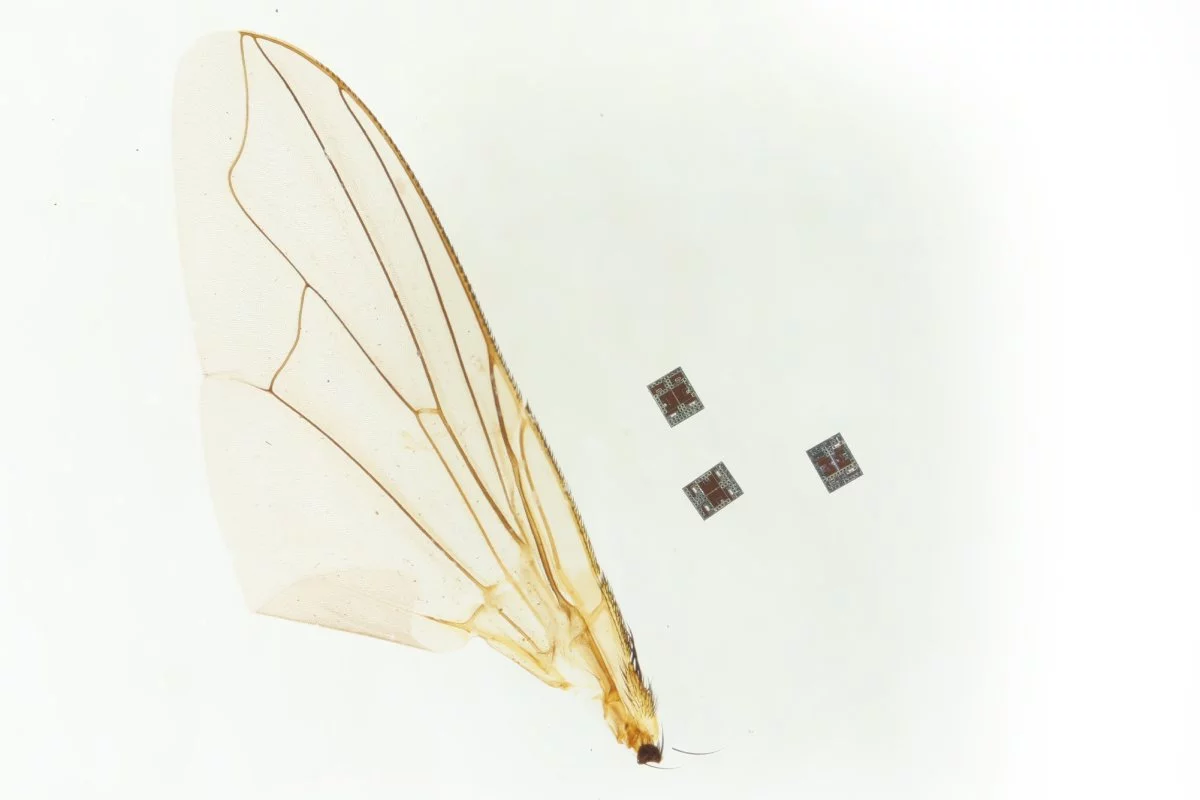

The Dawn of Autonomous Microrobots: Engineering Intelligence at the Salt-Grain Scale
In a laboratory at the intersection of the University of Pennsylvania and the University of Michigan, a team of researchers has quietly rewritten the boundaries of autonomy. Their creation—a microrobot scarcely larger than a grain of table salt—embodies a convergence of computation, sensing, actuation, energy harvesting, and bidirectional communication, all within a sub-millimeter footprint. This is not merely a feat of miniaturization; it is an audacious step toward the long-envisioned world of “smart dust,” where intelligence permeates the invisible.
Integrated Autonomy: A New Playbook for Miniaturization
The device’s architecture is a marvel of systems integration. Unlike earlier microrobots, which relied on external tethers or passive mechanisms, this prototype achieves true autonomy by unifying:
- Heterogeneous System-on-Chip Design: Sensor arrays, a primitive CPU, memory, and motor drivers are co-fabricated using mature CMOS processes. This pragmatic approach sidesteps the uncertainties of exotic nanotechnology, leveraging existing semiconductor infrastructure for scalability.
- On-Die Photovoltaics: The robot draws power from integrated solar cells, liberating it from the coils and wires that have historically constrained microrobotics. This energy autarky is a decisive break from the past.
- Bio-Compatible Packaging: Advanced glass passivation, borrowed from wafer-level encapsulation, ensures durability in biological environments—a nod to the device’s potential for in-vivo applications.
The true innovation lies not in any single component, but in the orchestration of these elements into a coherent, self-sufficient system. It is a playbook reminiscent of the smartphone revolution, where disparate technologies fused to create new markets and behaviors.
Strategic and Economic Ripples: Redefining Market Boundaries
The implications of this microrobotic leap extend far beyond the laboratory. By bridging the gap between passive microstructures and intelligent, mobile machines, the platform unlocks a spectrum of applications poised to disrupt established industries.
Expanding the Total Addressable Market
- Medical Micro-Intervention: Imagine targeted drug delivery, micro-biopsies, and localized electro-stimulation—all performed by autonomous agents within the human body. Such capabilities could shift billions in healthcare spending from inpatient to outpatient settings, fundamentally altering procedure economics.
- Precision Manufacturing and Inspection: Autonomous microrobots could traverse the innards of semiconductor fabrication tools, turbines, or chemical reactors, enabling maintenance and inspection at a scale previously unimaginable.
- Dual-Use Sensing: Swarms of “smart dust” for intelligence, surveillance, and environmental remediation introduce both opportunities and regulatory complexities, with implications for defense and critical infrastructure.
Supply Chain and Corporate Strategy
- Advanced Packaging and Materials: The demand for wafer-level 3D integration, specialty metals, and medical-grade encapsulation is set to ripple through the supply chain, aligning with the capital expenditure roadmaps of leading foundries and materials suppliers.
- Edge-AI and IP Cores: As compute budgets shrink to microwatt levels, startups specializing in ultra-low-power inference engines become prime acquisition targets.
- Strategic Positioning: Med-tech giants and pharmaceutical firms must now contemplate buy-or-partner strategies, while cloud and telecom providers can extend their orchestration platforms into the realm of microrobotic telemetry.
Industry Currents and Macroeconomic Undercurrents
This microrobotic breakthrough arrives at a pivotal moment for the semiconductor industry. As the relentless pace of Moore’s Law slows, the focus shifts to “More-than-Moore”—where heterogeneous integration and system-level innovation drive value. Microrobots exemplify this trend, extracting exponential utility from incremental advances in node technology.
Addressing Labor and Healthcare Pressures
Autonomous in-vivo robotics offer a technological response to the global shortage of skilled clinicians and the ballooning costs of chronic disease management. By automating diagnostics and interventions at the cellular level, these devices align with the incentives of payors seeking outcome-based reimbursement models.
Geopolitical and Ethical Dimensions
As with other frontier technologies, sub-millimeter robotics intersect with export controls and dual-use policy. The strategic significance of microrobot swarms will not be lost on regulators, echoing recent debates over AI chip exports. Meanwhile, questions of sustainability, bioethics, and patient consent will ascend to boardroom agendas, particularly as “internal IoT” devices become a reality.
Charting the Road Ahead: From Prototype to Platform Shift
The next 18 to 36 months will be decisive. Research will pivot toward mesh networking among microrobots, enabling collective behaviors and emergent intelligence. On-chip machine learning—albeit in primitive forms—will enhance context awareness at microwatt power budgets. Regulatory sandboxes, akin to the FAA’s drone corridors, will emerge as proving grounds for clinical adoption.
For industry leaders, the imperative is clear:
- Audit product portfolios for cannibalization or complementarity as microrobots approach commercial viability.
- File cross-domain patents that preemptively stake claims at the intersection of MEMS, AI, and bio-compatible materials.
- Invest strategically in academic spin-outs and early-stage ventures, where valuations remain attractive relative to the overheated AI sector.
- Plan for supply chain resilience, including rare-metal sourcing and end-of-life recycling protocols.
The arrival of autonomous microrobots at the sub-millimeter scale signals a platform shift as profound as the integrated circuit. Those who recognize its potential—and act with foresight—stand to shape the contours of healthcare, manufacturing, and data collection for decades to come. The micron frontier, once a domain of science fiction, is now a canvas for strategic vision.

 By
By
 By
By
 By
By
 By
By

 By
By