

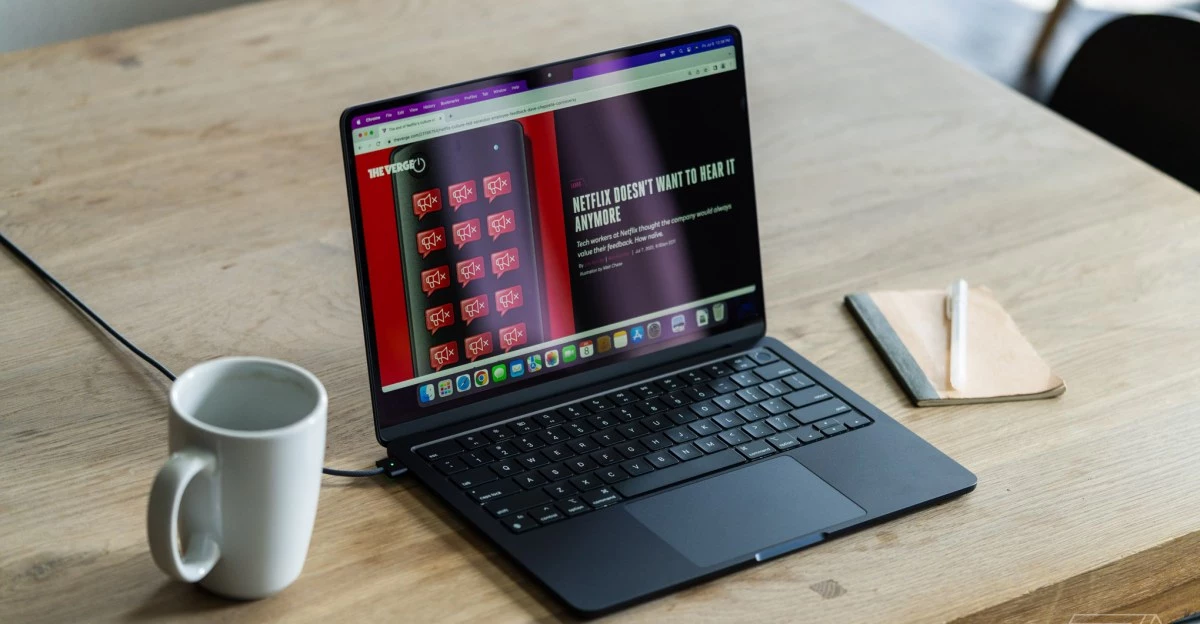

Apple’s M2 MacBook Air Discount: A Calculated Play in a Shifting Silicon Landscape
The $599 Cyber Monday promotion for Apple’s 13-inch M2 MacBook Air, just a hair above the outgoing M1’s clearance price, is more than a seasonal enticement. It is a strategic maneuver, orchestrated primarily through Best Buy, that signals a recalibration of Apple’s channel posture and a broader inflection point in the personal computing industry. The move invites scrutiny not only for its aggressive pricing—ushering Apple Silicon into the sub-$600 tier for the first time—but also for the nuanced signals it sends across the technology and retail ecosystem.
ARM Ascendant: Technology and Design in the Spotlight
Apple’s decision to discount, rather than discontinue, the M2 MacBook Air is a deliberate endorsement of ARM’s growing dominance in the mainstream laptop market. Even as Qualcomm’s Snapdragon X Elite and Microsoft’s Windows on ARM initiatives gather momentum, Apple’s two-year-old silicon continues to outperform most x86-based competitors in the same price band. The M2 Air’s technical profile—16 GB of RAM, a modernized display, and a fan-less, whisper-quiet chassis—showcases the advantages of Apple’s vertically integrated approach.
Yet, the device’s limitations are equally instructive. The single-monitor cap, a subtle but effective segmentation tactic, preserves Apple’s upsell path to the 14-inch Pro and newer M3/M4 Airs. Meanwhile, the fan-less thermal envelope, while a marvel of industrial design, imposes throttling under sustained workloads—a trade-off that OEMs eyeing passive-cooling solutions must weigh carefully.
Key technological takeaways:
- ARM’s mainstream validation: The M2’s performance at this price point cements ARM’s viability beyond mobile and into productivity laptops.
- Thermal and I/O trade-offs: Apple’s design choices set benchmarks—and boundaries—for thin-and-light notebook engineering.
- Strategic segmentation: By reserving certain features for higher tiers, Apple maintains clear differentiation across its lineup.
Economic Undercurrents: Inventory, Channel Strategy, and Deflationary Winds
Beneath the surface of this holiday promotion lies a sophisticated channel-clearing operation. By routing discounts through third-party retailers like Best Buy, Apple preserves its premium brand aura in its own stores while supporting partners’ traffic and attach-rate goals. This tactic likely leverages existing co-op marketing funds, minimizing direct margin erosion for Cupertino.
The sub-$600 price point is more than a psychological threshold—it is a test of market elasticity. Apple is probing demand from cost-sensitive switchers, households deferring upgrades, and emerging markets, all against the backdrop of a PC sector still digesting the overstock hangover from pandemic-era supply chain disruptions. The willingness to participate in such steep discounting, historically rare for Apple, points to elevated channel inventory and a broader industry-wide recalibration.
Economic and channel dynamics at play:
- Inventory management: Tactical discounting helps unwind excess stock without diluting Apple’s direct-to-consumer pricing power.
- Market elasticity: The promotion gauges latent demand, informing volume planning for future entry-level devices.
- Deflationary signals: Apple’s participation in sector-wide discounting underscores the persistent softness in consumer hardware demand.
Competitive Ripples and the Looming AI PC Cycle
At $599, the M2 MacBook Air encroaches on territory once dominated by premium Chromebooks and mid-range Windows laptops, applying pressure to Google’s OEM partners and Microsoft’s Surface Laptop Go line. This price compression is not merely a response to inventory pressures; it is also a prelude to a new competitive epoch. With Intel’s Meteor Lake and AMD’s Hawk Point heralding the “AI PC” era, Apple’s repositioning of the M2 clears the runway for an anticipated M4 refresh, rumored to bring a more powerful Neural Engine and on-device AI capabilities.
The extended commercial life of the M2 platform also dovetails with Apple’s sustainability narrative, reinforcing its circular-economy credentials at a time when the industry faces mounting scrutiny over e-waste and rapid refresh cycles.
Strategic implications for stakeholders:
- CIOs and procurement leads: The discounted M2 Air offers an ARM-based pilot platform, but monitor and management tooling limitations must be considered.
- Component suppliers: Accelerated sell-through will influence future orders for advanced silicon nodes.
- Retailers: Exclusive promotions drive foot traffic and service attach rates, but may spark demands for parity from competing OEMs.
- Competing OEMs: The window to differentiate Windows-on-ARM offerings is narrowing, with margin pressures likely to intensify.
As the PC industry braces for an AI-centric cycle, Apple’s tactical discounting of the M2 Air serves as both a clearing mechanism and a strategic feint—broadening its addressable base, reinforcing ARM’s ascendancy, and setting the stage for the next wave of innovation. For industry leaders, the lesson is clear: those who read these signals astutely will shape the contours of the coming hardware and AI landscape.

 By
By
 By
By
 By
By
 By
By

 By
By
 By
By







