

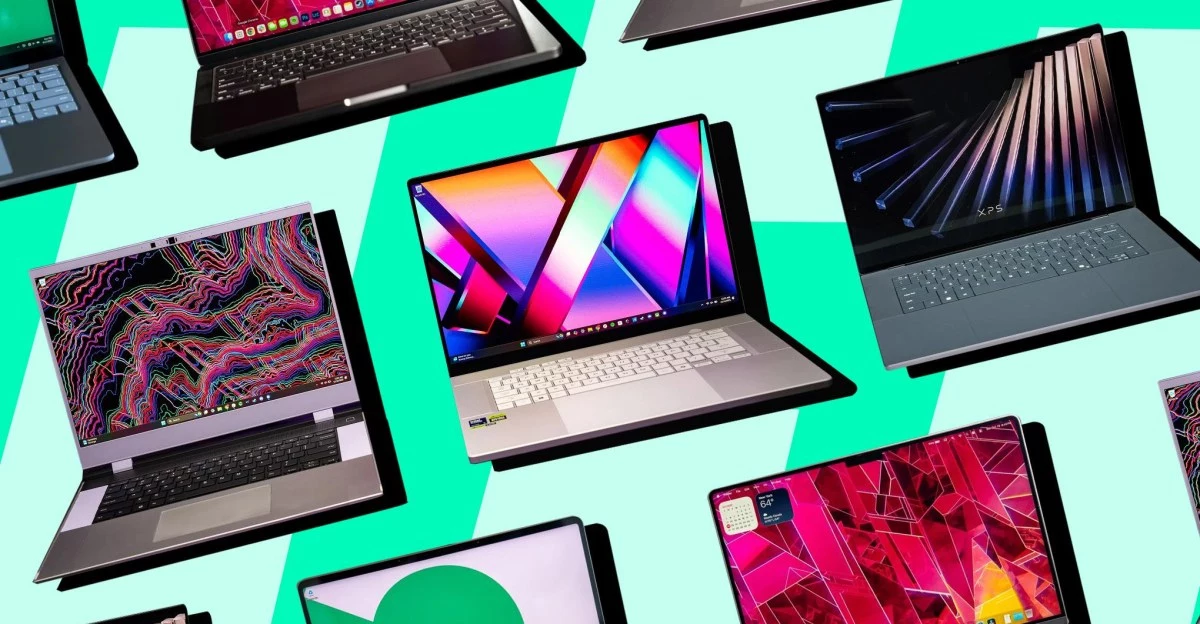

Apple’s M5 MacBook Air and the new baseline for everyday computing
The latest portable computing survey places Apple’s 2026 MacBook Air (M5) at the top for general-purpose use—an outcome that says as much about industry direction as it does about one product. The Air’s appeal is framed around a familiar triad: balanced performance, long battery life, and high-quality display output. But the deeper signal is structural: Apple’s M-series cadence has normalized a world where performance-per-watt is no longer a niche metric for ultraportables—it is the benchmark against which mainstream laptops are judged.
This matters because the MacBook Air is not positioned as a specialist machine. It is the archetypal “default laptop,” and when that category is led by an ARM-based system-on-chip (SoC) with tight hardware-software integration, it forces the rest of the market to compete on Apple’s terms: efficiency, thermals, and integrated acceleration (CPU/GPU/NPU) rather than raw peak power alone.
Key implications for buyers and vendors are already visible:
- Cooling and chassis design become strategic differentiators when efficiency is the goal, not just brute-force performance.
- Integrated accelerators (notably neural engines/NPUs) increasingly shape perceived speed in real workflows—video calls, transcription, photo enhancement, and on-device AI.
- Ecosystem cohesion (OS optimization, app readiness, battery management) becomes a competitive moat, not a marketing footnote.
Windows OEMs, ARM momentum, and the pressure to deliver “native-grade” experiences
The report’s broader device spectrum—especially the continued relevance of Microsoft Surface Laptop/Surface Pro for Windows-centric professionals—highlights a market reality: many organizations still run on Windows workflows, compliance requirements, and management stacks. Yet Apple’s M5-era efficiency puts pressure on Windows OEMs and platform partners to accelerate the transition from “ARM-capable” to ARM-excellent.
The strategic challenge is twofold:
- Software compatibility and performance consistency: Enterprises and power users will not tolerate uneven emulation performance or edge-case driver issues.
- Silicon strategy and differentiation: If OEMs rely on broadly similar components without deep platform optimization, they risk commoditization—competing primarily on price, screen size, and industrial design.
This is where Microsoft’s Surface line sits in a delicate position. Surface devices often represent the “ideal” Windows hardware experience, but the survey’s framing suggests that total cost of ownership (TCO) is becoming more decisive than MSRP alone. Premium design is valuable, but it must translate into measurable outcomes: battery durability over years, fewer IT support incidents, and predictable performance under hybrid work conditions.
For enterprise IT and procurement leaders, the practical takeaway is to evaluate Windows laptops less by headline specs and more by:
- Battery health and longevity under real usage (video conferencing, browser-heavy workflows, security agents)
- Thermal behavior and sustained performance (not just short benchmark bursts)
- Manageability and security posture aligned to endpoint standards
- Application readiness for ARM transitions where applicable
Segmentation sharpens: budget funnels, creative workhorses, and gaming’s thermal ceiling
One of the report’s most commercially important observations is that “best laptop” has become a segmented statement. The market is increasingly bifurcated into generalists and domain-optimized machines, with pricing and workload specificity acting as the sorting mechanism.
On the value end, devices like the MacBook Neo and entry Chromebooks represent more than budget options—they are ecosystem on-ramps. Education and first-time buyers are highly price sensitive, and vendors treat these devices as long-term customer acquisition plays tied to services and platforms (e.g., Apple Education, Google Workspace). As supply chains stabilize compared to pandemic-era volatility, tiered lineups become a way to anchor customers early and expand them upward over time.
At the specialist end, the survey reinforces two distinct poles:
- Creative professionals: The MacBook Pro 14 is positioned as a targeted tool for color grading, 3D, and AI-assisted media workflows—where sustained performance, calibrated displays, and efficient accelerators matter as much as portability.
- Gaming enthusiasts: Systems like Asus ROG and Lenovo Legion continue to chase discrete GPU leadership, but remain constrained by the physics of heat and weight. The category’s innovation is real, yet it underscores a persistent trade-off: top-tier gaming performance still demands bulkier thermals and power budgets than ultraportables can accommodate.
For buyers, segmentation is now the rational path, not a compromise. The most “future-proof” choice is often the one that matches the workload profile precisely—because overbuying performance can mean carrying unnecessary weight and paying for unused capability, while underbuying can lock users into slowdowns that compound over a device’s lifecycle.
Dual screens, modularity, and ESG-driven procurement: the next competitive battleground
Beyond silicon, the report points to form factor and lifecycle innovation as emerging differentiators. Devices like the Asus Zenbook Duo signal a productivity thesis: for many knowledge workers, screen real estate can be as valuable as CPU gains. Dual-screen and convertible designs cater to parallel workflows—research plus writing, code plus documentation, dashboards plus communication—where context switching is the true productivity tax.
Even more strategically disruptive is the Framework Laptop 13 and its modular ethos. Repairability and upgrade paths are moving from enthusiast talking points to procurement criteria, driven by:
- Right-to-repair momentum and regulatory scrutiny
- E-waste reduction targets and corporate ESG reporting
- The desire to extend refresh cycles and amortize IT spend
This reframes competition around lifecycle value. A laptop’s differentiator may increasingly be its upgrade roadmap, parts availability, warranty structure, and supply-chain transparency—not only its launch-day benchmarks.
Taken together, the survey reads less like a single winner’s podium and more like a map of where portable computing is headed: ARM efficiency as the mainstream expectation, AI-ready client hardware as the next baseline, and sustainability-linked lifecycle design as a procurement lever. In that environment, the smartest purchase is rarely the most powerful machine—it is the one whose strengths align cleanly with how people actually work, create, and manage fleets at scale.

 By
By
 By
By
 By
By
 By
By


 By
By
 By
By







