
The “overrated” list as a signal: why marquee attractions are losing their monopoly on meaning
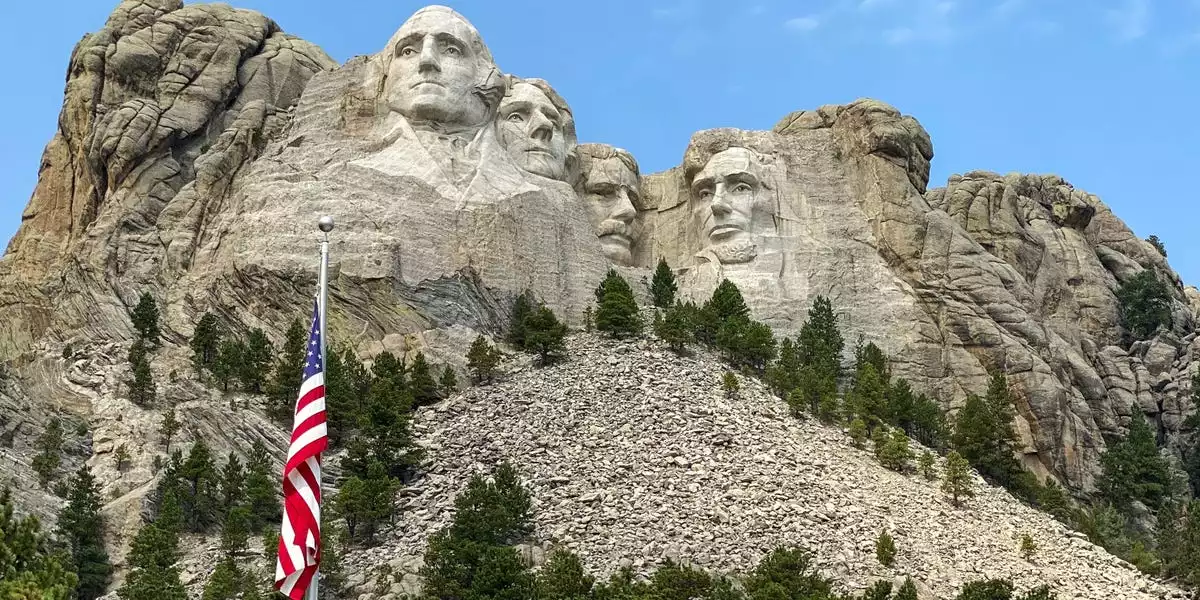
Emily Hart’s critique of iconic U.S. tourist stops—the Las Vegas Strip, Four Corners Monument, Mount Rushmore, Bourbon Street, Times Square, the Southernmost Point in Key West, and Salem’s Halloween crush—lands as more than a seasoned traveler’s hot take. It reads like a field report from a travel economy in transition, where the value of a destination is increasingly measured not by recognizability, but by felt experience.
Across the industry, the post-pandemic traveler has been drifting away from “checklist tourism” toward what could be called an authenticity premium: a willingness to invest time and money in experiences that deliver texture—local stories, craft, nature, and neighborhood specificity. Hart’s framing is careful: she doesn’t deny the appeal of these places; she argues that the experience often underdelivers relative to the hype, especially when crowds, commercialization, and photo-driven itineraries flatten what should be culturally distinct.
Her suggested alternatives—Fremont Street and Red Rock Canyon over the Strip, Monument Valley over Four Corners, Crazy Horse Memorial and Custer State Park near Mount Rushmore, Frenchmen Street over Bourbon Street, and “hidden gem” New York neighborhoods beyond Times Square—underscore a consistent pattern: travelers are seeking adjacent authenticity, not necessarily obscure destinations, but places close enough to be accessible while still offering a stronger sense of place.
—
Attention economics meets tourism: how social platforms reprice destinations in real time
Hart’s list also illustrates how the travel market is now shaped by the attention economy. In earlier eras, destination demand was anchored by guidebooks, tour operators, and civic marketing. Today, it is increasingly recalibrated by influencers, creators, and high-velocity user-generated content—including content that explicitly labels attractions “overrated.”
This matters because “overrated” is not merely an opinion; it can function as a demand-routing mechanism:
- Foot traffic can shift quickly from legacy hotspots to nearby districts that better match emerging preferences (food culture, live music, local art, outdoor access).
- Local revenue distribution changes when visitors spend less time in the most commercial corridors and more time in neighborhoods with independent operators.
- Reputation becomes dynamic, shaped by short-form video, review platforms, and algorithmic amplification rather than long-term brand equity alone.
For destination marketers and city planners, the strategic asset is no longer just a skyline photo or a slogan—it’s real-time sentiment data. Platforms such as Instagram, TikTok, Google reviews, and travel apps generate continuous signals about crowding, disappointment, delight, and perceived value. Operators that can interpret those signals can respond with sharper positioning and better visitor outcomes, including:
- Crowd management (nudging visitors to off-peak times or alternative zones)
- Experience redesign (adding storytelling, guided interpretation, or cultural programming)
- Smarter spend allocation (marketing lesser-known areas to reduce bottlenecks)
In this environment, the most resilient destinations will be those that treat perception as a living system—measured, tested, and iterated—rather than a static brand.
—
The business of dispersal: crowding, price inflation, and the fight for equitable tourism value
Marquee attractions still play a crucial role as demand magnets. Times Square and the Las Vegas Strip, for example, remain powerful global symbols that pull first-time visitors into a city’s orbit. Yet Hart’s critique highlights the economic side effects of concentrating tourism too tightly:
- Crowding and service bottlenecks reduce satisfaction and can shorten length of stay.
- Price inflation (for food, lodging, and transport) can make the experience feel extractive rather than welcoming.
- Displacement effects emerge when surrounding communities see the costs of tourism—traffic, noise, strained infrastructure—without proportional benefits.
From a destination management perspective, promoting alternatives isn’t just a traveler tip; it’s a strategy to flatten peak loads and broaden the economic multiplier. If visitors who would have spent four hours on the Strip instead allocate a day to Red Rock Canyon, or if New Orleans nightlife disperses from Bourbon Street to Frenchmen Street and beyond, spending can become more diversified—supporting guides, local venues, and smaller businesses.
This also reframes municipal investment decisions. Cities and states face a recurring trade-off: pour capital into high-visibility projects near famous landmarks, or invest in the less glamorous foundations that enable better experiences across a wider geography—transit links, pedestrian design, broadband connectivity for small operators, conservation, and public safety. Hart’s “overrated” list implicitly argues that the next era of tourism competitiveness will be won not by bigger signs and brighter lights, but by better-designed ecosystems.
—
AI, personalization, and mixed reality: the next layer of competition in U.S. travel
The forward-looking implication is clear: as travelers demand more tailored experiences, the industry will increasingly rely on AI-driven personalization to reduce mismatch between expectations and reality. Recommendation engines can already build itineraries based on preference profiles—food-forward, outdoors-heavy, history-focused, crowd-averse—helping travelers avoid the most overhyped moments and discover higher-fit alternatives.
For businesses, this creates a new competitive frontier:
- Hospitality and tour operators that integrate social sentiment + booking patterns + real-time feedback can anticipate crowd surges and adjust staffing, inventory, and pricing.
- Destinations can deploy dynamic routing—suggesting nearby attractions when congestion spikes—improving satisfaction while protecting infrastructure.
- Experience providers can differentiate through local narrative partnerships, working with artisans, cultural institutions, and community stewards to deliver depth that a selfie spot cannot.
Meanwhile, virtual and augmented reality are emerging as both expectation-setters and value-add layers. Virtual previews can reduce disappointment by aligning hype with reality, while mixed-reality enhancements can enrich on-site visits—turning a quick stop into a story-driven encounter. Over time, these tools may also become off-peak revenue channels through virtual tours and digital extensions tied to cultural experiences.
Hart’s argument ultimately converges on a pragmatic thesis for the business of travel: iconic landmarks will always matter, but the growth will accrue to destinations—and operators—that can convert attention into authentic, distributed, data-informed experiences. In a market where travelers increasingly buy meaning rather than mere proximity to fame, the winners will be those who design for depth, not just demand.

 By
By
 By
By
 By
By
 By
By


 By
By