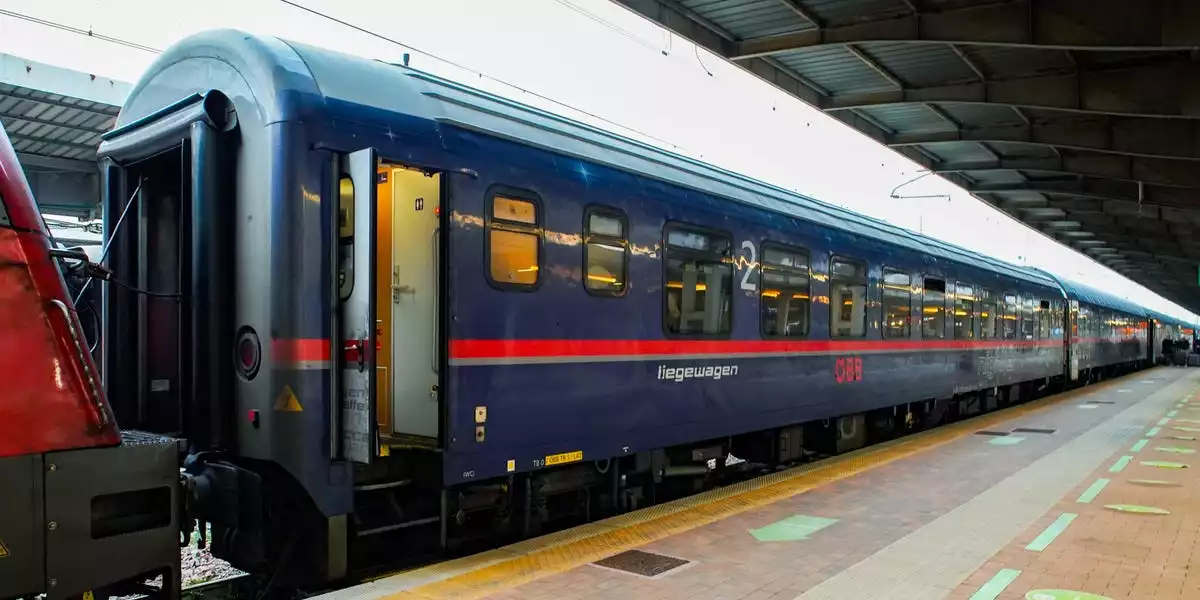

The Sleeper Train Renaissance: Between Romance and Reality
The allure of the night train is as old as the steel rails themselves—a promise of adventure, intimacy, and the gentle rhythm of travel through sleeping cities. Yet, as a recent journey aboard ÖBB’s Nightjet from Vienna to Venice reveals, the romance of Europe’s sleeper trains is now being rigorously tested by the demands of modern travelers and the imperatives of a carbon-constrained economy. The experience, oscillating between cramped couchettes and the sanctuary of private cabins, throws into relief the industry’s struggle to balance nostalgia with necessity.
Sustainability and Strategy: Rail’s Second Golden Age
Europe’s railways are experiencing a renaissance, propelled by a confluence of environmental mandates and shifting public sentiment. The EU’s Fit-for-55 package and escalating carbon taxes are not mere policy abstractions—they are the wind at the back of operators like ÖBB, SNCF, and Deutsche Bahn, who are reviving night services once considered relics of a bygone era. Electrified rail, with its lower emissions and resilience to energy-price shocks, is increasingly positioned as the antidote to short-haul air travel and airport congestion.
This transformation is not confined to rhetoric. Nightjet’s next-generation Siemens “Viaggio Next Level” carriages, with their wider sleeping pods, modular interiors, and in-cabin Wi-Fi, signal a decisive pivot from commoditized berths to a tiered, airline-style product ladder. The sleeper train is being reimagined—not as a compromise, but as a destination in itself.
- Decarbonisation Tailwind: Modal shift from air to rail is accelerating, driven by both regulation and consumer conscience.
- Rolling-Stock Modernisation: Investment in flexible, high-comfort carriages is redefining what overnight rail can offer.
Experience Design: The New Competitive Battleground
The traveler’s account—one night spent in a stifling six-berth couchette, another in the relative luxury of a private cabin—underscores a truth familiar to hoteliers and airlines: comfort is king. The willingness of passengers to pay a two- to fourfold premium for privacy and rest is not merely anecdotal; it is a clarion call for yield management and product differentiation.
Operators face a delicate balancing act. High-margin private suites can subsidize low-fare berths, much as premium economy underwrites budget seats in aviation. Yet, operational frictions—confusing boarding, limited food options, and the absence of a café car—reveal the distance yet to travel. Digital touchpoints, from real-time carriage mapping to in-app food and beverage pre-orders, are no longer optional; they are the price of admission in a world where high-speed day trains and airlines set the standard.
- Tiered Cabin Economics: Dynamic pricing and flexible berth-to-suite ratios can optimize both yield and occupancy.
- Digital Service Integration: Seamless boarding, digital F&B, and real-time information are critical to passenger satisfaction.
Investment, Infrastructure, and the Road Ahead
Beneath the surface, macroeconomic forces are reshaping the night train’s prospects. Electrified rail’s relative insulation from volatile jet fuel prices is a strategic advantage, but operators must still hedge electricity costs and invest in renewable PPAs to stabilize fares. Labor shortages and aging infrastructure threaten to cap growth; unlocking network capacity will require investment in signaling technologies and, eventually, autonomous operations.
For investors, the appeal is clear. Modular sleeper cars, with depreciation horizons stretching three decades, represent attractive, asset-backed opportunities—especially when indexed to green-bond frameworks. Station real estate, too, is ripe for reinvention: early-morning arrivals create demand for micro-hospitality, echoing the high-margin retail models of airports.
- Rolling-Stock Leasing: Long-lived, modular assets aligned with sustainability mandates offer compelling returns.
- Station Real Estate: Upgrading terminals for hospitality and co-working can unlock ancillary revenue.
The Future: From Nostalgia to Networked Mobility
The night train’s revival is not merely a matter of rolling out new carriages. It is a product differentiation arms race, with capsule pods, hybrid hotel-train cabins, and branded journeys on the horizon. API-driven mobility ecosystems will bundle night-train itineraries with last-mile solutions, carbon reporting, and accommodation—operators lacking open digital platforms risk being sidelined by aggregators.
Hardware and software will converge: sensors tracking berth occupancy and passenger movement will feed machine-learning models, optimizing energy use and personalizing service. In a fractious geopolitical climate, resilient rail corridors that bypass congested or sensitive airspace will only grow in strategic value.
The traveler’s mixed Nightjet experience is emblematic of an industry at an inflection point—caught between the sepia-toned allure of the past and the unforgiving expectations of the present. Those who harness data, design, and disciplined investment will not only rekindle Europe’s love affair with the sleeper train but transform it into a cornerstone of sustainable, high-margin mobility.

 By
By

 By
By

 By
By

 By
By
 By
By