
When a robot hand becomes a cultural Rorschach test
The recent dispute between humanoid robotics company 1X and *Wired* offers a revealing snapshot of how quickly a technical milestone can be reinterpreted through cultural and emotional lenses. At the center is Neo, 1X’s humanoid robot, and a set of promotional visuals meant to showcase its new hand module—fingers curling around a wine glass, a gesture resembling the unzipping of a jacket. *Wired* journalist Boone Ashworth framed the imagery as sexualized, a critique that triggered a pointed public response from Dar Sleeper, 1X’s VP of Product and Design, who argued the article misrepresented the launch after he had granted exclusive access.
Tech columnist Joshua Topolsky then added a meta-layer: the critique, he suggested, was relatively mild—and the broader lesson is that journalistic reframing is not an aberration but a structural feature of modern tech media. In other words, once a product enters the public arena, the company’s intended narrative becomes only one of several competing interpretations.
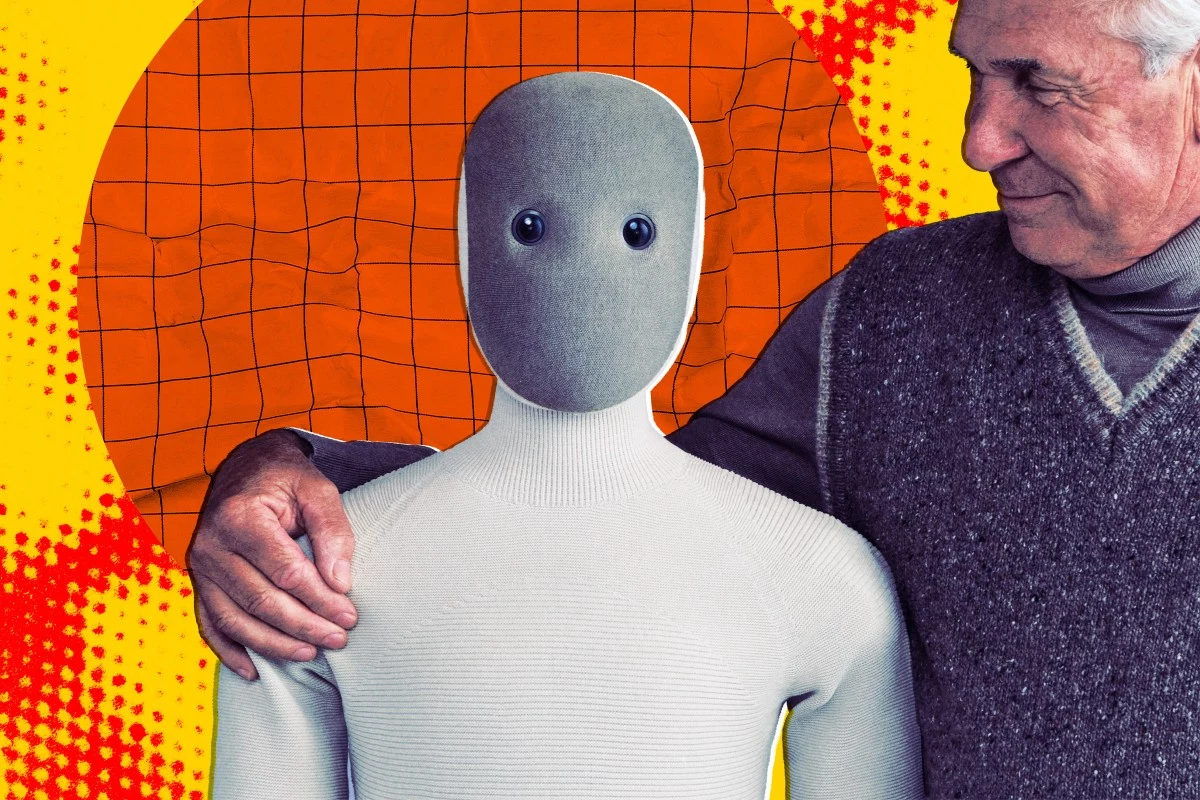
This is not merely a skirmish about tone. It is an early indicator of a larger reality for the humanoid robotics sector: the more human-like the machine becomes, the less “purely technical” its public reception will be. Dexterous hands are not just actuators and sensors; they are symbols, and symbols invite projection.
Dexterity as a breakthrough—and as an invitation to anthropomorphize
From an engineering standpoint, Neo’s hand capabilities represent a meaningful step forward. High-fidelity finger articulation is a gating factor for many real-world tasks, and progress here can translate into tangible commercial value across multiple domains:
- Delicate assembly and lab work, where controlled grip and fine manipulation can reduce error rates
- Healthcare and assisted living, where safe handling of objects and adaptive grasping are essential
- Service and consumer environments, where robots must interact with everyday items designed for human hands
Yet the same dexterity that expands utility also intensifies the robot’s anthropomorphic presence. A hand is not perceived like a wheel or a gripper; it is perceived like *a hand*. When marketing emphasizes tactile, intimate, or lifestyle-adjacent scenarios—wine glasses, clothing, close-up skin-like materials—it can shift the audience’s interpretation from “tool competence” to “social agent behavior.”
That shift matters because it changes the questions people ask. The conversation moves from performance metrics to boundary-setting:
- What kinds of interactions are being normalized?
- What emotional cues are being implied?
- Is the robot being positioned as an appliance, a coworker, or something more ambiguous?
Layered on top is a practical concern that often gets overshadowed by the aesthetics: remote-operation and data flow. As humanoid robots move toward homes, hospitals, and workplaces, the public will increasingly connect physical capability with surveillance risk—cameras, microphones, telemetry, and operator access. In that context, marketing that leans into intimacy can inadvertently amplify anxieties about consent, privacy, and control, even if the underlying system architecture is responsible and well-governed.
The business calculus: attention is cheap, trust is expensive
For robotics companies competing for mindshare, the temptation to pursue viral resonance is understandable. Sensational or provocative imagery can generate immediate reach, accelerate brand recognition, and differentiate a product in a crowded field. But the Neo episode highlights a recurring strategic tension: brand heat is not the same as brand equity.
Humanoid robotics sits at a sensitive intersection of labor, safety, ethics, and identity. Stakeholders who matter most to long-term adoption—enterprise buyers, regulators, institutional partners, and risk-conscious investors—tend to evaluate not only what a robot can do, but also what it signals about the company’s judgment.
Several second-order effects become plausible when marketing is perceived as courting sensuality or blurred boundaries:
- Enterprise friction: Industrial and healthcare customers may avoid reputational spillover, even if the technology is strong.
- Regulatory attention: Controversies can accelerate calls for “robot ethics by design,” including guidelines on emotional manipulation and inappropriate framing.
- Partnership risk: Brands and integrators may hesitate to align with a narrative that could polarize audiences.
The media-relations dimension is equally instructive. Granting an exclusive is a high-trust move, but it does not guarantee narrative control. The public disagreement between 1X leadership and a major publication underscores a core reality of the current media ecosystem: tech journalism increasingly blends product analysis with cultural critique, interpreting launches through frameworks such as gender, power, and social norms. Companies that treat this as unfairness rather than inevitability risk repeating the cycle—surprise, defensiveness, escalation—each time a product crosses into culturally charged territory.
What this signals for humanoid robotics marketing, regulation, and adoption
The Neo controversy is best understood as a preview of the governance challenges that will follow humanoid robots into everyday life. As the industry matures, the competitive advantage will not come solely from better actuators or more robust autonomy, but from the ability to operationalize trust—through design, policy, and communication.
Several strategic moves are emerging as table stakes for companies building human-adjacent machines:
- Ethical marketing review as a formal process: multidisciplinary vetting across design, legal, PR, and ethics to anticipate unintended readings of imagery and language.
- Technical grounding in public storytelling: demonstrations, whitepapers, and third-party validation that keep attention anchored to capability, safety, and use-case fit.
- Structured press engagement over “exclusive dynamics”: clearer expectation-setting that respects editorial independence while reducing preventable misalignment.
- Participation in standards bodies: helping shape privacy, safety, and emotional-impact guidelines before they are imposed in reaction to controversy.
The deeper lesson is that humanoid robotics is entering a phase where cultural interpretation becomes part of the product surface area. A dexterous hand is a triumph of engineering—but it is also a human signifier, and signifiers are contested. Companies that recognize this early, and build narrative discipline alongside technical excellence, will be better positioned to convert fascination into durable adoption as robots move from labs and demos into the lived spaces of work and home.

 By
By
 By
By
 By
By


 By
By
 By
By
 By
By