


The Packing List as Strategic Blueprint: Rail’s New Era of Mobility and Commerce
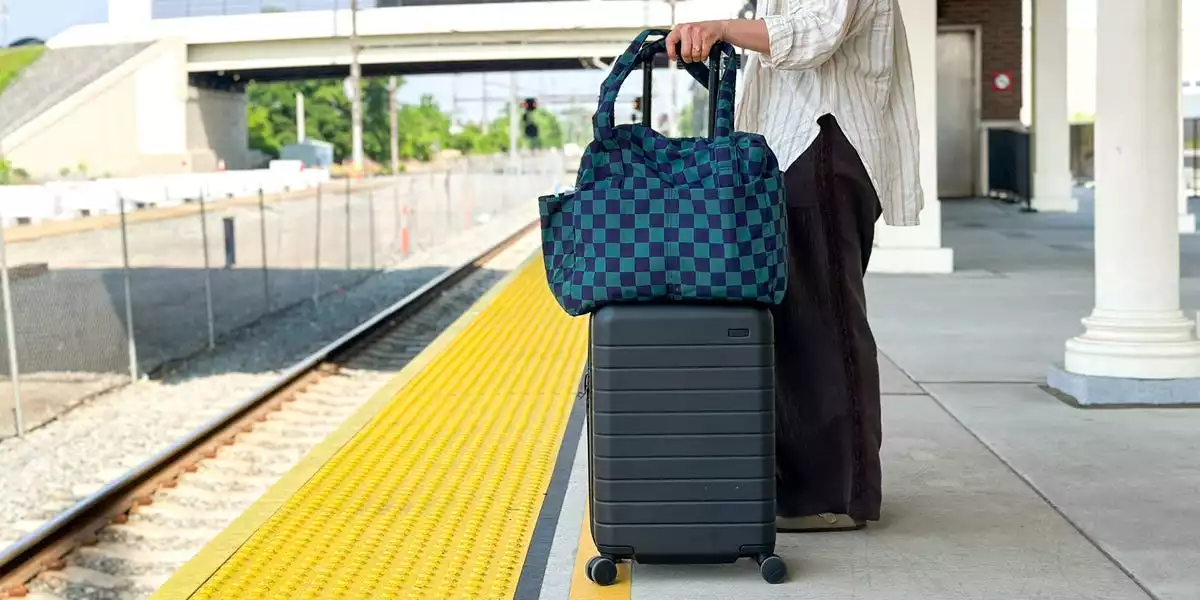
In the quiet hum of a train slicing through America’s Northeast corridor, a new archetype of traveler is emerging—one whose “must-pack” list reads less like a checklist and more like a manifesto for the future of mobility, retail, and technology. This is not the jet-setter of yesteryear, but the power-user of rail: 8,000 miles logged in a single year, every item in her kit a calculated hedge against friction, fatigue, and failure. Her approach, distilled into a disciplined selection of premium luggage, device-protective bags, noise-cancelling headphones, robust charging solutions, wellness kits, analog note-taking tools, protein-rich snacks, and a prudent cash reserve, is a study in cognitive load management and productivity preservation. But beneath the surface, her choices illuminate tectonic shifts in how—and where—work, commerce, and well-being are being redefined.
Rail’s Quiet Renaissance: From Transit to Distributed Workspace
The American rail renaissance is no longer a speculative hope but a data-backed trend. Intercity rail ridership, particularly along the Northeast and West Coast, is rebounding faster than its airborne counterpart. Hybrid work has transformed the train from a mere conduit to a rolling office, where the expectation is not just to arrive, but to produce. The power-user’s insistence on quiet cars, noise isolation, and reliable power is not idiosyncratic—it is emblematic of a broader demand for productivity that transcends location.
For rail operators, this is both a challenge and an opportunity. The ability to guarantee consistent Wi-Fi, seat-level power, and true noise mitigation is no longer a luxury—it is a competitive differentiator. Those who can deliver on these fronts stand poised to siphon share from airlines on sub-500-mile routes, especially as corporate sustainability targets cast a skeptical eye on short-haul flights. The “work-from-rail” phenomenon is not merely a pandemic artifact; it is a harbinger of a distributed workspace value chain that is only beginning to reveal its commercial potential.
Premiumization, Embedded Hardware, and the New Status Economy
The contents of the power-user’s bag offer a window into the evolving psychology of status and utility. Away, Baggu, and their ilk have seized the middle ground—brands that signal quality and durability without the baggage of conspicuous luxury. Lifetime warranties and modular, repairable designs are not just ESG talking points; they are economic levers, reducing total lifecycle costs for both consumers and manufacturers. The parallels to outdoor gear—Patagonia, YETI—are instructive: utility is the new status, and warranty economics are the new loyalty program.
At the device level, the train traveler’s micro-ecosystem—laptop, phone, headphones—demands uninterrupted power and connectivity. This has spurred a secondary market in ultracompact chargers, battery-integrated luggage, and USB-C standardization. Noise-cancelling headphones, once a premium differentiator, are rapidly commoditizing. For legacy audio brands, the imperative is clear: layer on software-defined enhancements—adaptive ANC, biometric profiles, spatial audio—or risk irrelevance. The embedded-hardware opportunity is not just about hardware, but about the seamless orchestration of productivity, comfort, and connectivity at the edge.
Resilient Commerce and the Rise of Self-Contained Habits
Perhaps the most telling item on the packing list is also the most analog: cash. The recommendation to carry a reserve in case of point-of-sale failures is a tacit acknowledgment of the resilience gaps in rail’s payment infrastructure. Intermittent cellular backhaul on moving trains exposes a white space for fintech innovation—offline-capable tokenization, edge-cached credentials, and stored-value wallets that can operate in a connectivity vacuum. For rail operators, every friction point is a drag on lifetime value, every missed ancillary sale a lost opportunity.
Health and wellness, too, are being reimagined for mobility. Portable supplement cases and dual-use cosmetics reflect a new “self-contained habits” economy, where routines travel as seamlessly as devices. The opportunity for brands is to pre-bundle compliant, rail-friendly wellness kits, capturing a slice of the $300 billion global wellness tourism market. Even analog stationery persists, a tactile counterweight to digital saturation, hinting at a latent demand for “phygital” workflows that blend the best of both worlds.
The Ecosystem Play: Rail as a Platform for Innovation
What emerges from this analysis is a vision of rail not as a transportation niche, but as a platform—an ecosystem where luggage, devices, payments, and food converge to expand total addressable markets. For decision-makers across sectors, the implications are profound:
- Rail operators can monetize premium quiet cars, bundle bandwidth and ergonomic seating, and upgrade payment stacks for frictionless commerce.
- Travel and accessory brands have an opening to develop rail-optimized SKUs and lifetime warranty-driven loyalty funnels.
- Consumer electronics must pivot to AI-driven, rail-calibrated audio and productivity bundles.
- Fintech can pilot offline payment rails and stored-value ecosystems.
- Food and CPG brands can align product formats with rail’s unique dwell times and distribution patterns.
To dismiss rail as a relic is to miss its metamorphosis into a node of the distributed workspace and a crucible for retail and technology innovation. The power-user’s packing list is more than a travel tip—it is a strategic microcosm of converging trends that will shape the next wave of mobility and commerce. As rail’s renaissance accelerates, those who read between the lines—and the luggage tags—will find themselves ahead of the curve.
 By
By
 By
By


 By
By


 By
By
 By
By

 By
By
 By
By







