

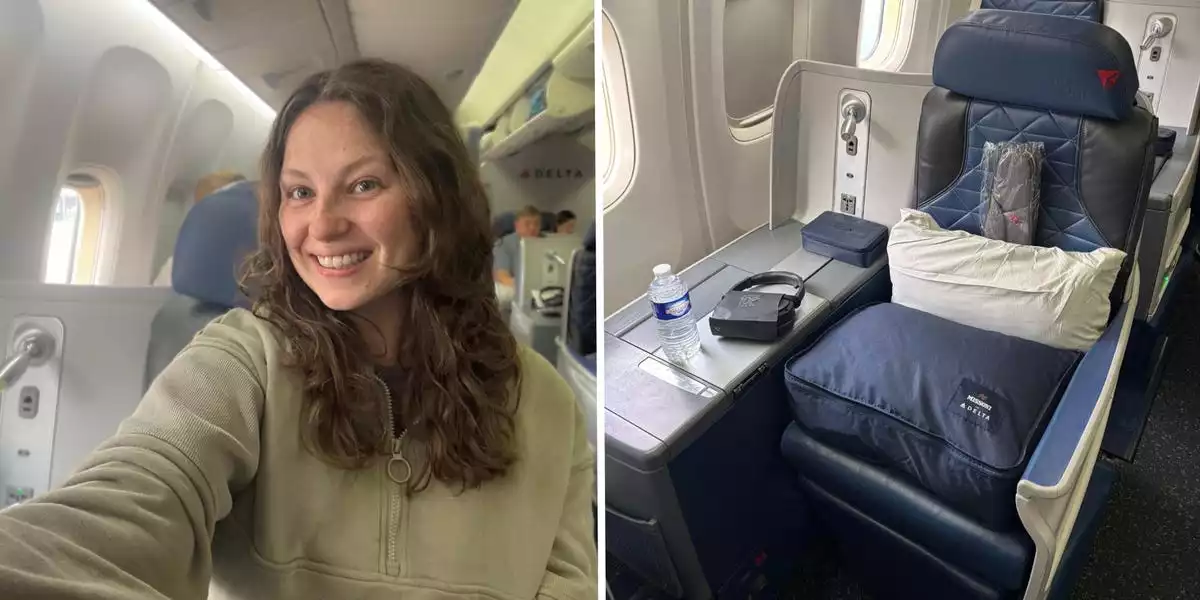

The New Battleground: Orchestrating Premium Air Travel Beyond the Seat
In an era where the trappings of luxury—lie-flat beds, chef-curated menus, exclusive lounges—have become table stakes for international business-class travel, the true differentiator for airlines is no longer the seat itself, but the seamlessness of the journey. A recent firsthand account of Delta Air Lines’ Delta One experience on a transatlantic route throws this paradox into sharp relief, exposing the friction points that persistently undermine even the most ambitious premium brand promises.
While Delta’s investment in hard product—its Thompson Vantage XL suites, elevated catering, and select biometric fast-track corridors—signals a clear intent to compete with global leaders, the operational “software” behind the experience often lags. This is not merely a Delta story; it is a microcosm of the strategic challenges facing legacy carriers worldwide as they navigate the shifting expectations of high-yield travelers in 2024.
Premium Experience: Where the Chain Breaks
The journey begins not at the aircraft door, but at the curb—a truth that many airlines still fail to operationalize. In Brussels, the absence of a dedicated Delta-branded check-in or expedited security channel for Delta One customers stands in stark contrast to the seamless ground experiences offered by Gulf and Asian competitors. These rivals have hardwired premium ground services—chauffeured transfers, exclusive immigration lanes—into their business-class DNA, making every touchpoint a deliberate extension of their brand.
- Ground Discontinuity: The lack of uniformity in premium ground services across Delta’s network exposes a vulnerability. Where biometric fast-track corridors and flagship lounges exist, the experience soars; where they don’t, the brand promise unravels.
- Cabin Hardware vs. Software: While the ergonomics and privacy of the Delta One suite earn high marks, a four-hour mechanical delay and a nonfunctional in-flight entertainment system reveal the fragility of customer satisfaction when operational reliability falters.
The economic stakes are high. Delta One fares command five to eight times the revenue per square foot compared to economy, but every disruption chips away at Net Promoter Scores and erodes the loyalty economics that underpin the SkyMiles program. As post-pandemic demand normalizes and competition for premium travelers intensifies, the margin for error narrows.
Predictive Technologies and the Quest for Consistency
The operational challenges that plague premium cabins are not insurmountable, but they demand a new level of technological orchestration. The four-hour delay attributed to mechanical issues points to an incomplete deployment of predictive maintenance and digital-twin diagnostics—tools that, if fully realized, could reduce unscheduled faults by up to 40%. The patchwork rollout of biometric passenger flow solutions—present at Atlanta and JFK, absent in Brussels—highlights the difficulty of scaling innovation across a global network.
Strategic imperatives for airlines now include:
- End-to-End Orchestration: Treating the entire curb-to-cabin journey as a single product, with API-level integration between airlines, airports, and security agencies, is essential for delivering consistency.
- Advanced Experience Metrics: Traditional on-time performance statistics miss the true cost of service volatility. Metrics like “Premium Disruption Minutes” and “IFE Downtime per Pax-Hour” should become core to revenue management and operational dashboards.
- Experience-Centric Ancillaries: Data shows premium travelers are willing to pay more for guarantees—quiet zones, personalized bandwidth, or instant rebooking. Monetizing peace-of-mind, not just square footage, is the next frontier.
Redefining Premium: From Physical Comfort to Digital Assurance
The definition of “premium” is shifting. Within the next three years, the industry’s leaders will not be those who simply offer the plushest seat, but those who deliver an uninterrupted, digitally orchestrated journey—predictive itineraries, adaptive cabin environments, and personalized wellness protocols. The competitive threat from Gulf carriers, who bundle biometric fast-track and limousine transfers as standard, is clear: consistency, not just comfort, is now the coin of the realm.
For senior leaders, the path forward is equally clear:
- Audit premium-journey pain points, prioritizing biometric and lounge deployments where experience variance is greatest.
- Invest in predictive maintenance analytics with measurable delay-reduction targets.
- Embed cross-functional incentives that tie premium NPS directly to uptime of both ground and inflight technology.
Delta One’s mixed review is not an isolated incident; it is a strategic signal. The future of premium air travel belongs to those who can synchronize operational resilience, data-driven service, and alliance-wide standards into a frictionless whole. For airlines, the premium cabin is no longer just a product—it is a promise, and in 2024, that promise is kept or broken long before the wheels ever leave the ground.

 By
By
 By
By
 By
By

 By
By


 By
By







