
From “apps” to “drops”: how Danger Testing is reframing software as culture
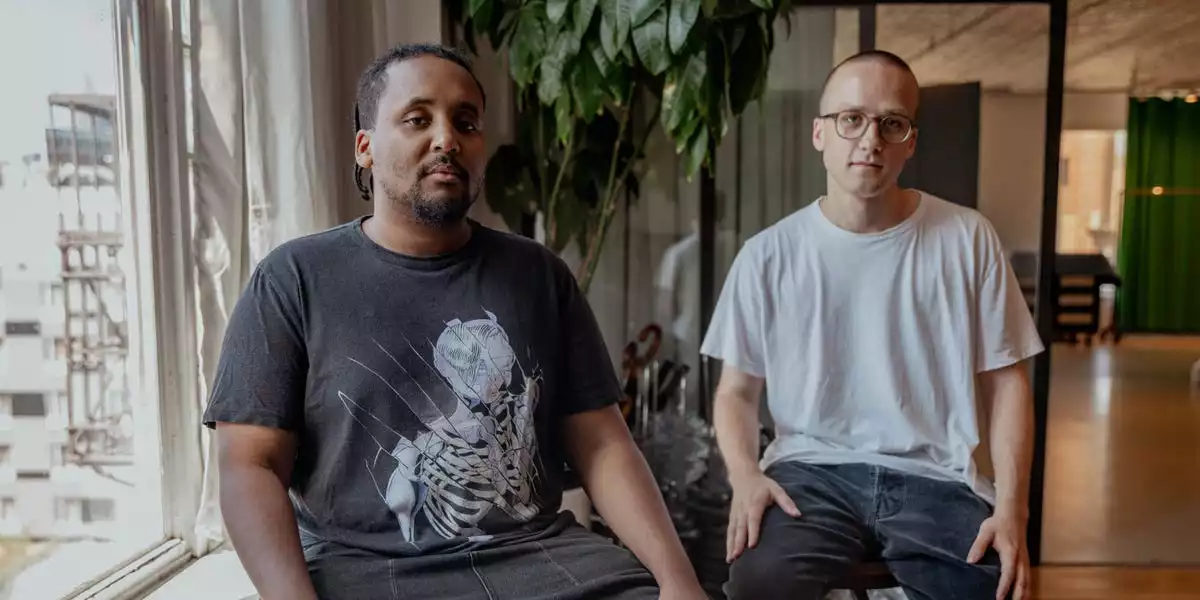
In New York City, Carlos Mayers (“Los Touré”) and Marc Mueller are betting that the next wave of consumer software won’t look like software at all. Their startup, Danger Testing, has shipped 50+ mini-apps since April 2025—a pace that resembles a creator’s content calendar more than a product roadmap. The founders describe the approach as “vibe-coding”: rapid, modular builds optimized for shareability, participatory humor, and moment-driven relevance, not the traditional north stars of retention curves and long-term feature compounding.
This is more than a quirky branding exercise. It signals a broader shift in how digital experiences are produced, distributed, and monetized in an era where attention is fragmented and platform algorithms increasingly throttle organic reach. In Danger Testing’s worldview, an app can be a punchline, a collectible, a social prompt, or a brand cameo—something closer to a memetic artifact than a utility.
Backed by $2.6 million in venture capital and funded largely through brand sponsorships, the company is positioning itself simultaneously as:
- a micro-app studio producing proprietary experiences
- an emerging agency layer that helps creators and brands build fan-driven interactive software
The “appstar” framing is telling: it implies that distribution is earned through persona, narrative, and cultural timing, not app-store optimization or paid acquisition alone.
The mechanics of “vibe-coding”: speed, modularity, and the new engagement math
Danger Testing’s velocity depends on a modern stack that makes software feel editable in near-real time. Modular code libraries, agile hosting, and low-code/no-code tooling compress the cycle from idea to live experience. The result is a production model that treats software as episodic media—released, shared, remixed, and replaced.
That speed comes with visible infrastructure realities. The company reportedly spends around $4,000 per month on its development platform—an important reminder that “democratized creation” still has a cost floor. The tension is structural: the faster you ship, the more you lean on scalable cloud services and tooling subscriptions, and the more you must justify spend through either sponsorship revenue or repeatable distribution.
What’s most disruptive is the deliberate deprioritization of classic app metrics. Instead of optimizing for daily active users, churn reduction, or subscription conversion, vibe-coding optimizes for social triggers—the mechanics that make people share:
- participatory hooks (users can “do” something, not just watch)
- novelty and satire (experiences built to be talked about)
- collectibility (digital dolls and other artifacts that feel ownable)
- time sensitivity (the sense that the moment will pass)
For product leaders, this reframes engagement from “how long do users stay?” to “how far does the experience travel?”—a shift from retention economics to distribution economics.
Sponsorship-first software and the emerging market for experiential micro-app advertising
Danger Testing’s early monetization leans on brand sponsorships rather than ads, in-app purchases, or premium tiers. That choice aligns with a broader advertising recalibration: as performance marketing faces signal loss, rising costs, and weaker click-through rates, brands are experimenting with owned, experiential formats that can generate earned media.
In this model, the mini-app becomes a form of high-production ad creative—but interactive, measurable, and culturally embedded. A sponsor can co-author the narrative, integrate product capabilities (for example, a voice-to-text feature), and benefit from the social spread of the experience itself.
Several economic dynamics sit beneath the headline novelty:
- ROI expectations will harden. Sponsorship budgets are not infinite, especially under inflationary pressure and geopolitical uncertainty. To scale, micro-app studios will need measurement that brands trust.
- Unit economics are fragile at high velocity. If each app is short-lived by design, the business must either (a) lower build and hosting costs dramatically, or (b) command premium sponsorship rates through reliable outcomes.
- Investor interest reflects creator-economy logic. The mention of attention from figures like Alexis Ohanian underscores a thesis: interactive micro-apps could be a high-ROI wedge into the $100B+ creator economy, where distribution is increasingly personality-led and community-driven.
For marketers, the implication is straightforward: apps may become a line item in campaign planning, not as long-term products but as time-boxed experiences—launch activations, fandom moments, or limited-run interactive stunts.
What comes next: platform alliances, privacy constraints, and tokenized “drop” economics
If vibe-coding is the creative layer, distribution is the strategic battlefield. The most plausible accelerant is platform partnership—especially as Meta, Snap, and TikTok continue exploring in-app interactivity. Native placement could reduce hosting burdens, improve performance, and unlock social-graph-driven sharing loops. It could also introduce new dependencies: platform rules, revenue-share terms, and content moderation constraints.
At the same time, the regulatory environment is tightening. Short-lived viral experiences can still collect data, embed third-party APIs, or trigger tracking concerns. Privacy compliance and measurement design will become differentiators, not afterthoughts—particularly if sponsors demand attribution while regulators restrict identifiers.
There are also non-obvious adjacency plays that fit the “drop” logic:
- Tokenized collectibility (Web3-inspired mechanics): the cadence and scarcity of vibe-coded releases mirrors NFT drops, even without the hype cycle. Limited digital items, gated access, or tradable collectibles could deepen community investment—if executed with restraint and clear user value.
- Flash commerce integration: streetwear-style scarcity could pair mini-app launches with limited product releases, turning interactive moments into direct sales funnels.
- Programmatic “mini-app placements”: a future where brands buy not just impressions, but interactive units priced on engagement—effectively platform-native advertising 2.0.
For Danger Testing, the strategic challenge is scaling without losing the very quality that makes the model work: cultural responsiveness. Moving from a two-founder sprint machine to a repeatable agency-and-studio hybrid will require process discipline, a creator onboarding pipeline, and a measurement framework that translates buzz into business outcomes.
If the last decade turned everyone into a publisher, this next phase may turn the most culturally fluent creators into software studios—shipping not products, but moments that travel.

 By
By
 By
By

 By
By
 By
By


 By
By