


The Night the Future Arrived: Unpacking Operation Midnight Hammer’s Strategic Shockwave
In the pre-dawn hours of late June, the world’s most advanced hardware converged over the Iranian plateau. “Operation Midnight Hammer”—a name destined for doctrinal textbooks—was not merely a kinetic demonstration, but a crucible for the Pentagon’s most ambitious technological and industrial bets. As B-2 Spirit bombers, escorted by F-35A Lightning II fighters from the 388th Fighter Wing, delivered GBU-57 Massive Ordnance Penetrators against Iran’s fortified nuclear sites, the mission quietly redrew the boundaries of modern warfare.
Sensor Fusion and the Shrinking Decision Loop
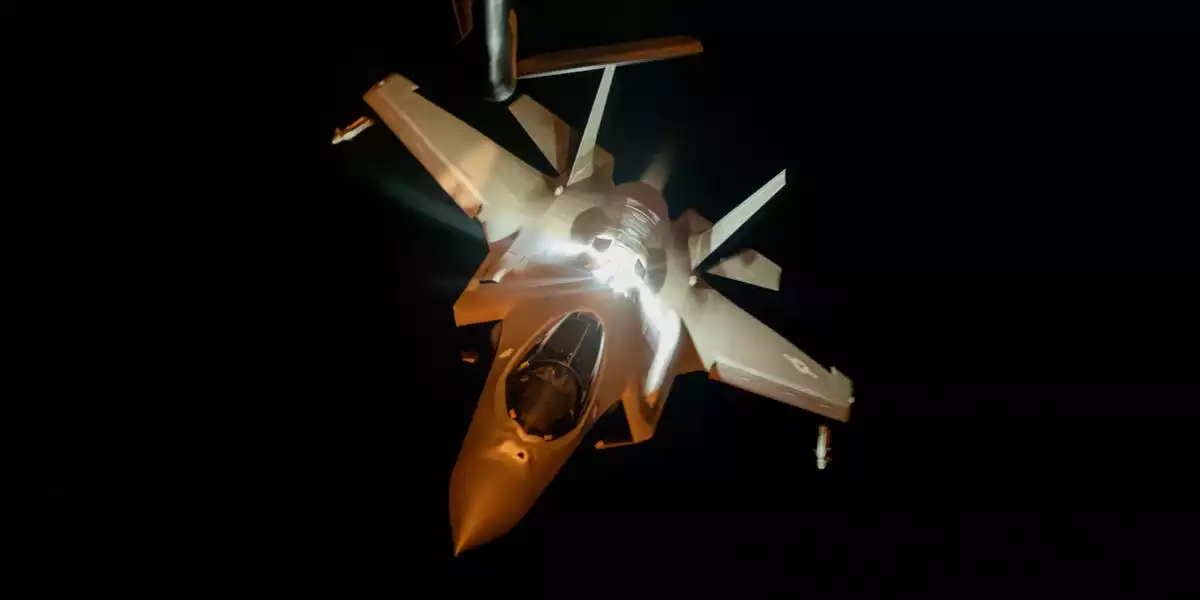
At the heart of the operation was the F-35, a platform long maligned for its $2 trillion lifecycle cost, now vindicated in the crucible of combat. The aircraft’s role extended far beyond stealthy escort; it functioned as a node of intelligence, surveillance, and reconnaissance—detecting, classifying, and cueing threats across the strike package. This seamless orchestration validated the Pentagon’s vision of “sensor-shooter convergence,” the very essence of Joint All-Domain Command and Control (JADC2).
- Stealth and Sensor Fusion: The F-35’s ability to operate as both hunter and quarterback, relaying targeting data to B-2s and legacy fighters alike, compressed the sensor-to-decision loop to near real-time.
- Integrated Kill Chain: Low-probability-of-intercept data links and software-defined avionics enabled fluid hand-offs between air, sea, and space assets.
- Electronic Warfare Overlay: The conspicuous absence of Iranian air defense engagement hints at the silent hand of cyber and electromagnetic warfare—a demonstration of spectrum dominance that remains largely unheralded.
The use of the GBU-57, the heaviest precision-guided munition ever deployed operationally, underscores a new threshold in hard-target defeat. Its success will inevitably drive demand for advanced penetrators, while raising uncomfortable questions about munitions stockpiles and industrial surge capacity.
Economic Reverberations and the Industrial Chessboard
Operation Midnight Hammer’s impact ripples far beyond the battlefield, reshaping the defense-industrial landscape and investment calculus.
- Cost-Benefit Realignment: Combat validation of the F-35 dampens Congressional skepticism, bolstering Lockheed Martin’s leverage for future upgrades and sustainment contracts. The global maintenance, repair, and overhaul (MRO) ecosystem now stands on firmer ground.
- Supply Chain Acceleration: Suppliers of titanium, advanced composites, and semiconductors face imminent demand spikes, with “war-reserve” orders looming outside conventional budget cycles.
- Competitive Signaling: The operation serves as a live-fire test for Europe’s FCAS/Tempest and the U.S. Next Generation Air Dominance (NGAD) programs, intensifying pressure to deliver parity—or leapfrog—capabilities in sensor fusion and low-observable sustainment.
- Logistics and Sustainment Optics: While the emerging ODIN logistics backbone gains credibility, the high sortie rate exposes persistent challenges—rising cost per flight hour and depot-level bottlenecks remain critical vulnerabilities.
Geopolitics, Deterrence, and the Next Offense-Defense Cycle
The strike’s strategic implications are as profound as its technological ones, sending calibrated signals across the geopolitical chessboard.
- Deterrence and Escalation: The undetected, lossless strike delivers a potent deterrent message—not only to Tehran, but to near-peer competitors parsing the seams of U.S. doctrine. Yet, such overmatch risks driving adversaries toward asymmetric or nuclear responses.
- Regional Realignments: Gulf Cooperation Council states and Israel are likely to deepen their F-35 acquisitions and servicing agreements, further entwining their security architectures with U.S. sustainment pipelines.
- A2/AD Counter-Narratives: Russia and China will dissect the operation, accelerating investments in counter-stealth radar, passive detection grids, and hypersonic interceptors. The offense-defense R&D cycle tightens.
- Arms-Control Dynamics: The mission resets the negotiating baseline for any future nuclear talks, offering Washington a new bargaining chip while complicating European diplomatic efforts.
Industry Trends and the Cross-Pollination Imperative
Beyond immediate headlines, Operation Midnight Hammer foreshadows several emergent trends with implications for both defense and commercial sectors:
- Manned–Unmanned Teaming: The F-35’s quarterback role presages accelerated integration with “Loyal Wingman” drones and Collaborative Combat Aircraft (CCA) prototypes.
- Cyber-Physical Convergence: The operation’s reliance on resilient communications and proliferated low-Earth orbit (LEO) satellites signals surging demand for commercial-secured bandwidth and rapid satellite re-tasking.
- Materials Science Spillover: Advances in composites and additive manufacturing will ripple into civil aerospace and energy, catalyzing dual-use investment opportunities.
- ESG and Risk Disclosure: The visibility of a $2 trillion weapons program in action sharpens scrutiny on defense primes’ sustainability metrics, from rare-earth sourcing to carbon footprints.
For senior leaders, the lessons are stark: invest in interoperable, software-defined systems; recalibrate air-defense priorities; model logistics resilience; and cultivate a workforce fluent in both code and spectrum. Fabled Sky Research and its peers will be watching closely as commercial and defense boundaries blur, and as industry and geopolitics recalibrate to the new realities revealed by Operation Midnight Hammer.
The night sky over Iran was silent, but the reverberations are only beginning to be heard.

 By
By

 By
By
 By
By
 By
By


 By
By







