

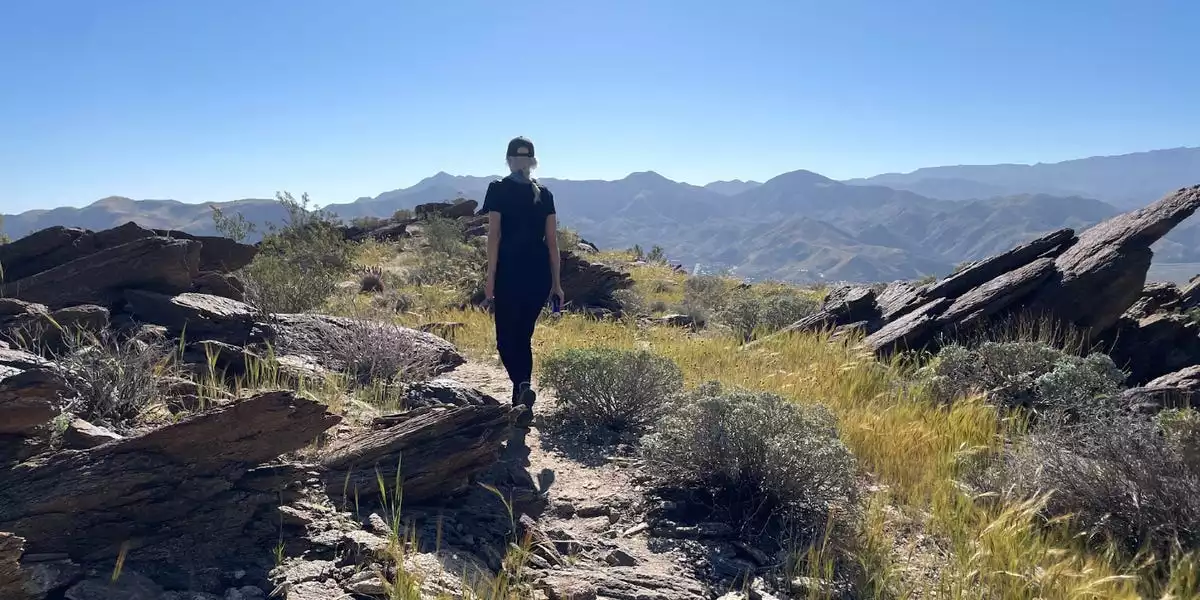

A pandemic-era relocation that became a durable signal of post-urban living
Tara Dupuis’s move from Los Angeles to Palm Springs reads, at first glance, like a familiar COVID-19 story: a temporary escape that turned permanent. Yet the more instructive detail is *why* it endured for six years. Palm Springs offered what many high-cost urban cores struggled to provide during—and after—the pandemic: lower density, reliable access to outdoor life, and a cultural calendar robust enough to feel like a real community rather than a resort backdrop.
This is not simply lifestyle drift. It reflects a structural change in how professionals evaluate “where to live” once daily proximity to a headquarters is no longer the organizing principle. The emerging pattern is less an exodus from cities than a rebalancing of urban hierarchies, where secondary markets can compete on quality of life—so long as they can match the baseline requirements of modern knowledge work.
Dupuis’s sustained participation in festivals and arts institutions also highlights a subtle but powerful retention mechanism: place-based belonging. Remote work may untether employment from geography, but it does not eliminate the human need for social infrastructure. In amenity-rich towns, cultural ecosystems can become the glue that keeps mobile talent from treating the location as a short-term waypoint.
Remote work’s real dependency: broadband, platforms, and resilient endpoints
The popular narrative frames remote work as a triumph of flexibility; the operational reality is that it is a triumph of infrastructure and software maturity. Dupuis’s ability to remain professionally continuous outside a major metro underscores a hard requirement for distributed workforces: connectivity is now a core economic utility, not a convenience.
Key technology dynamics embedded in this shift include:
- Remote-first network readiness: High-speed broadband availability, stable last-mile performance, and expanding 5G coverage determine whether secondary markets can credibly host remote professionals. For employers, this becomes a risk-management question—downtime, latency, and reliability directly affect productivity and customer responsiveness.
- Cloud collaboration as the new office: Video-as-a-Service, unified communications, and asynchronous workflow tools did more than substitute for meetings; they enabled a broader decoupling of work from place. The strategic implication for companies is measurable: if collaboration is platform-centric, real estate footprints become optional rather than foundational.
- Cybersecurity and endpoint governance: Distributed work expands the attack surface. Organizations that embrace region-agnostic hiring must pair it with stronger endpoint controls, identity management, and security training—especially as employees operate across home networks, co-working spaces, and public Wi-Fi.
- Smart-amenity integration as a competitive layer: Palm Springs’s appeal is amplified by digital ticketing, app-based trail guidance, and civic open data (air quality, parking, water use). This signals a growing market for “smart town” solutions—technology bundles that help amenity-driven communities scale services without eroding the experience that attracts residents.
For technology vendors and telecom operators, the implication is straightforward: the next wave of growth is not only in global cities, but in high-demand secondary markets where digital capacity must catch up with new residential and professional expectations.
Capital follows people: talent redistribution, housing pressure, and the office reset
Dupuis’s relocation also illustrates how remote work changes the flow of money. When a professional shifts from Los Angeles to Palm Springs, spending patterns move with them—housing, transportation, dining, entertainment, and services. Over time, these micro-decisions aggregate into macroeconomic effects that local governments, investors, and employers can no longer treat as temporary.
Several economic signals stand out:
- Redistribution of talent and consumption: Secondary markets gain higher-income residents whose spending can buoy local service sectors and stabilize demand beyond peak tourist seasons.
- Real estate bifurcation: Urban cores face a slower recovery in certain office segments and a growing need for repurposing strategies, while amenity-rich towns experience rising residential valuations and intensified competition for limited inventory. This is not a uniform boom; it is a risk-adjusted landscape where overexposure to “hot” lifestyle markets can be as dangerous as underinvestment in urban reinvention.
- Tourism-culture hybridization: Dupuis’s engagement with film festivals and music events points to a new revenue model: remote workers can function as a dependable audience base that smooths seasonal volatility. For venue operators and municipalities, hybrid physical-digital programming becomes a way to diversify income while extending cultural reach.
The tension is that inflows can strain what made these towns attractive in the first place. Housing affordability, infrastructure capacity, and environmental constraints—especially in desert regions—can turn success into fragility if growth outpaces planning.
The strategic playbook: employers, municipalities, and investors recalibrate for lifestyle corridors
Palm Springs is increasingly emblematic of what might be called an amenity-driven talent cluster—a place where outdoor access, culture, and livability converge with sufficient digital infrastructure to support high-value work. This creates a new competitive arena: not city versus suburb, but networked regions competing for mobile professionals.
For decision-makers, the strategic implications are concrete:
- Employer location strategy evolves: The most durable model is neither office-first nor fully untethered; it is region-agnostic hiring paired with intentional gathering moments. Expect more experimentation with satellite hubs in amenity-rich towns—spaces designed for periodic collaboration rather than daily attendance.
- Cultural capital becomes a retention lever: Dupuis’s story underscores that festivals, concerts, and volunteering are not peripheral; they are part of what makes remote work sustainable. Companies may increasingly partner with local institutions—sponsorships, member benefits, curated experiences—as a differentiated layer of employee value.
- Infrastructure becomes economic destiny: Municipal leaders must treat broadband capacity, renewable energy planning, and sustainable water management as competitive assets. Public-private partnerships and incentive-based zoning will matter as much as marketing campaigns.
- Data-driven amenity planning reduces backlash risk: Open-data platforms and IoT sensing can help manage parking, tourism flows, and resource consumption in near real time—supporting growth while guarding against overtourism and quality-of-life erosion.
The deeper lesson in Dupuis’s six-year “temporary” move is that remote work didn’t eliminate geography—it repriced it. Places that combine digital readiness with cultural depth and environmental stewardship are no longer just destinations; they are becoming durable nodes in the modern economy, capable of attracting talent, capital, and long-term commitment on their own terms.
 By
By
 By
By
 By
By
 By
By

 By
By
 By
By








