

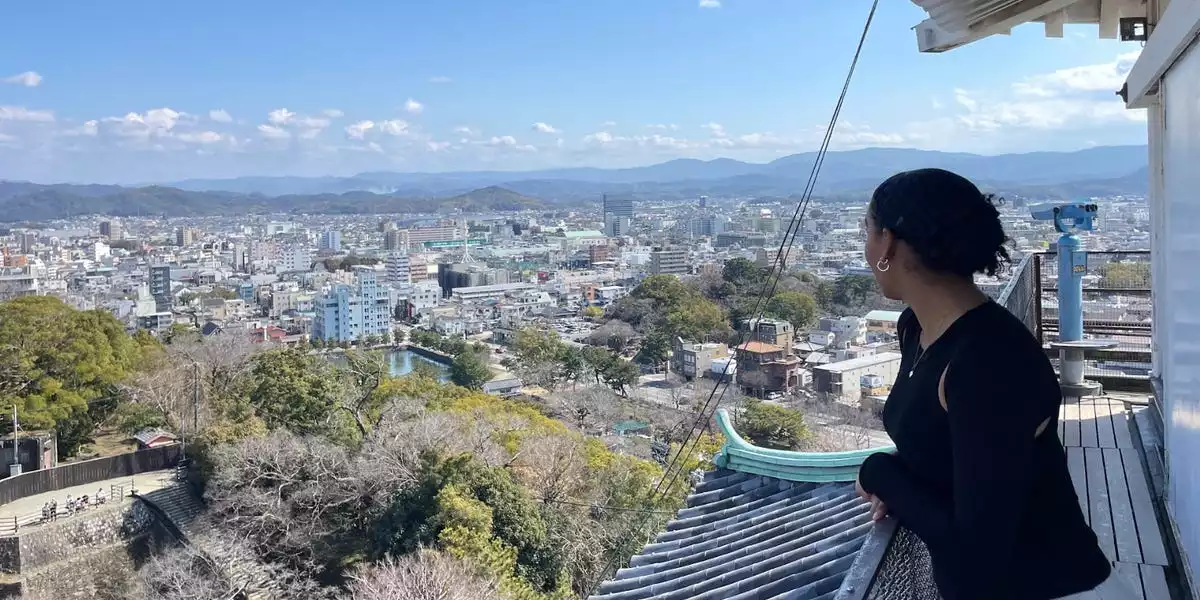

Japan’s tourism “long tail” moves from postcard icons to lived-in neighborhoods
Japan’s famed Golden Route—Tokyo, Kyoto, Osaka—has long functioned as the country’s default tourism narrative: efficient, iconic, and heavily optimized for first-time visitors. Yet the shift described here—from marquee cities to highly accessible regional hubs such as Saitama (Kawagoe), Kobe, Nara, and Wakayama—signals something more structural than a personal preference. It reflects a market where travelers increasingly value texture over trophies: residential streets, local food rituals, and heritage sites that feel integrated into everyday life rather than staged for mass consumption.
These “micro-destinations” are not remote. Their appeal is precisely that they sit close enough to major gateways to support low-friction day trips while offering a different emotional register: calmer streetscapes, smaller businesses, and cultural assets that reward curiosity. Kawagoe’s “Little Edo” atmosphere, Kobe’s cosmopolitan port identity, Nara’s temple-and-garden depth, and Wakayama’s coastal and riverbank scenery illustrate how place differentiation can thrive outside the traditional spotlight.
For the travel industry, this is the practical manifestation of a broader trend: experience diversification. The competitive advantage is no longer limited to the biggest attractions; it increasingly belongs to destinations that can deliver high engagement per visitor—and do so without collapsing under the weight of overtourism.
Rail connectivity becomes an economic strategy, not just a convenience
A central enabler in this narrative is Japan’s transport network. The ability to move from Tokyo to Kawagoe in under an hour, or from Osaka to Kobe and Nara with minimal planning overhead, turns regional tourism into a scalable product without requiring new airports or major capital megaprojects. In business terms, infrastructure leverage is doing the heavy lifting: existing rail density converts secondary cities into extensions of the primary hubs’ tourism economy.
That has meaningful implications for regional economic decentralization. When visitor flows expand beyond the urban cores, spending disperses into:
- Independent cafés and specialty food vendors (from sweet potatoes to ramen and street foods)
- Small museums, gardens, and heritage sites that monetize cultural preservation through admissions and retail
- Boutique inns, family-run guesthouses, and ryokan that compete on intimacy and local storytelling rather than scale
- Neighborhood retail corridors that benefit from foot traffic without needing luxury positioning
This redistribution is not merely additive; it can be corrective. Overconcentrated tourism creates visible strain—crowding, price inflation, resident fatigue—while leaving nearby communities under-monetized. Regional hubs offer a release valve, but they also introduce a new governance challenge: ensuring that growth does not erode the very “residential ambiance” that makes these places attractive.
For policymakers and destination managers, the strategic question becomes: How do you grow visitation while preserving authenticity and livability? The answer is likely to involve calibrated capacity planning, reinvestment in conservation, and smarter visitor routing—especially around fragile historic sites such as temples, castle precincts, and scenic promenades.
Platforms, algorithms, and AI itinerary design reshape how destinations are discovered
What makes this shift accelerate now is not only traveler sentiment; it is the machinery of digital discovery. User-generated content, geotagging, review ecosystems, and recommendation algorithms increasingly determine what becomes “worth visiting.” Where traditional tourism marketing once reinforced a narrow set of flagship cities, platform dynamics now surface second-tier locations through social proof and personalized feeds.
This creates both opportunity and competition. Micro-destinations can gain global visibility quickly, but they can also experience sudden demand spikes that outpace local operational readiness. That is where technology moves from marketing to management.
Several technology vectors stand out:
- AI-driven itinerary personalization: Tools that combine real-time rail data, opening hours, weather, event calendars, and user preferences can make day trips feel bespoke—turning “nearby” into “must-do.”
- Digital concierge services: Multilingual chatbots, mobile-first guides, and hyper-local content can reduce friction for international visitors while keeping spending local.
- Smart visitor management: IoT sensors, timed-entry systems, and mobile check-ins can help smaller attractions anticipate peaks, manage queues, and allocate staff efficiently without resorting to blunt restrictions.
- Vertical integration of local commerce: Platforms that bundle museum passes, workshops, food tours, and transit tickets can capture wallet share while simplifying planning—provided they avoid extracting value at the expense of local operators.
For technology providers, the commercial logic is straightforward: the more fragmented the destination ecosystem, the greater the upside for aggregation, booking enablement, and payments integration. For local businesses, the strategic imperative is equally clear: visibility and conversion increasingly depend on being legible to platforms—accurate listings, dynamic availability, multilingual metadata, and consistent review management.
The next competitive frontier: sustainable “slow travel” that still scales
The deeper significance of these regional hubs is that they align with two forces shaping global travel: sustainability and resilience. Transport-efficient day trips can lower incremental emissions compared with car-heavy itineraries, and “slow travel” preferences—lingering in fewer places, seeking community-centric experiences—fit naturally with smaller cities that reward unhurried exploration.
At the same time, diversification is a risk strategy. A tourism economy overly concentrated in a few cities is more exposed to shocks—natural disasters, public health disruptions, geopolitical volatility. A broader portfolio of destinations creates continuity options for tour operators, platforms, and national tourism planners.
The business takeaway is that places like Kawagoe, Kobe, Nara, and Wakayama are not peripheral; they are becoming strategic nodes in a more distributed tourism model—one where rail connectivity, platform discovery, and AI-enabled personalization turn overlooked neighborhoods into high-value experiences. The winners will be those who can scale access and revenue without scaling disruption, preserving what makes these micro-destinations feel like Japan beyond the brochure.

 By
By
 By
By

 By
By


 By
By
 By
By







