


A franchise relaunch that doubles as a brand asset play
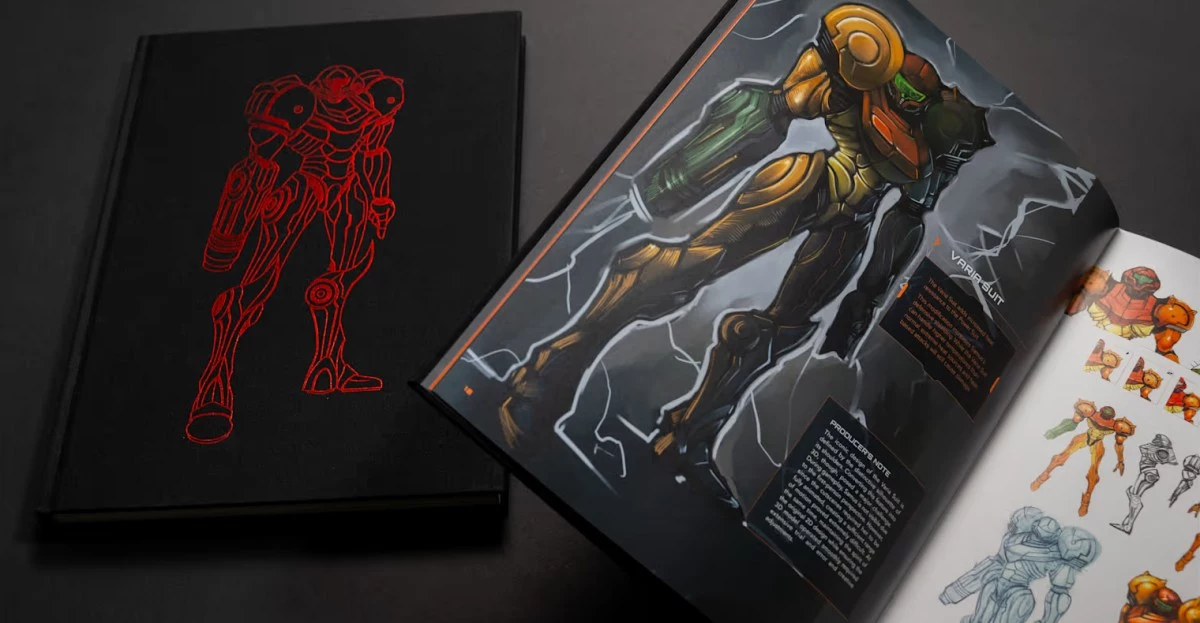
The December debut of _Metroid Prime 4: Beyond_ on Nintendo Switch and the forthcoming Switch 2 is more than a high-profile release in a storied science-fiction series—it is a carefully timed signal about Nintendo’s broader platform strategy. Alongside that launch, Nintendo and Retro Studios have introduced _Metroid Prime 1–3: A Visual Retrospective_, a 210-page hardcover positioned as both documentation and premium collectible, complete with a stitched canvas cover embossed with Samus Aran’s silhouette and producer Kensuke Tanabe’s margin notes.
From a business and technology lens, the pairing is instructive: Nintendo is effectively using a tentpole game release to pull demand through an adjacent product category—high-end physical publishing—while reinforcing the franchise’s identity and longevity. The book’s temporary discount pricing ($41.08 vs. $49.99 MSRP) across major retailers also suggests a measured approach to merchandising that blends prestige positioning with conversion-oriented retail tactics.
Key signals embedded in this coordinated release window include:
- IP ecosystem reinforcement: the Metroid universe is treated as a durable platform, not a single product cycle.
- Cross-generational continuity: Prime 4 spanning two Switch generations implies a deliberate effort to reduce consumer friction and preserve engagement.
- Premium physical as strategic complement: tangible goods become a hedge against the commoditization pressures of digital storefronts and discount-driven software markets.
Retro Studios’ engine evolution as a case study in sustainable technical iteration
One of the more consequential dimensions of the retrospective is its implicit technical narrative: the progression of Retro Studios’ proprietary engine capabilities across the original trilogy. While art books are often framed as fan service, this one also functions as a rare, structured artifact of how a mid-sized studio can evolve core technology without collapsing under scope creep.
The retrospective’s arc—from early lighting and shader experiments in _Metroid Prime_ to more advanced physics and volumetric techniques by _Metroid Prime 3_—maps onto a broader industry lesson: technical ambition is most durable when it is iterative, reusable, and pipeline-aware. For engineering leaders, the value is not in any single technique, but in the pattern:
- Compounding returns on engine investment: each title becomes a platform for the next, reducing reinvention and stabilizing production risk.
- Asset longevity through pipeline discipline: when tools and rendering approaches evolve predictably, content creation scales more efficiently.
- Innovation bounded by scope control: the trilogy’s evolution illustrates how to modernize visuals and simulation while staying shippable.
This matters now because Nintendo’s cross-generational release strategy for Prime 4 implies a tech-agnostic development pipeline designed to minimize fragmentation. If the same title can credibly serve two hardware generations, it suggests that Nintendo is prioritizing forward-compatible assets, adaptable performance targets, and long-lived tooling—a pragmatic counterpoint to the industry’s frequent tendency to treat each hardware leap as a forced reset.
The economics of nostalgia, collectibles, and retail leverage in a digital-first era
The Visual Retrospective also lands squarely in a fast-growing segment: premium collectibles that monetize emotional attachment. Across entertainment categories—vinyl, deluxe film “making-of” editions, limited-run figurines—consumers have demonstrated a willingness to pay for objects that feel archival, scarce, or museum-grade. Nintendo’s execution here is notably deliberate: the book is designed to read as a “piece of art” rather than a disposable companion product.
Several economic dynamics are at play:
- Ancillary revenue optimization: a modest discount can trigger impulse conversion among core fans, raising customer lifetime value (CLV) without diluting the franchise’s premium aura.
- Collector economy targeting: high-quality materials and presentation justify price resilience and secondary-market interest, even when discretionary spending is under pressure.
- Retail channel orchestration: broad availability via Amazon, Walmart, and other outlets indicates Nintendo’s ability to translate digital fandom into physical shelf demand—leveraging placement, promotion, and distribution scale.
The timing is especially strategic. Launch-adjacent collectibles benefit from heightened attention, but they also serve a quieter function: they keep the franchise “present” between gameplay moments, extending engagement beyond the screen. In an era where live-service models dominate mindshare, Nintendo is demonstrating an alternative: premium, finite objects that deepen attachment without requiring perpetual in-game monetization.
Knowledge capture, talent signaling, and the quiet power of controlled transparency
Perhaps the most revealing element is the book’s blend of Nintendo’s famously tight IP control with granular, personal documentation—including candid references to development strain such as burnout during _Metroid Prime 2: Echoes_. That juxtaposition points to a sophisticated internal posture: protect the crown jewels externally, but preserve rich context internally—and selectively share enough to strengthen trust and legitimacy.
For organizations facing talent scarcity and escalating production complexity, this is not trivial. The inclusion of margin notes and behind-the-scenes narrative acts as a form of knowledge management—capturing tacit decisions, trade-offs, and creative debates that are often lost once teams disperse. It also functions as employer branding: acknowledging difficulty can humanize a studio and signal maturity, especially to experienced developers who value realistic production cultures.
For business and technology leaders, the broader takeaway is that Nintendo is treating Metroid as a multi-surface asset:
- Hardware strategy: cross-generational releases reduce adoption friction and protect audience scale.
- Software strategy: franchise continuity sustains long-term engagement.
- Merchandising strategy: premium physical goods diversify revenue and reinforce identity.
- Organizational strategy: curated transparency strengthens institutional memory and talent appeal.
In a market where attention is fragmented and digital content is endlessly substitutable, Nintendo’s Metroid Prime playbook underscores a durable advantage: when a company can turn its development history into a product—and its product into a platform—it is no longer merely shipping games. It is compounding an ecosystem.

 By
By
 By
By
 By
By
 By
By
 By
By

 By
By








