
DARPA has moved Diraq into Stage C, the final phase of its Quantum Benchmarking Initiative, putting the Sydney-founded quantum company’s silicon-based approach into a tougher category than a funding headline or a roadmap update. Alongside IBM, IonQ, and Atom Computing, Diraq will now face independent U.S. government verification of whether its technology can plausibly reach “utility-scale” operation by 2033. For Diraq, which says the Stage C agreement has a potential value of up to US$300 million beginning with an initial US$51 million tranche for the next year, the real significance is that its manufacturing story is now being tested, not just presented.
The practical question is straightforward: can a quantum architecture built around mainstream chip-manufacturing methods become useful and affordable before its control, cooling and error-correction costs overwhelm the promise? Stage C matters because it is designed to answer that question in a way public demonstrations and investor decks cannot.
Stage C raises the evidence bar
In DARPA’s announcement, the agency said it has evaluated more than 20 companies since launching QBI in mid-2024. Stage B focused on detailed R&D plans, technical risks, mitigation strategies and prototype requirements. Stage C moves past paper plans into verification and validation of hardware, architectures, systems engineering and the demonstrations needed to show the proposed systems can actually be built and operated as intended.
That is a meaningful shift in how quantum claims get judged. For years, the sector has leaned on qubit totals, lab milestones and aggressive timelines. QBI is aimed at a harsher standard: whether a system can produce enough computational value to exceed the cost of building and running it. That frames quantum less as a race to the biggest number and more as a manufacturing and operations problem.
It also matters that DARPA has not declared a winner. Diraq’s silicon spin qubits are being assessed beside IBM’s modular superconducting processors, IonQ’s trapped-ion systems and Atom Computing’s neutral-atom arrays. Microsoft and PsiQuantum previously advanced through a predecessor program. The point of Stage C is not to bless one modality early. It is to find out which assumptions survive contact with engineering reality.
Why silicon-CMOS matters—and what it still doesn’t prove
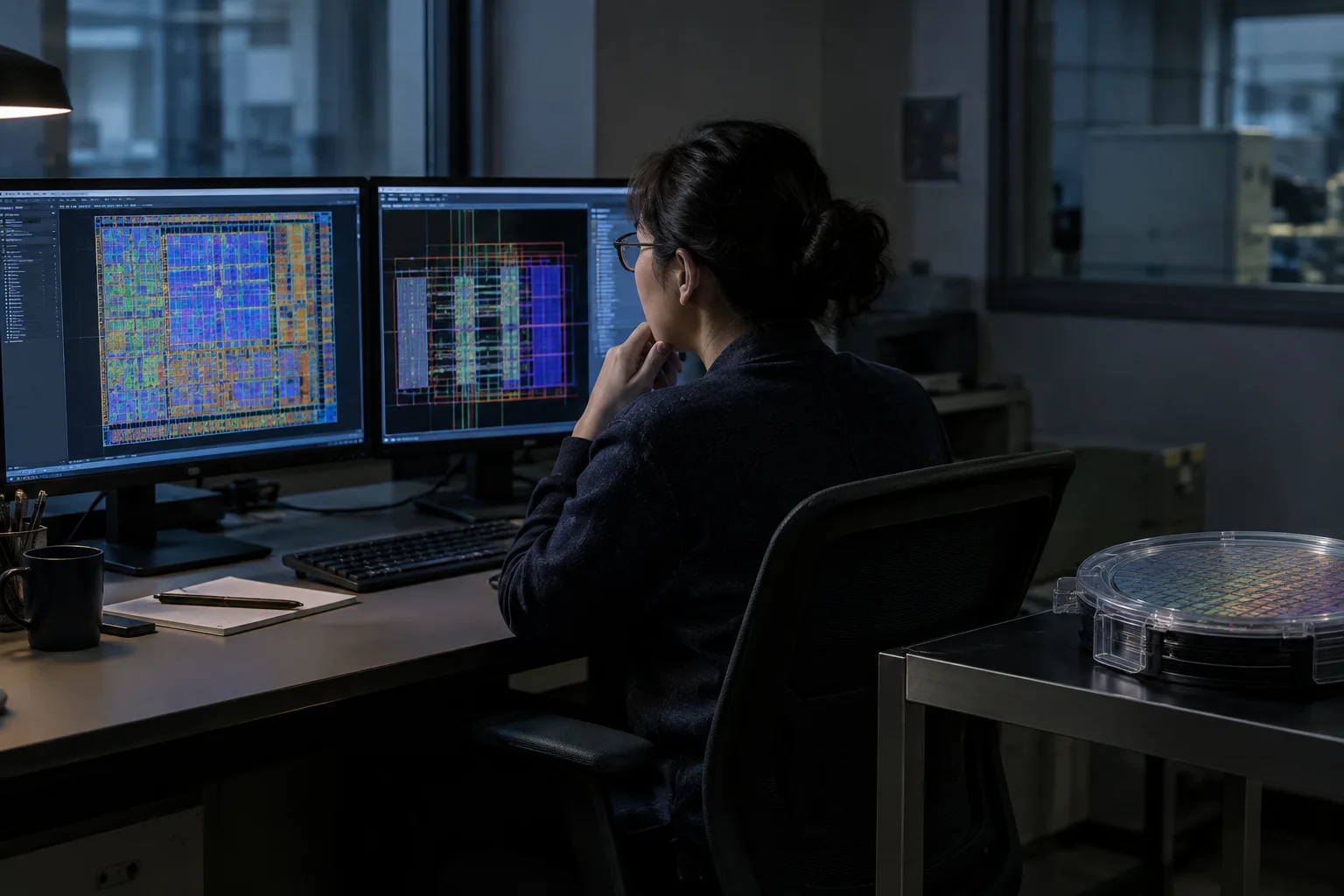
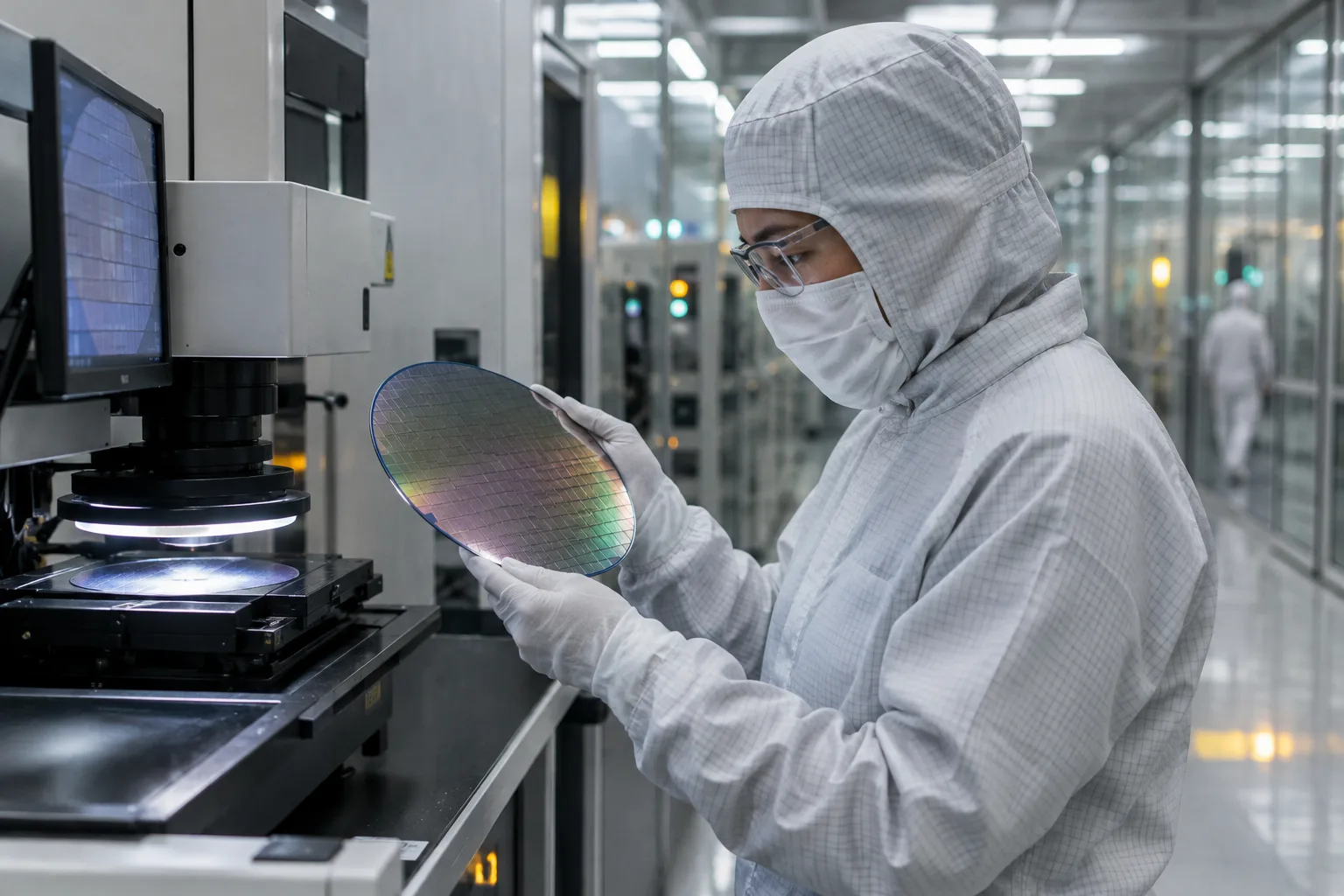
Diraq’s pitch is strategically attractive because it speaks the language of the semiconductor industry. The company is commercializing silicon CMOS spin qubits, and it says recent work includes high-fidelity silicon spin qubits fabricated in an industrial 300mm CMOS-compatible process plus an eight-qubit array built that way. If that compatibility holds up at scale, it could reduce a major source of friction in quantum computing by tapping existing fabrication tools, supplier networks and manufacturing expertise.
That is why this story reaches beyond one startup. A credible CMOS-based quantum path could affect foundries, equipment makers, packaging specialists, cryogenic suppliers, control-electronics vendors, cloud operators and governments trying to anchor more advanced chip production domestically. It also fits neatly with defense and industrial-policy goals: if a quantum platform can use more of today’s semiconductor stack, it may be easier to source, scale and support over time.
But compatibility with a fab is not the same thing as fault tolerance, and it is not the same thing as a viable product. A useful quantum machine does not need merely a large population of physical qubits. It needs logical qubits that remain reliable after error correction, with overheads low enough that the system’s economics do not collapse under the weight of control hardware, interconnects, packaging and cooling.
In Diraq’s Oct. 7 statement, the company said it is targeting 150,000 physical qubits by 2029, more than two million physical qubits on a single chip and utility-scale operation by 2031, ahead of DARPA’s 2033 program target. Those targets help explain the company’s ambition, but they are still roadmap claims rather than independently verified operating results.
The same is true of the company’s planned deployment in an Equinix data center in Sydney before the end of 2026. If completed, that would be a notable integration milestone because it would place silicon quantum hardware in a shared commercial data-center environment. It would not, by itself, show that the machine delivers economic value on real workloads. Likewise, Diraq’s US$38 million Department of Commerce letter of intent under the CHIPS and Science Act could become important for U.S. production, but a letter of intent is not a finished award.
The scorecard to watch now
The useful scorecard from here is less glamorous than most quantum marketing. What matters now is fabrication yield and repeatability; whether performance survives beyond a small array; how much physical-to-logical qubit overhead error correction demands; how complex the control stack becomes; what the cryogenic power burden looks like; and how much all of that costs to run over time.
Public materials still leave major gaps on exactly those points. There is no disclosed independent measurement of Diraq’s logical-qubit performance, error-correction overhead, connectivity at scale, manufacturing yield, cost per qubit or cryogenic operating cost. DARPA also has not publicly detailed the workload benchmarks it will use to decide whether “utility-scale” has been reached. That is not unusual for a government technical program, but it means outside observers should be careful about treating Stage C as proof of a machine that already works at commercial scale.
Even so, Stage C can have real near-term effects. Government validation tends to attract suppliers, talent, partners and customers before the end state is settled. For Diraq, that could strengthen its position with semiconductor and cloud-adjacent partners. For investors, it raises both the opportunity and the risk: a structured federal evaluation is more credible than a slide deck, but it can still be mistaken for a product milestone if readers ignore the difference between being tested and being proven.
The deeper importance of Diraq’s advancement, then, is not that DARPA has picked a champion. It is that a central quantum claim—that silicon manufacturing can make fault-tolerant computing economically realistic—has moved into a phase where independent scrutiny is supposed to expose what roadmaps usually hide. The next meaningful updates will not be bigger qubit aspirations. They will be hard evidence on yield, overhead, cooling, integration and whether the machine can do useful work for less than it costs to exist.
 By
By
 By
By
 By
By

 By
By


 By
By