
Student laptop pricing is being reset by memory scarcity and supply-chain friction
The entry-level laptop market—long the refuge of students and cost-sensitive families—is undergoing a structural price reset. A global RAM (DRAM) and storage (NAND) shortage is colliding with persistent logistics and currency headwinds, pushing even “basic” laptops into unfamiliar price bands. The timing is especially acute: universities and schools are expanding digital learning requirements, from cloud collaboration to multimedia coursework and AI-assisted study tools, precisely as budgets are squeezed.
Several forces are converging:
- Component bottlenecks are dictating configurations, not user needs. OEMs are increasingly forced to ship 8 GB RAM and slower storage tiers to protect margins, even as modern workloads (video lectures, browser-heavy research, coding environments) punish those constraints over time.
- Supply-chain costs remain sticky, with residual port congestion, energy volatility, and localized disruptions at chip and component plants adding surcharges to already thin low-end margins.
- Currency dynamics amplify imported costs, particularly for devices assembled in East Asia; a weaker dollar against major currencies can translate into higher landed costs that are difficult to absorb at the entry level.
The result is a market where the headline price matters less than total cost of ownership: a laptop that feels “fine” in month one can hit a performance cliff by mid-semester if memory and storage are underspecified.
The new student shortlist reveals a bifurcation: efficient ARM ultralights vs. value x86 and Chrome OS
Despite inflationary pressure, a clear set of devices stands out—not because they are uniformly cheap, but because they represent balanced propositions across performance, longevity, and day-to-day usability.
On the premium-but-student-relevant end, Apple’s lineup underscores how far ARM-based PC design has progressed:
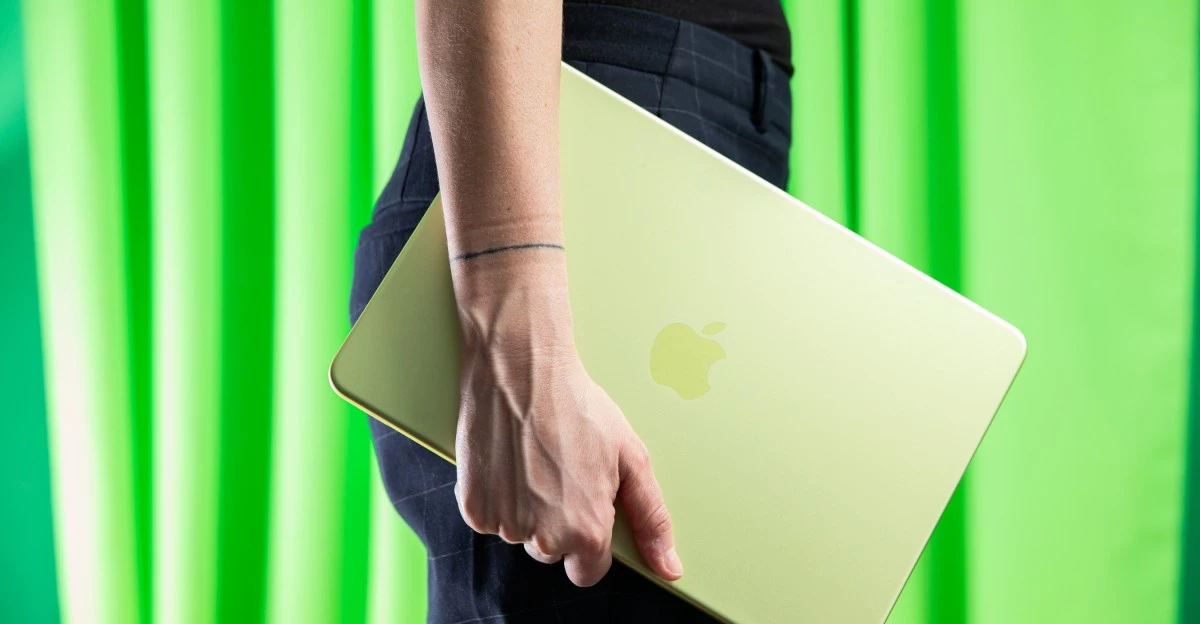
- MacBook Air (M5) ($1,299) reads as the strongest all-rounder for many undergraduates, pairing next-gen Apple silicon with high energy efficiency and sustained multi-core performance. For students living in browsers, productivity suites, and creative tools, the Air’s advantage is less about peak benchmarks and more about consistent responsiveness on battery.
- MacBook Neo ($599) aims to reclaim the “budget Mac” narrative with an ARM foundation and strong build fundamentals—trackpad, chassis feel, and baseline performance. Yet the constraints are telling: 8 GB RAM and slower flash storage may be manageable for light workloads, but they also illustrate how memory and storage have become strategic rationing points.
Windows OEMs are responding with their own ARM push, most visibly through Qualcomm’s Snapdragon roadmap:
- Asus Zenbook A14 (~$700), powered by Snapdragon X Plus, signals a Windows ultralight strategy that mirrors MacBook priorities: thin-and-light mobility, competitive battery life, and the potential for LTE/5G connectivity. The subtext is strategic—ARM laptops are no longer niche experiments; they are becoming mainstream options in the $600–$800 band.
Meanwhile, traditional value systems remain relevant, but increasingly come with explicit trade-offs:
- Acer Aspire 14 AI (~$500) leans into practical I/O and value, but compromises on chassis and panel quality—an important consideration for students staring at screens for hours daily.
- HP OmniBook 3 (~$500) offers a 16-inch alternative with generous screen real estate and solid battery life, though with middling processing power that may limit heavier multitasking or specialized coursework.
Finally, Chrome OS continues to occupy a pragmatic lane for web-centric education:
- Asus Chromebook Plus CX34 (~$350) and Acer Chromebook Plus Spin 514 emphasize fast boot, manageable security, and cloud-first workflows, with convertibles justifying a premium where note-taking and flexibility matter.
Across these categories, the market is effectively segmenting into three student archetypes:
- Mobility-first (ARM ultralights, long battery life)
- Budget-first (value Windows, more compromises)
- Web-first (Chromebooks, cloud-centric simplicity)
ARM momentum and “AI-ready” expectations are reshaping what counts as an entry-level PC
The deeper story is architectural. Apple’s M-series trajectory and Qualcomm’s Snapdragon X Plus are accelerating a broader shift toward integrated, power-efficient system-on-chip (SoC) designs in laptops. For students, the immediate benefit is tangible: all-day battery life, quieter thermals, and strong performance-per-watt. For the industry, the implications are competitive and strategic.
Key technology dynamics now in play:
- ARM’s expansion beyond smartphones is pressuring Intel and AMD to push harder on low-power roadmaps (e.g., Intel’s Meteor Lake directionality and AMD’s efficiency-focused mobile lines). The fiercest battleground is emerging in the sub-$800 category, where students and institutions buy at scale.
- Memory and storage are now product strategy levers. With DRAM and NAND capacity tight—pulled by smartphones, AI inference demand, and data center procurement—OEMs are using configuration tiers (8 GB vs. 16 GB; faster vs. slower storage) to manage bill-of-materials volatility. The risk is that students experience write-latency degradation and multitasking slowdowns that shorten a device’s useful academic life.
- Edge-AI integration is becoming a procurement criterion. The next academic cycle is likely to see broader deployment of laptops with on-board neural engines supporting language learning, writing assistance, accessibility features, and potentially proctoring. Institutions will need compatibility and privacy guardrails before scaling.
In other words, “entry-level” is no longer defined solely by CPU class; it’s increasingly defined by whether a device can sustain modern workloads—often browser-heavy, video-rich, and AI-augmented—without collapsing under memory pressure.
Procurement strategy is shifting toward refurbished durability, subscriptions, and lifecycle economics
As new-device pricing rises, the market’s pressure valve is the secondary channel. Certified refurbished business-class laptops, such as a Lenovo ThinkPad T14 Gen 4, are becoming a rational choice for students who value durability, serviceability, and full-sized keyboards over thinness. This is not merely bargain hunting; it’s a lifecycle strategy that can outperform low-end consumer hardware in real-world academic conditions.
For institutions, the strategic playbook is becoming clearer:
- Avoid false economies at the bottom. A modest step-up—often as little as $100 more for RAM or storage—can extend viability across multiple academic cycles and reduce support incidents.
- Institutionalize trade-in and refurbishment pipelines to dampen price volatility and ensure predictable fleet quality.
- Adopt device-as-a-service (DaaS) models where appropriate, smoothing capex into operating expenses while bundling support, mid-term upgrades, and responsible recycling.
- Diversify suppliers and assembly geographies as geopolitical realignments and industrial policy (including U.S. incentives and China’s self-reliance push) reshape manufacturing footprints and export-control risk.
What emerges from this cycle is a more mature student laptop market—one where architecture choices (ARM vs. x86), memory allocation, and lifecycle planning matter as much as sticker price. The winners will be the OEMs and institutions that treat student devices not as disposable commodities, but as long-horizon productivity assets in an education system that is increasingly digital by default.
 By
By
 By
By
 By
By
 By
By

 By
By
 By
By