
A record-low AirTag price that signals more than a retail promotion
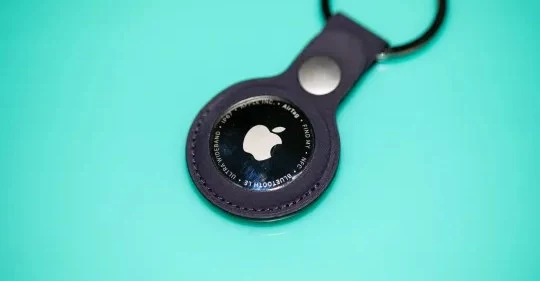
Apple’s decision to reprice its second-generation AirTag to an all-time low of US$89 for a four-pack—with Costco effectively bundling a fifth AirTag at no extra charge—reads, on the surface, like a straightforward consumer electronics deal. Yet the structure and timing of the offer suggest something more strategic: Apple is using pricing leverage on a relatively low-cost accessory to expand the installed base of a platform asset—Find My—whose value compounds as adoption rises.
This is a familiar playbook in ecosystem economics. Hardware margins can be flexed on “edge” devices when the broader objective is to increase:
- Network effects (more devices participating in the Find My network)
- Platform stickiness (more reasons to stay within iOS, watchOS, and Apple services)
- Behavioral habit formation (tracking keys, luggage, bags becomes routine, not occasional)
The Costco “four-plus-one” model is particularly telling. It doesn’t just lower the unit price; it nudges households into multi-object tracking—a use pattern that makes the platform feel indispensable and raises switching costs versus alternatives like Tile or Samsung SmartTag.
Ultra Wideband upgrades: precision today, spatial computing tomorrow
The second-generation AirTag’s most consequential improvement is its upgraded ultra wideband (UWB) chip, which enhances Precision Finding with directional guidance—on-screen arrows and distance readouts—inside the Find My app. This is not merely a quality-of-life feature. UWB’s centimeter-level accuracy is a foundational capability for a world moving beyond “connected devices” toward spatially aware computing.
Apple’s extension of Precision Finding to Apple Watch Series 9 and later is equally strategic. By pushing location intelligence to the wrist, Apple reinforces a multi-device continuum where iPhone, Watch, and services operate as a single, ambient system. It also differentiates Apple’s approach from generic Bluetooth Low Energy (BLE) trackers, which can be effective but typically lack the same precision and spatial context.
For business and technology leaders, the deeper implication is that Apple is continuing to normalize UWB as a consumer standard—an important prerequisite for broader adoption in:
- Indoor navigation (multi-floor buildings, venues, campuses)
- Asset tracking in controlled environments (offices, studios, light industrial)
- Context-aware experiences that depend on reliable proximity and directionality
This matters because UWB is a bridge technology: it improves consumer tracking now while quietly laying groundwork for augmented reality (AR) and mixed reality use cases where accurate indoor positioning becomes essential.
Travel features, airline integrations, and the emerging service layer around Find My
Apple’s refinements increasingly reflect real-world friction points—especially travel. Features such as item sharing among up to five users and temporary location sharing with airlines indicate a deliberate move toward partnerships that extend Find My beyond personal convenience into operational workflows.
If airlines can ingest temporary, user-consented location data to help reunite travelers with delayed luggage, Apple is effectively positioning Find My as a lightweight consumer-to-enterprise bridge. That opens the door to a broader service layer across travel and logistics, where the customer experience is shaped not only by the airline’s systems but also by Apple’s device-level capabilities and APIs.
Several non-obvious trajectories emerge here:
- Travel-tech differentiation: Airlines and airports may compete on “visibility” features—faster baggage recovery, fewer service desk interactions, better disruption handling.
- Hospitality and venue services: Hotels, resorts, and event operators could build premium experiences around item recovery and guest support.
- Operational analytics potential: Even with strong privacy guardrails, the industry will watch whether anonymized, consented insights can support optimization—while recognizing that location data is among the most regulated and scrutinized categories.
Apple’s challenge is to scale these integrations without triggering backlash around surveillance or misuse. The company’s brand strength in privacy will be tested not by marketing claims, but by the clarity of consent flows, data minimization, and how third parties are governed.
Accessory economics, repairability signals, and competitive pressure in Bluetooth trackers
AirTag’s design still lacks an integrated attachment point, a choice that continues to sustain a thriving ecosystem of holders, loops, and mounts. While critics frame this as an omission, it also functions as an economic catalyst: third-party accessory makers gain a durable market, and Apple benefits indirectly from a richer product halo around AirTag adoption.
At the same time, Apple’s use of a user-replaceable CR2032 battery is a pragmatic nod to longevity and total cost of ownership. In a period of muted global spending growth and heightened value sensitivity, replaceable batteries reduce perceived obsolescence and keep the product viable for years—an increasingly important factor as regulators tighten expectations around e-waste and repairability.
From a market dynamics perspective, aggressive promotions on AirTag increase competitive pressure across the Bluetooth tracker sector, which is widely expected to grow at a double-digit CAGR over the next several years. Competitors face a difficult trade-off:
- Match Apple on price and risk margin compression
- Differentiate on interoperability and features, potentially without UWB parity
- Focus on niches (enterprise, cross-platform households, specialized rugged use)
Apple’s advantage is not only hardware; it is the Find My network effect plus deep OS integration. Discounting accelerates that advantage by expanding the installed base quickly—especially when bundled in ways that encourage multi-tracker usage.
What looks like a bargain bin moment for a small accessory is better understood as a platform maneuver: Apple is using price, UWB precision, and travel-centric integrations to make location awareness feel native to daily life—an incremental step that also happens to align neatly with the longer arc toward spatial computing and service-driven partnerships.
 By
By
 By
By

 By
By


 By
By
 By
By