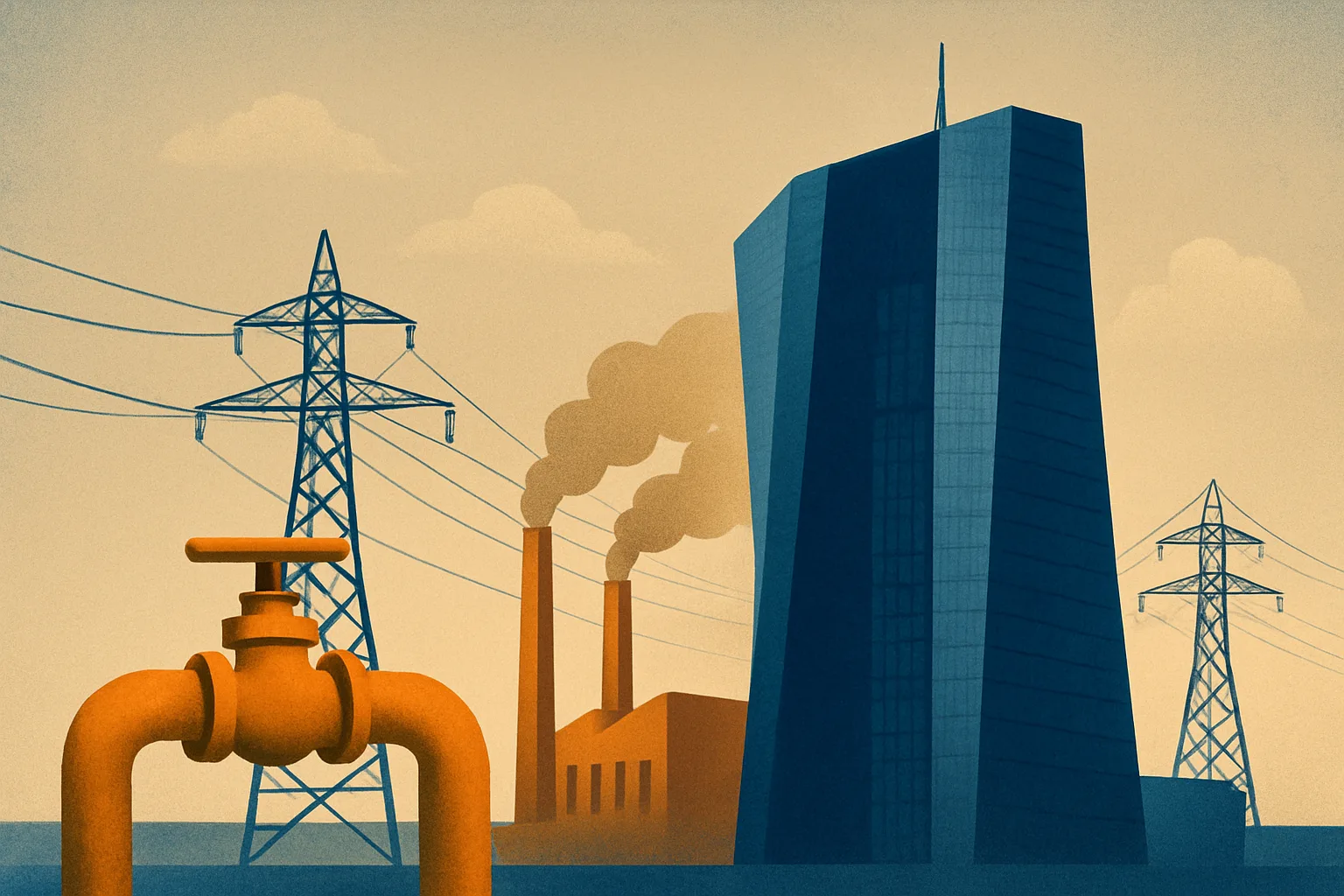

A second increase, not a fresh reversal
The European Central Bank decided on September 10, 2026, to raise its three policy rates by a quarter percentage point, citing inflation pressure from the Middle East conflict. Effective September 16, the deposit rate will rise to 2.50%, the main refinancing rate to 2.65% and the marginal lending rate to 2.90%. The distinction between announcement and implementation matters: the new rates are not yet effective as of September 15. (ecb.europa.eu)
This is renewed tightening, rather than a fresh reversal. The ECB had already raised rates on June 11 before holding them steady on July 23. September therefore strengthens an existing response to the energy shock. Associated Press also reported that stronger-than-expected economic activity helped underpin the decision. (apnews.com)
The important change is the expected persistence of inflation, not a higher forecast for this year. The ECB still projects headline inflation averaging 3.0% in 2026, but now expects 2.5% in 2027 and 2.1% in 2028, both upward revisions. Inflation excluding energy and food is projected at 2.6% next year and 2.3% in 2028. Those figures explain why policymakers are looking beyond the immediate fuel-price increase. They do not establish that prolonged above-target inflation is inevitable: these are conditional forecasts. (ecb.europa.eu)
Cheaper oil does not mean cheaper European energy
The staff projections reveal a distinction that an oil-centred account misses. Compared with June’s assumptions, the September baseline incorporates lower oil prices but higher gas and electricity prices. For the third quarter, assumed oil prices are nearly 15% lower than previously projected, while gas prices are 20% higher and electricity prices 50% higher. Staff link the gas revision substantially to low European storage, and the electricity revision partly to weather-related demand and supply conditions. (ecb.europa.eu)
For an energy-intensive manufacturer, the analytical implication is straightforward: falling crude prices need not signal relief if its principal exposure is purchased gas or electricity. Energy composition matters as much as the direction of a headline commodity index. Firms facing those costs must decide whether to absorb them, pass them through or reduce activity. That is a mechanism implied by the divergent assumptions, not evidence that every industrial sector is experiencing the same squeeze. (ecb.europa.eu)
The forecasts also incorporate market-based interest-rate and commodity assumptions with an August 19 cutoff. Their path back toward price stability is therefore conditional on an earlier market snapshot—not a guarantee about subsequent energy supplies or an ECB promise to deliver the assumed interest rates. (ecb.europa.eu)
The case for insurance—and the evidence against urgency
The immediate inflation figures support concern but complicate the diagnosis. August headline inflation rose to 3.3% from 2.9% in July, while energy inflation reached 14.3%. Yet inflation excluding energy and food edged down to 2.4%, and services inflation fell to 3.0%. The ECB said wages had not shown a material response to the energy shock; most longer-term inflation expectations remained around 2%. This is not evidence of an established wage-price spiral. (ecb.europa.eu)
The hike is better understood as insurance against propagation: the risk that an extended energy shock changes broader pricing and wage-setting. Waiting would avoid adding financing pressure while households and businesses absorb higher energy bills. Acting now attempts to prevent inflation from becoming harder to reverse. Neither argument disappears simply because the other is valid; the decision depends on how persistent policymakers believe the shock will be. (ecb.europa.eu)
Improved growth projections give the ECB more room to take that insurance. Staff expect expansion of 0.9% this year and 1.4% next year, upgrades from June. But resilience is not immunity. The decision explicitly identifies downside risks to growth alongside upside risks to inflation—the combination that makes another supply disruption particularly uncomfortable. (ecb.europa.eu)
Borrowing costs are moving; market outcomes remain conditional
There is already evidence of transmission, though not of a credit collapse. The ECB reported that bank lending rates for companies rose from 3.6% in May to 3.8% in June and July after June’s increase. Corporate lending nevertheless accelerated to 4.4% annual growth in July. Higher financing costs and expanding credit can coexist, especially while spending decisions and existing commitments adjust with a delay. (ecb.europa.eu)
For investors, the distinction is between plausible channels and demonstrated outcomes. A higher expected rate path could pressure bond valuations and equity multiples; weaker demand could instead restrain longer-term yields. Currency support from higher rates could be offset by concern about Europe’s energy exposure. These are scenarios, not claims about the announcement-day market reaction. The ECB’s outlook itself combines inflation pressure, growth risks and uncertainty over the eventual policy path. (ecb.europa.eu)
Nor does Frankfurt’s decision establish a synchronized global tightening cycle. AP reported that inflation concerns also confronted the Federal Reserve ahead of its September 15–16 meeting, but that meeting’s outcome was still unresolved on September 15. For European businesses, the practical question is narrower: whether their selling prices and orders can withstand both expensive energy and the financing costs intended to stop that expense spreading further. (apnews.com)

 By
By
 By
By

 By
By

 By
By
 By
By