
Promotional pricing as a strategic signal in the music hardware market
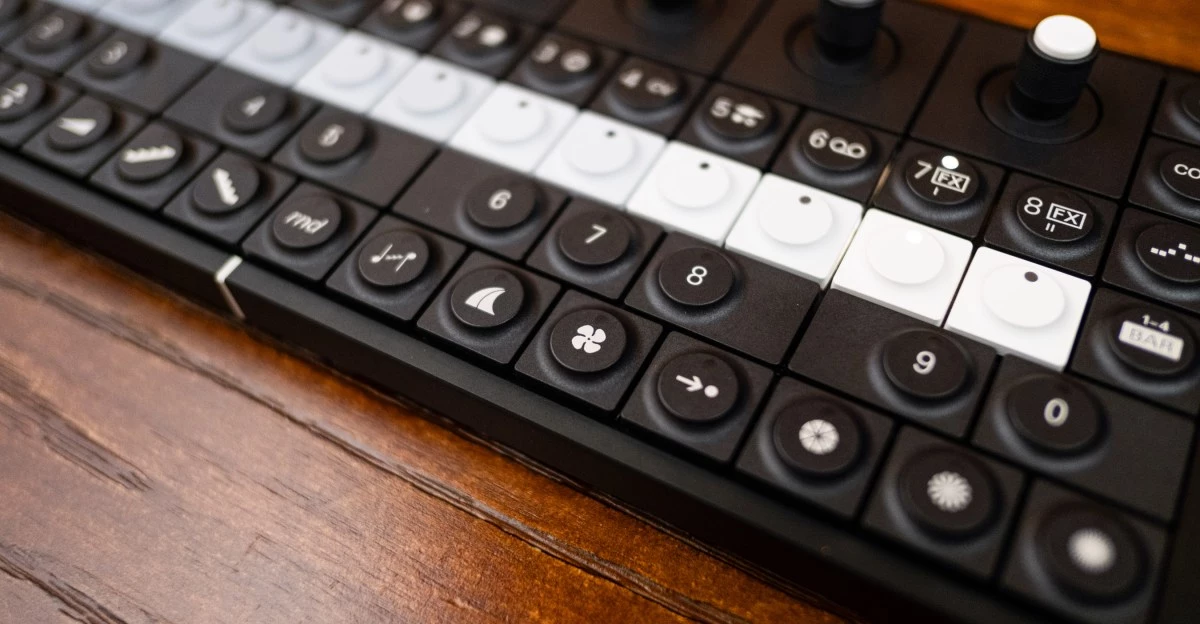
Teenage Engineering’s latest discounts on two high-profile instruments—the OP-XY and the EP-40 Riddim—read as more than a seasonal sales tactic. They function as a market signal about where the company believes the next wave of growth will come from: the expanding prosumer segment that wants premium tactility and immediacy, but increasingly expects consumer-electronics-style pricing dynamics.
The headline numbers are difficult to ignore. The OP-XY, positioned as a “greatest hits” flagship that consolidates capabilities associated with Teenage Engineering’s legacy groovebox and synth lineage, drops from $2,299 to roughly $1,609 through major retailers such as Guitar Center and B&H Photo via coupon-driven promotions. The EP-40 Riddim, a genre-leaning sampler designed for dub, reggae, and bass-forward workflows, falls from $329 to about $230 across the same channels. Some promotions reportedly extend through August 2026, a notably long runway in a category where scarcity and limited runs often underpin brand mystique.
This is a careful balancing act: expand reach without diluting prestige. Teenage Engineering has historically benefited from a perception of rarity—reinforced by periodic stock constraints and “sold out” moments on mass marketplaces. Discounting through curated retail partners, rather than broad price cuts everywhere, allows the firm to pursue volume while still controlling the narrative around value and desirability.
Design-led instruments meet tiered product architecture
Teenage Engineering’s competitive edge has long been its fusion of industrial design and performance-oriented music technology—devices that are simultaneously tools, instruments, and objects of taste. The OP-XY embodies that thesis: a consolidated, modular-feeling platform that signals product maturity and brand continuity. In business terms, it’s a portfolio statement—an instrument that implies the company’s past innovations are not being abandoned, but recomposed into a premium centerpiece.
The EP-40 Riddim, by contrast, is strategically narrower: a lower-cost entry point with a clearer stylistic identity. Together, the two discounts illuminate a deliberate tiered product architecture that resembles consumer electronics roadmaps more than boutique music hardware traditions:
- Flagship halo product (OP-XY): high margin potential, brand-defining, designed to anchor the ecosystem and attract professionals and serious enthusiasts.
- Accessible, genre-specific on-ramp (EP-40 Riddim): lower barrier to entry, faster purchase decisions, and a pathway to upsell as users’ skills and ambitions grow.
- Cross-channel retail execution: Guitar Center and B&H Photo provide credibility and reach, while coupon mechanics preserve the “official” MSRP as an aspirational reference point.
This structure matters because the music-creation market is no longer split cleanly between “pro studio” and “casual hobbyist.” The center of gravity is shifting toward creators who want hardware immediacy—hands-on control, performance readiness, and a workflow that feels musical rather than administrative—without committing to the cost and complexity of traditional studio setups.
Competitive pressure from software—and why tactile hardware still wins mindshare
The discounts arrive against a backdrop of relentless competition from DAWs, mobile music apps, and low-cost controllers. Software has improved dramatically on accessibility, sound quality, and distribution. Yet hardware grooveboxes and samplers retain a defensible position when they deliver what software struggles to replicate: constraint-driven creativity, stage-friendly ergonomics, and a sense of “play” that translates well to live performance and content creation.
Teenage Engineering’s promotional pricing sharpens that value proposition. A lower effective price on the OP-XY, in particular, tests the price elasticity of the prosumer market: how many aspiring producers and semi-professional musicians were previously priced out, but will now convert? If the installed base expands, downstream effects follow:
- Ecosystem amplification: more user-generated patches, tutorials, performance clips, and community presets—organic marketing that compounds over time.
- Peer-to-peer evangelism: hardware instruments often sell through demonstration; more owners means more real-world exposure.
- Platform leverage: a larger user base strengthens the case for add-ons—sound packs, expansions, and potentially software services.
The retailer strategy also hints at operational confidence. Promotions that can run deep and long suggest Teenage Engineering is managing inventory and procurement with unusual steadiness for a hardware maker—especially in an era still shaped by component volatility and demand forecasting risk. If supply chain resilience is indeed improving, it becomes a competitive moat: rivals can design compelling products, but they still need to manufacture and deliver them reliably at scale.
Where this move points next: services, AI workflows, and the creator economy
The most consequential implication may be what these discounts enable beyond unit sales. Music hardware is increasingly evaluated not just as a one-time purchase, but as an entry ticket into a broader creative loop: learning, sharing, performing, and monetizing. Devices like the OP-XY are naturally suited to short-form performance culture—loop-based composition, rapid iteration, and camera-friendly interaction that plays well on livestreams and social platforms.
That creates several plausible next steps for Teenage Engineering and its peers:
- Service ecosystem expansion: subscription or marketplace models for curated genre packs, community patches, and collaborative “jam” features could convert hardware adoption into recurring revenue.
- Partnership-driven distribution: collaborations with streaming platforms, live-event producers, or digital art venues could turn instruments into experiential marketing channels rather than standalone products.
- AI-enhanced creation on device: features such as sample suggestions, chord/progression assistance, or intelligent effects modulation would help hardware compete with software-native tools—while keeping the tactile workflow that users buy hardware for.
- New pressure on music IP frameworks: as loop-first creation accelerates, demand may grow for clearer sample licensing, micro-royalty systems, and rights tooling that matches the speed of modern production.
Ultimately, Teenage Engineering’s discounting strategy looks less like a retreat from premium positioning and more like a recalibration of the funnel—using targeted price relief to widen adoption while preserving the brand’s design-first aura. If the company can convert that expanded audience into an ecosystem—content, services, and next-generation workflows—it won’t just be selling instruments at a better price; it will be shaping how music technology is bought, learned, and performed in the next phase of the creator economy.

 By
By
 By
By
 By
By


 By
By
 By
By