

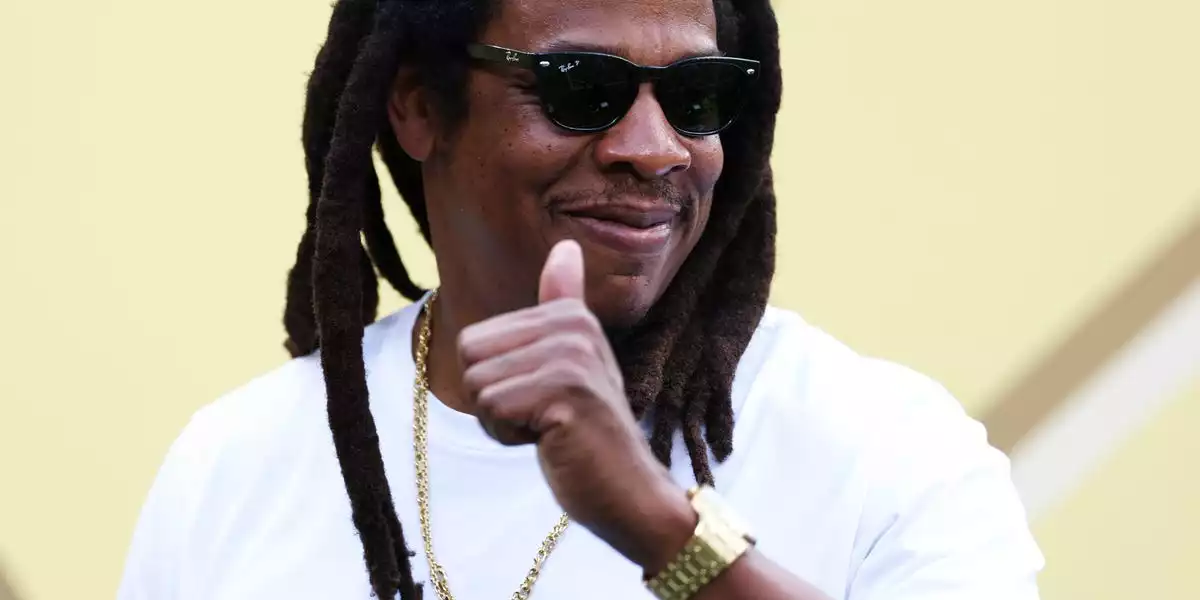

A celebrity collector as a market signal for modern haute horlogerie
Shawn “Jay-Z” Carter’s watch collecting has moved well beyond celebrity accessorizing into something closer to a publicly legible investment thesis—one that luxury executives, technologists, and wealth managers increasingly read as a proxy for where the top end of the mechanical watch market is heading. His collection spans the industry’s most influential maisons—Rolex, Audemars Piguet, Hublot, Richard Mille, Patek Philippe, and F.P. Journe—but the more telling detail is *what* he selects: ultra-complications, limited editions, and bespoke creations whose valuations routinely reach six and seven figures.
Pieces frequently associated with his public appearances—such as the Patek Philippe Grand Complication 5304-301R (often cited above $1 million), the diamond-set Hublot Big Bang (reported around $5 million), and high-profile Patek references including the Sky Moon Tourbillon, Grandmaster Chime, and Nautilus Tiffany & Co. edition—function as cultural artifacts and market instruments at once. When these watches appear at events like the Grammys or Super Bowl week, they do more than punctuate a look: they broadcast scarcity, craftsmanship, and capital concentration to a global audience that now understands watches as both luxury and liquid narrative.
For brands, this visibility matters because it is *not* the traditional ambassador playbook. Jay-Z’s watches are integrated into a broader identity—music, entrepreneurship, and status signaling—creating a form of organic product placement that can be more persuasive than formal endorsement. In an era where affluent consumers are skeptical of scripted marketing, authenticity—real or perceived—has become a competitive advantage.
Complications, materials science, and the new engineering prestige
Jay-Z’s preference for complicated and technically ambitious watches underscores a wider renaissance in traditional watchmaking techniques—tourbillons, perpetual calendars, minute repeaters—now reinforced by modern manufacturing. The contemporary collector’s appetite is pushing brands to invest in:
- In-house movement R&D, where differentiation increasingly lives beneath the dial
- Micro-machining and tighter tolerances, enabling more reliable high-complication production
- Advanced materials such as ceramics, sapphire, and carbon composites that change durability and aesthetics
- High-precision gem-setting, where craftsmanship meets repeatable engineering
This is where horology becomes a technology story. The most coveted mechanical watches are no longer simply “heritage products”; they are miniaturized engineering platforms that blend centuries-old finishing standards with 21st-century production methods. The result is a prestige economy in which technical difficulty becomes a form of brand currency.
Equally important is the shift toward co-creation as an innovation engine. Jay-Z’s 2013 Shawn Carter Hublot Classic Fusion collaboration illustrates how limited-run partnerships can compress product cycles and introduce design risk in a controlled way. For maisons, these collaborations can:
- Accelerate relevance with younger, culturally attuned buyers
- Create scarcity by design, supporting pricing power
- Generate earned media that traditional campaigns struggle to match
- Provide a testbed for new aesthetics and materials without replatforming a core line
Just as notable is the rise of bespoke and ultra-personalized commissions, exemplified by custom diamond-set pieces and the Richard Mille “Blueprint” concept associated with his collection. Advances in CAD/CAM tooling and increasingly sophisticated workshop workflows make it easier to deliver one-off outcomes without collapsing margins—an important evolution as the ultra-wealthy increasingly demand products that are not merely rare, but *singular*.
Watches as alternative assets: scarcity economics and secondary-market power
At the top of the market, mechanical watches have matured into a recognizable alternative asset class, and Jay-Z’s acquisitions mirror the same logic driving family offices and private collectors: scarcity, provenance, and brand durability can combine into a store of value that feels culturally legible in a way many financial instruments do not.
This dynamic is most visible in the secondary market, where limited Patek Philippe and Richard Mille references have, at times, outperformed more traditional collectibles. The underlying mechanics are familiar to anyone who studies constrained supply markets:
- Scarcity and discontinuation (notably around icons like the Nautilus and Royal Oak)
- Multi-year waiting lists, which effectively create a shadow market
- Speculative trading, where allocation becomes arbitrage
- Auction houses and boutique dealers acting as price setters and liquidity venues
Yet the same forces that support valuations also introduce fragility. Speculation can inflate prices beyond collector fundamentals, and the market’s social-media visibility can amplify momentum in both directions. For brands, the tension is strategic: scarcity supports desirability, but excessive flipping can erode long-term brand equity and alienate genuine collectors.
Macro conditions add another layer. The upper echelon of watchmaking has shown notable resilience through economic cycles, aided by wealth growth and geographic diversification—particularly demand across Asia, the Middle East, and the United States. Jay-Z’s global media footprint amplifies this cross-border appetite, effectively turning individual wrist shots into international marketing moments.
Executive takeaways: provenance tech, personalization systems, and experiential luxury
For business and technology leaders, the most actionable insight is that modern haute horlogerie is increasingly a hybrid of craft, capital markets, and customer data. Jay-Z’s collection highlights several strategic directions:
- Agile collaboration models: institutionalize short-run co-creation with credible cultural partners to drive innovation without diluting core heritage.
- Digital provenance infrastructure: as watches behave more like assets, demand rises for verifiable history, service records, and ownership chains—opening the door to blockchain-backed certification and tamper-resistant digital passports.
- Data-driven personalization: bespoke demand favors brands that can operationalize customization through integrated CRM, design automation, and AI-assisted configuration—reducing lead times while preserving artisanal quality.
- Experiential luxury as differentiation: private viewings, VIP events, and narrative-rich acquisition rituals are becoming part of the product, not merely marketing—especially for top collectors who value access as much as objects.
Jay-Z’s horological profile ultimately reads as a case study in how luxury evolves when craftsmanship meets modern influence and financial logic. The watches may be mechanical, but the ecosystem around them—media, technology, resale infrastructure, and cultural capital—moves at digital speed, rewarding brands that can protect heritage while engineering relevance.
 By
By
 By
By
 By
By
 By
By

 By
By
 By
By







