
The Rotisserie Chicken Wars: Where Taste, Technology, and Transparency Collide
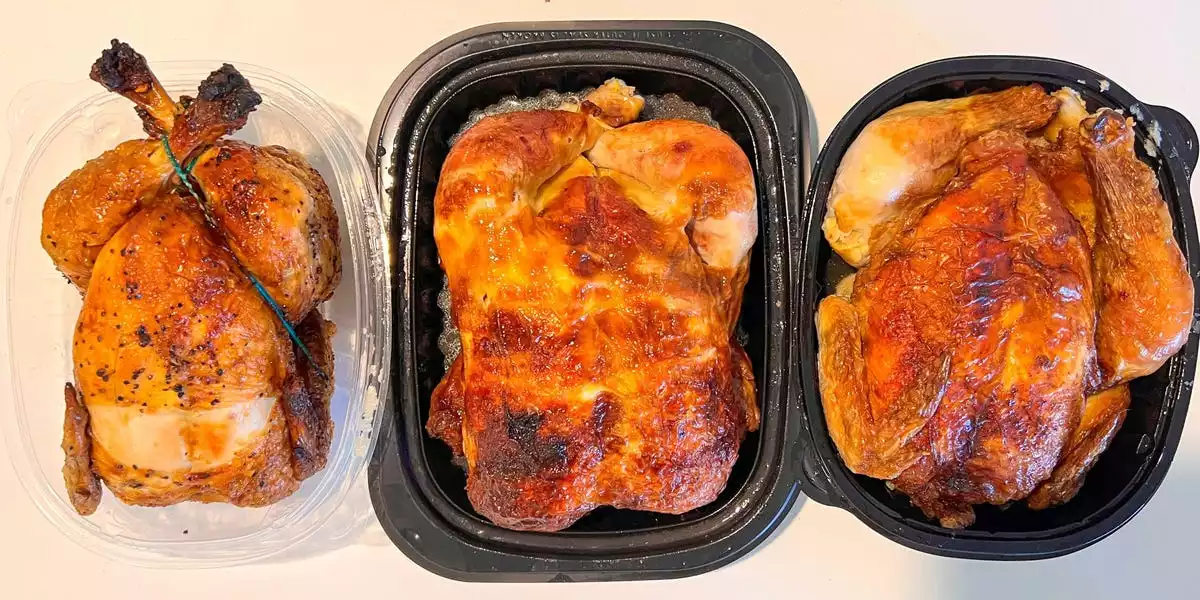
Beneath the golden skin of a supermarket rotisserie chicken lies a microcosm of modern grocery retail—a battleground where price, provenance, and palate vie for supremacy. The recent consumer taste test pitting Costco, Safeway, and Whole Foods against one another, while seemingly a culinary curiosity, reveals the tectonic forces shaping the future of food retail. The humble chicken, it turns out, is no mere commodity; it is a strategic anchor, a technological proving ground, and a litmus test for consumer trust.
Strategic Anchors and the Science of Sensory Satisfaction
For decades, Costco’s $4.99 rotisserie chicken has been retail legend—a loss leader engineered to lure shoppers into cavernous aisles, where margin-rich items await. Yet, the taste test’s verdict upends conventional wisdom: Safeway’s mid-priced bird, not the cost leader or the premium organic option, triumphed in taste, moisture, and ingredient familiarity. This outcome signals a recalibration in the calculus of shopper loyalty.
- Traffic Drivers Redefined: The notion that only deep discounts drive store visits is challenged. Sensory quality—flavor, juiciness, and ingredient transparency—can counterbalance price gaps, especially as consumers grow more discerning.
- Operational Complexity: Prepared foods are a logistical Rubik’s Cube. Mastery demands not just culinary acumen but also technological sophistication—IoT-enabled ovens, AI-powered demand forecasting, and real-time shrink minimization. The rotisserie chicken, with its perishable nature and high turnover, becomes a proving ground for these innovations.
Margin Engineering Meets the Clean-Label Imperative
The ingredient list, once a footnote, is now front and center in consumer decision-making. Costco’s use of sodium phosphate and modified food starch is a classic move—preserve margin by extending shelf life and standardizing flavor. Whole Foods, in contrast, champions ingredient minimalism, yet its bird faltered in taste, exposing the limits of “clean label” when not paired with food science innovation.
- Ingredient Transparency as Table Stakes: Today’s shoppers decode labels with the rigor of auditors. Clean label is no longer a differentiator; it is a baseline expectation, and any gap between brand promise and eating experience is swiftly penalized.
- The Science of Satisfaction: The underperformance of “simple” formulations points to a frontier for food-tech: naturally derived binders, precision fermentation, and enzymatic tenderizers that deliver both transparency and sensory delight.
Navigating Pricing Power and Supply Chain Volatility
Inflationary cross-currents—poultry feed and labor costs up by double digits—have squeezed margins and tested the limits of consumer price tolerance. Safeway’s $9 rotisserie chicken, positioned between the extremes, demonstrates the power of micro-segmentation: capturing value without alienating the price-sensitive.
- Vertical Integration vs. Agility: Costco’s poultry complex in Nebraska is a testament to supply chain control, but ingredient concessions and variable eating quality raise questions about hidden costs to brand equity. Retailers must weigh the stability of vertical integration against the innovation and flexibility offered by specialized co-manufacturers.
- Dynamic Pricing and Membership Models: The future belongs to those who harness real-time elasticity analytics—calibrating pricing tiers to optimize both traffic and margin. A portfolio approach, blending loss-leaders, mid-premium, and halo SKUs, is now within reach thanks to advanced data science.
Technology and the New Era of Prepared Foods
The rotisserie oven, once a symbol of analog simplicity, is being reimagined as a node in the digital food ecosystem.
- Sensor-Driven Cooking: Connected ovens dynamically adjust airflow, rotation, and spice injection, transforming subjective craft into scalable, data-validated consistency.
- Traceability and ESG Analytics: Blockchain and cloud-native systems can now surface farm-level welfare metrics, addressing regulatory demands and consumer scrutiny—especially as new directives on food additives and animal welfare loom.
- Food Science R&D: The gap between clean label and sensory satisfaction is an open invitation for startups—plant-based binders, edible films, and enzymatic solutions that sidestep regulatory hurdles while preserving eating quality.
Retailers who reframe prepared foods as a tech-enabled experience—integrating smart ovens, computer vision, and machine learning—will not only raise consistency and margin but also unlock new business models, from white-label licensing to franchise expansion. The challenge is to align ingredient transparency with sensory excellence, forging partnerships with food-tech innovators to ensure that health-consciousness does not come at the expense of flavor.
As the rotisserie chicken taste test reveals, the path to retail leadership is no longer paved by price alone. It is a multidimensional contest—one that rewards operational dexterity, technological investment, and a relentless commitment to consumer trust. Those who master this trifecta will transform a supermarket staple into a defensible, data-driven franchise, setting the table for the next era of grocery innovation.

 By
By

 By
By

 By
By

 By
By
 By
By