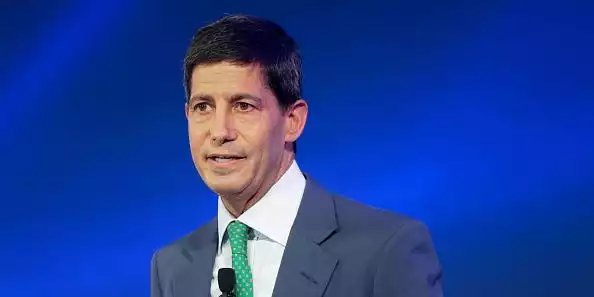

The Warsh Nomination: A New Chapter in Central Banking’s Political Drama
The corridors of monetary power in Washington have seldom been as fraught with intrigue as they are today. President Trump’s nomination of Kevin Warsh—former Federal Reserve Governor and ex-Morgan Stanley executive—to succeed Jerome Powell as Chair of the U.S. Federal Reserve, lands not with a bang, but with the subtle tremors of a tectonic shift. While markets have registered only a muted response, the implications for U.S. monetary policy, capital markets, and the technology sector are profound, setting the stage for a contest over the very soul of central banking.
Political Headwinds and the Risk Premium of Uncertainty
Warsh’s nomination arrives amid a tempest of political maneuvering. Republican senators, leveraging a Department of Justice investigation into current Chair Powell, have threatened to block any Fed nomination until the probe concludes. This standoff is more than Beltway theater—it strikes at the heart of central bank independence, a principle that has underpinned global faith in the dollar for decades.
- Investor Sentiment: The immediate market reaction—flat Treasury yields, softening precious metals, and listless equities—belies the deeper risk premium now shadowing U.S. assets. The prospect of a Fed Chair seen as aligned with White House priorities introduces an element of political risk that could unsettle the dollar’s safe-haven status.
- Global Ripples: Should the perception of compromised autonomy take root, international reserve managers may begin reallocating away from U.S. assets, nudging capital toward the euro or alternative stores of value—even as gold prices dipped on the news.
A Fork in the Road: Rules-Based Policy or Political Accommodation?
Warsh’s intellectual pedigree is clear: he has long criticized the Fed’s post-crisis expansionism and its dovish leanings, advocating for a regime shift toward rules-based policy—think a modernized Taylor Rule—and a stricter approach to inflation.
- Potential Policy Outcomes:
– Rules-Based Hawkishness: If Warsh holds true to his convictions, markets could see a front-loaded tightening cycle should inflation overshoot, a scenario at odds with the administration’s preference for loose money.
– Political Pressure: Alternatively, if political imperatives prevail, the Fed may maintain an extended low-rate environment. This would buoy risk assets in the short term but risks stoking medium-term inflation and de-anchoring expectations.
For the technology sector, the stakes are particularly acute. Ultra-low discount rates have fueled sky-high valuations for growth companies, SPACs, and venture-backed unicorns. A hawkish pivot would compress multiples and penalize duration-heavy equities—cloud, SaaS, and AI platforms foremost among them. Yet, Warsh’s deregulatory instincts could also catalyze innovation in banking-as-a-service and digital assets, offering new pathways for growth even as old ones narrow.
Digital Currency, Corporate Strategy, and the New Monetary Playbook
Beyond the immediate rate debate, Warsh’s openness to central-bank digital currency (CBDC) experimentation signals a potential acceleration of the digital dollar agenda. This could position the U.S. as a formidable rival to China’s e-CNY, spurring private-sector partnerships in secure payments, digital identity, and quantum-resistant cryptography.
- Strategic Moves for Corporates:
– Interest-Rate Hedging: With term-rate volatility likely to rise, prudent treasurers may look to lock in fixed-rate debt and revisit share-repurchase strategies.
– Valuation Recalibration: Equity analysts should stress-test models with a 50–75 basis point upward shift in discount rates, especially for high-duration tech sectors.
– CBDC Readiness: Fintechs and infrastructure vendors should allocate resources to compliance, custody, and interoperability solutions, anticipating procurement opportunities in a fast-tracked digital-dollar rollout.
– Policy Engagement: Firms with Washington exposure would do well to advocate for a data-driven, independent Fed, lest credibility erosion translate into higher long-term funding costs.
Navigating the Interregnum: Strategic White Space for the Bold
The Warsh nomination is not merely a personnel change; it marks a potential inflection point in U.S. monetary doctrine. The period between nomination and policy clarity is a liminal space—one that rewards those who move early to fortify balance sheets, recalibrate risk models, and scenario-plan for both a hawkish recalibration and a politically influenced status quo.
For global investors, technology executives, and policy strategists alike, the coming months will test assumptions about the resilience of American institutions and the adaptability of capital markets. As Fabled Sky Research notes in its recent analysis, this is a moment to watch not only for what is said in confirmation hearings, but for the subtle shifts in risk, capital, and innovation that will define the next era of central banking.

 By
By
 By
By
 By
By
 By
By
 By
By


 By
By