


Uber and Waabi: Rewriting the Autonomous Vehicle Playbook
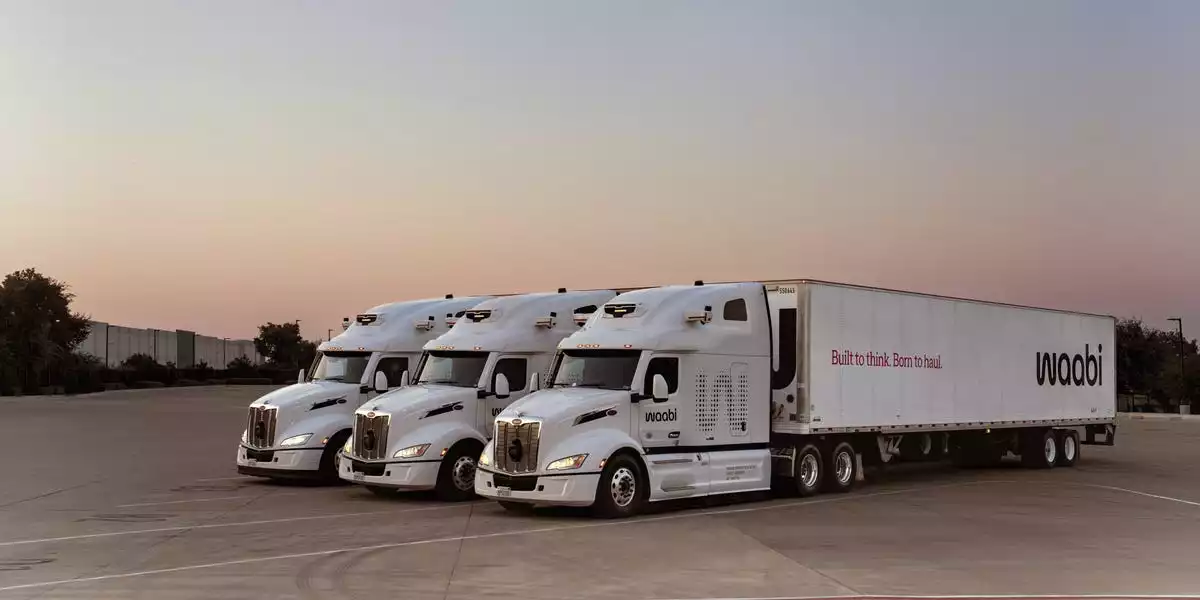
Uber’s $250 million, milestone-driven commitment to Waabi marks a nuanced, almost surgical return to the autonomous vehicle (AV) fray. Gone are the days of the company’s sprawling, capital-intensive ATG unit; in its place is a leaner, smarter partnership model. This time, Uber is not building from scratch but leveraging Waabi’s singular “AI brain” and industrial-scale simulation engine, aiming for a fleet of 25,000 robotaxis and, crucially, the flexibility to extend into long-haul trucking. The deal reframes the AV race from a breakneck sprint to a marathon of scale and economics, where convergence between freight logistics and urban mobility is not just possible but inevitable.
The Architecture of Generalizable Autonomy
Waabi’s technological proposition is as audacious as it is elegant: a single, unified autonomy stack that can be tuned for both dense urban ride-hailing and the open highways of freight logistics. Traditional approaches have siloed development—one stack for trucks, another for city cars—multiplying costs and slowing deployment. Waabi’s “single-brain” architecture instead trains perception, prediction, and planning modules on a shared data substrate, then customizes policies for each vehicle class.
This modularity is more than a technical flourish; it is a strategic accelerant. The same software can migrate fluidly across Class 8 trucks, mid-size vans, and passenger vehicles, provided the right hardware partners come aboard. The result: faster time-to-market, lower per-vertical R&D spend, and a level of optionality that competitors, burdened by bespoke stacks, can only envy.
At the core of Waabi’s edge is its mixed-reality simulation environment. Here, synthetic miles—generated at a fraction of the cost and risk of real-world testing—expose the autonomy stack to rare, edge-case scenarios at industrial scale. This aligns with regulatory shifts, such as the NHTSA’s AV TEST program, which increasingly recognize virtual validation as a legitimate pathway to safety certification. The capital efficiency is profound: simulated miles cost cents, not dollars, enabling rapid iteration without the cash burn that has hobbled so many AV hopefuls.
Strategic Realignment: From Asset-Heavy to Platform-Oriented
Uber’s approach to AVs has matured. By tying funding to Waabi’s technical milestones, Uber secures asymmetric upside—access to cutting-edge autonomy—while capping its downside risk. This “capital-light” model allows Uber to rent R&D agility, rather than shoulder the burdensome P&L of heavy engineering. If successful, the partnership could supercharge Uber’s core flywheel: lowering driver costs, boosting vehicle utilization, and expanding the margin profile of Uber Freight.
The economic logic is compelling. Global trucking, a $4 trillion market, and ride-hailing, at $300 billion, have long been treated as separate domains. Yet, a shared autonomy layer allows Uber to arbitrage supply across both, smoothing the cyclicality of consumer mobility with the steadier demand of freight. For Waabi, Uber’s marketplace infrastructure—dispatch, payments, insurance, and consumer trust—offers a commercialization shortcut, sidestepping the need to build these rails from scratch.
Competitively, the landscape is shifting. Waymo and Zoox enjoy first-mover visibility but remain encumbered by high operational costs and limited operational domains. Truck-centric players like Aurora and Kodiak bet on the simplicity of highways, but risk missing out if robotaxi demand accelerates. Waabi’s horizontal approach, spanning both freight and passenger, hedges these timelines and positions it as a potential “AV middleware” provider—software that OEMs may license, much as Android became the default OS for mobile devices.
Regulatory, Economic, and Labor Catalysts
North America’s chronic driver shortage—80,000 seats unfilled, with trucking wages rising over 12% year-on-year—sharpens the economic case for autonomy, especially in long-haul corridors. Policy levers, such as the U.S. Inflation Reduction Act and Canadian zero-emission mandates, may further accelerate adoption, as autonomous routing reduces idle time and unlocks carbon credits.
Yet, regulatory fragmentation persists. Waabi’s simulation data, if shared with regulators, could become a persuasive tool in shaping a national AV framework, especially as simulation-based safety cases gain traction. Still, the specter of a high-profile AV incident looms, threatening to reset timelines overnight.
Labor dynamics are equally complex. Autonomous trucking is likely to first displace overnight highway segments, with human drivers focusing on the nuanced first and last miles—a hybrid model that may soften the blow of technological disruption. In ride-hailing, autonomy could rewire the gig economy, as platforms seek cost predictability amid growing scrutiny over worker classification.
The Road Ahead: Data Moats, Partnerships, and Industry Power Shifts
Every mile—real or simulated—logged by Waabi’s stack, especially when fused with Uber’s vast telemetry, deepens a formidable data moat. This not only sharpens behavioral prediction models but also opens doors to differentiated insurance products, a potentially lucrative adjacency.
Partnerships with OEMs and Tier-1 suppliers will be decisive. Waabi’s modular stack could appeal to mid-tier manufacturers lacking the resources for in-house autonomy, while Tier-1s might integrate its software into sensor-compute reference designs, accelerating validation and opening new royalty streams.
Ultimately, the Uber–Waabi alliance exemplifies a sector pivoting from moonshot experimentation to disciplined, platform-oriented scaling. The next two to three years will test whether simulation-first development can outpace the road-mile incumbents—and whether the AV tipping point, long promised, is finally at hand. For executives across transportation, logistics, and manufacturing, the lesson is clear: the locus of strategic control is shifting, from asset-heavy vehicle makers to asset-light software orchestrators who command both the algorithms and the demand graph.

 By
By
 By
By
 By
By
 By
By
 By
By
 By
By

 By
By







