
Davos 2024: Artificial Intelligence Redraws the Map of Global Capital
The snow-dusted avenues of Davos have long been a theater for the world’s grandest economic dramas, but in 2024, the stage was commandeered by artificial intelligence. Gone were the days when geopolitics or macroeconomic tremors dominated the Promenade. Instead, the conversation pulsed with the urgency of a technological epoch shift—a moment when AI, in all its generative and infrastructural complexity, became the axis around which global capital, talent, and policy now revolve.
From Application to Infrastructure: The New Arms Race
A casual observer might have noted the sheer density of tech-branded chalets lining the Promenade—nearly 80% of corporate “houses” belonged to technology firms, a visual testament to AI’s gravitational pull. Yet, beneath the surface, a subtler transformation was underway. The spotlight, once trained on consumer-facing titans, has shifted toward those who own the digital scaffolding: Nvidia, Palantir, and their ilk. The narrative has moved from software-as-a-service to something more elemental—compute-as-capital.
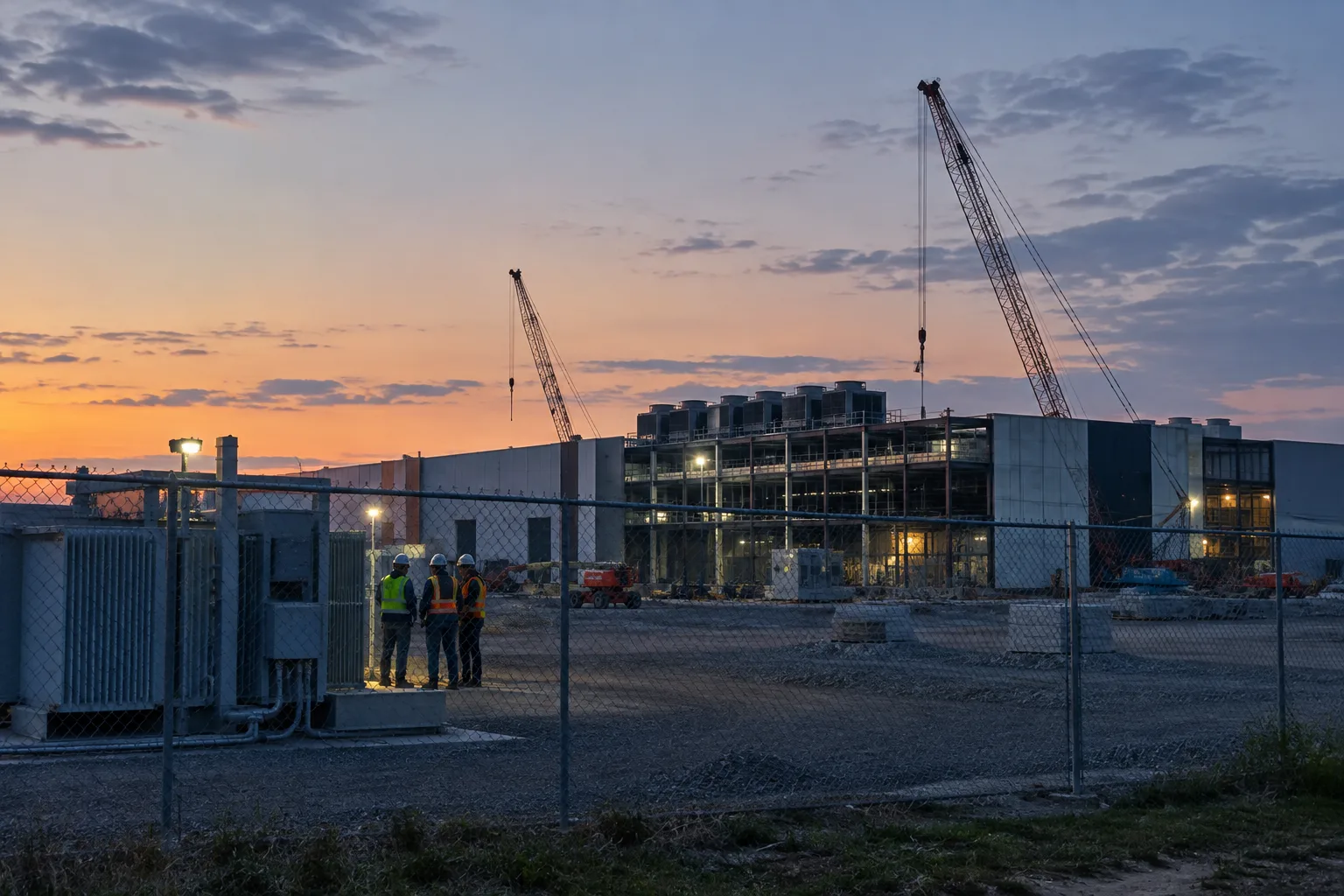
- Capital Expenditure Renaissance: Hyperscalers are now budgeting unprecedented sums for AI-optimized data centers. This CAPEX intensity, reminiscent of early telecom build-outs, signals a pivot toward tangible assets—power, cooling, and networking infrastructure. Private-equity infrastructure funds, often silent partners, are co-investing in these real assets, creating a bulwark against the ephemeral risks that haunted the dot-com era.
- Defensible Value: Unlike the froth of purely model-centric startups, these investments come with depreciation schedules and utility-like cash flows, offering a measure of resilience even if some AI bets falter.
This infrastructure-first approach is not merely a hedge; it is a recalibration of where value will be captured in the AI economy. As Microsoft’s Satya Nadella warned, the true promise of AI will only be realized if its productivity gains diffuse beyond the vendors and into the broader enterprise landscape.
Productivity, Talent, and the Limits of Diffusion
The productivity story of generative AI is seductive—early deployments in coding, customer service, and drug discovery are yielding 15-40% efficiency gains at the task level. Yet, the path from pilot to profit is neither automatic nor evenly distributed.
- Sectoral Containment: Nadella’s platform paradox looms large: if AI’s bounty accrues only to a closed circle of tech firms, the broader economy risks stagnation, and sky-high valuations may not survive the reckoning.
- Integration Costs: For non-tech incumbents, the challenge is acute. Those who fail to experiment with domain-specific large language models risk margin erosion as rivals harness superior labor-to-output ratios.
- Talent Scarcity: The market for senior LLM engineers has reached fever pitch, with compensation packages surpassing even those of elite hedge-fund quants. A bifurcation is emerging—deep model R&D remains concentrated in coastal hubs, while “prompt operations” and AI-augmented workflows spread globally. Smart organizations are already distinguishing between GPU-level talent and more scalable prompt-engineering roles, designing compensation and equity pools accordingly.
The absence—or low-key participation—of figures like OpenAI’s Sam Altman, Elon Musk, Amazon, and Google added its own intrigue. Their retreat from Davos suggests a tactical focus on product execution and regulatory engagement in Washington and Brussels, rather than public spectacle.
Energy, Policy, and the Macro Backlash
AI’s infrastructural hunger is not satisfied by silicon alone; it is inextricably tied to the world’s energy grids and regulatory frameworks.
- Energy Demand: New AI data centers can require five to ten times the power density of their predecessors. This creates unexpected alliances between AI developers and utility-scale renewables, small modular nuclear ventures, and grid storage startups. Investors with dual mandates—digitalization and decarbonization—are now forced to rethink ESG frameworks, treating compute efficiency as a lever for emissions mitigation.
- Monetary Policy: The capital outlays for AI infrastructure are counter-cyclical, threatening to reignite demand for industrial inputs and energy even as central banks attempt to guide economies toward disinflation. CFOs must now model higher real rates into the long-term economics of AI projects, particularly those with horizons extending beyond 2026.
Regulatory crosswinds are intensifying. The EU AI Act’s looming penalties and the U.S. election cycle’s uncertain legislative trajectory mean that executives must institutionalize model governance and hedge against jurisdictional divergence—partitioning data, ensuring model-card transparency, and preparing for sector-specific rules.
Strategic Imperatives for the AI Age
For decision-makers, the message from Davos is unmistakable: AI is no longer a speculative play, but a systemic driver of economic value and risk. The winners will be those who treat AI as an integrated challenge—capital, talent, energy, and policy—rather than a mere technology upgrade.
- Commission cross-functional audits to ensure AI productivity gains reach the P&L, not just the lab.
- Lock in energy and compute contracts to hedge against looming capacity constraints.
- Institutionalize AI ethics and governance to withstand regulatory divergence across continents.
- Rebalance innovation portfolios to include hard-tech enablers—advanced packaging, photonics, and thermal management—alongside software bets.
The tectonic shifts glimpsed at Davos 2024 will echo for years to come. For those with the foresight to adapt, the AI era promises not only competitive advantage but a redefinition of what it means to build, invest, and lead in the digital age.

 By
By
 By
By

 By
By
 By
By

 By
By