


The New Shape of Consumer Tech: Data, Transparency, and the Persistence of Ownership
This week’s retail landscape, marked by a flurry of strategic discounts across wearables, power accessories, audio, and smart-home devices, offers a window into the evolving priorities of both technology makers and their customers. What appears at first glance as post-holiday inventory management is, on closer inspection, a coordinated push toward deeper integration of data-driven value, energy transparency, and a renewed appetite for physical ownership in an increasingly ephemeral digital world.
—
Sensor Fusion and the Democratization of Health Analytics
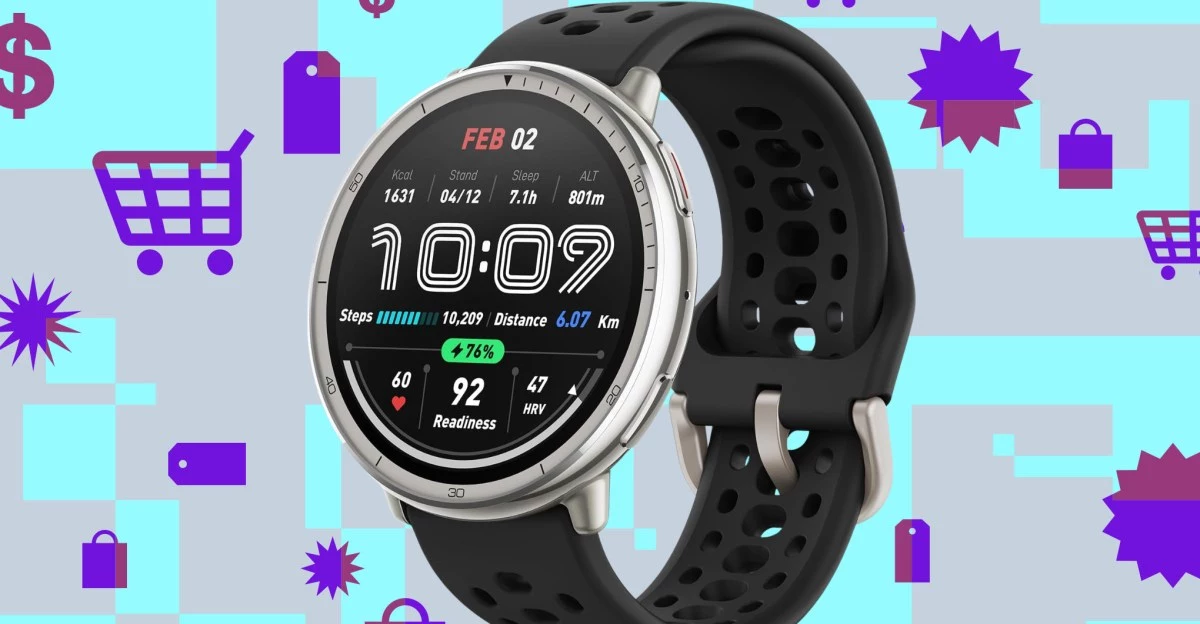
The Amazfit Active 2’s sub-$90 price tag is more than a bargain; it is a harbinger of the commoditization of advanced sensor arrays. By packing PPG, SpO₂, GNSS, and cycle-tracking into a device with a nine-day battery life, Amazfit is not merely undercutting the incumbents—it is forcing a recalibration of what consumers expect from mass-market wearables. For Apple, Garmin, and Fitbit, the race is no longer about hardware prowess alone. The battleground is shifting toward software, services, and the monetization of longitudinal health data.
- Ultra-Low-Power Innovation: The leap in battery longevity is a testament to advances in microcontroller efficiency and AI-at-the-edge processing. This means wearables can now support more sophisticated, potentially even HIPAA-compliant diagnostics, without the daily charging friction that has long hampered adoption.
- Strategic Implication: As hardware margins compress, expect a pivot to subscription-based health analytics, clinician dashboards, and regulatory-cleared features as the next frontier for value capture.
—
Energy Transparency and the Rise of Embedded Displays
Anker’s 45W Nano Charger, with its on-device wattage display, signals a subtle but profound shift: energy observability is becoming a core feature, not a novelty. In a world inching toward real-time, policy-driven demand response, the ability to see—at a glance—how much power is being drawn is both empowering for users and foundational for future regulatory compliance.
- From Gadget to Grid Asset: The Google Nest Learning Thermostat’s price cut is less about moving units and more about embedding smart thermostats as nodes in a decarbonizing grid. As utilities roll out time-of-use pricing, these devices become essential tools for aggregated demand-side management, a market that could soon eclipse hardware revenues.
- UX Trojan Horse: The micro-display on Anker’s charger is more than an information portal; it is a potential storefront for contextual commerce. Imagine a future where your charger upsells carbon offsets or travel insurance—small, always-on screens as gateways to pico-transactions.
—
Audio, Safety, and the Enduring Allure of Physical Media
Shokz’s OpenRun Pro bone-conduction earbuds, discounted to $109.95, land at the intersection of safety and situational awareness. As cities tighten rules on “sealed-ear” devices for cyclists and runners, open-ear audio is poised for growth, driving demand for MEMS microphones and DSPs that can blend ambient and digital soundscapes.
Meanwhile, Amazon’s “3-for-$33” 4K Blu-ray promotion and the continued strength of franchise-driven titles like Donkey Kong Bananza reveal a consumer cohort unwilling to cede quality and ownership to the streaming oligopoly. The fatigue with fragmented catalogs, compression artifacts, and the specter of revoked licenses is real. Studios are taking note, experimenting with premium “own-the-file” tiers and even exploring NFT-backed digital twins—hybrid models that blend collectible scarcity with DRM-free playback.
—
Strategic Undercurrents and the Data Exhaust Flywheel
Beneath the surface, a powerful flywheel is spinning: every discounted wearable, charger, or thermostat seeds new streams of data. For device makers and platform operators, the true long-term value lies not in the initial sale, but in the recurring, longitudinal datasets that can be leveraged for AI-driven services, insurance partnerships, and participation in energy markets.
- Retailers: January is less about clearance and more about ecosystem seeding. Bundling health, audio, and smart-home SKUs builds stickiness, setting the stage for future upsell opportunities.
- Utilities: The proliferation of smart thermostats is a lever for scaling demand response programs, with hardware discounts offset by avoided generation costs.
- Investors: Component suppliers specializing in low-power sensor fusion, GaN power stages, and bone-conduction transducers are quietly outpacing broader semiconductor markets.
The week’s discounts, then, are not mere footnotes in the retail cycle. They are signposts pointing to a future where health data, energy transparency, and high-fidelity content ownership are the pillars of durable consumer value. For those reading between the lines, the message is clear: in a world of selective constraint—on capital, on attention, on trust—organizations that treat hardware as the gateway to data-driven services will define the next era of consumer technology.

 By
By
 By
By

 By
By
 By
By
 By
By

 By
By







