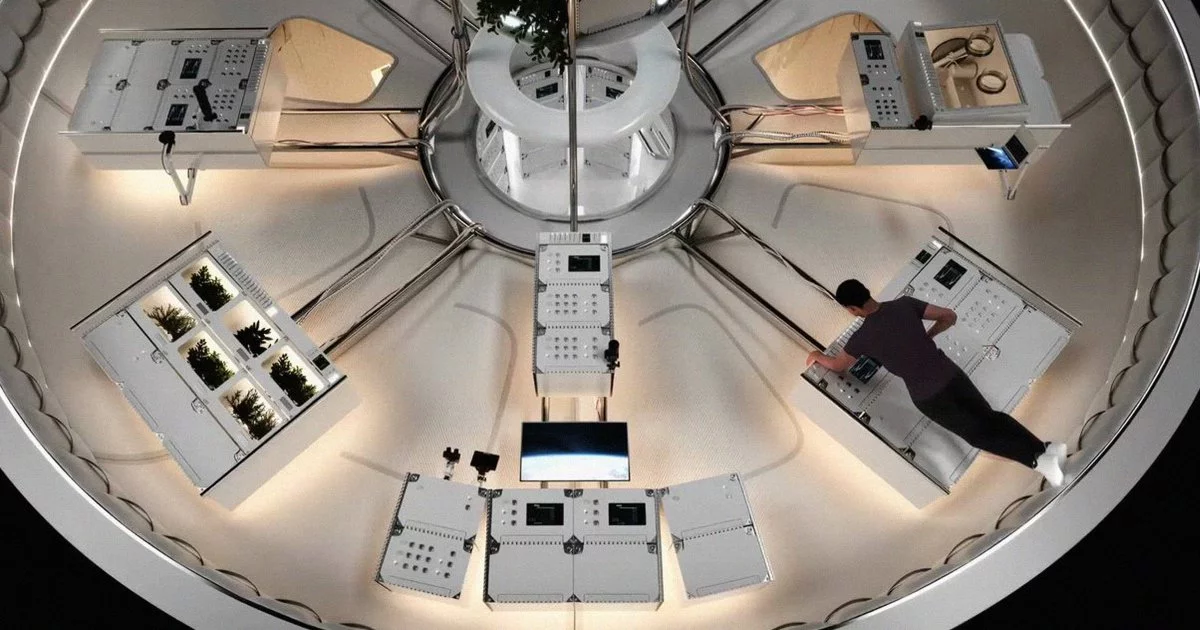

Inflatable Habitats and the Reimagining of Orbital Real Estate
In the shadow of the International Space Station’s impending retirement, a new paradigm for orbital infrastructure is quietly inflating. Max Space’s unveiling of the Thunderbird Station—a 12,300-square-foot, single-launch inflatable habitat—signals a profound shift in both the economics and architecture of living and working in low Earth orbit (LEO). With operational ambitions set for 2029 and a prototype test flight scheduled for 2027, Thunderbird is not merely a technical feat; it is the harbinger of a new business model for space habitation, one that treats orbital volume as a flexible, monetizable asset.
The Maturation of Inflatable Composites and Their Strategic Edge
The technology underpinning Thunderbird is no longer the stuff of speculative fiction. Third-generation soft-goods—hybrid fabrics interwoven with robust films and embedded with micrometeoroid shielding—have reached a level of maturity that rivals, and in some respects surpasses, traditional rigid modules. These inflatable composites offer:
- Multi-layer redundancy: Each layer serves as both a barrier and a backup, transforming catastrophic punctures into manageable maintenance events.
- Embedded sensor networks: Continuous structural health monitoring enables predictive maintenance, reducing downtime and operational risk.
- Panoramic transparency: Advanced laminate stacks allow for large windows, balancing radiation protection with optical clarity—a leap forward for both astronaut experience and scientific observation.
Such advances are not only relevant in orbit; the underlying materials science has terrestrial applications, from disaster relief shelters to rapid-deploy field hospitals, hinting at a future where space innovation cycles back to Earth in unexpected ways.
Economic Disruption: From Scarcity to Abundance in LEO
The most radical promise of Thunderbird is economic. Where traditional rigid modules have delivered pressurized volume at a staggering $60,000–$70,000 per cubic foot, Max Space claims a tenfold reduction, targeting sub-$10,000 per cubic foot. This shift does more than lower costs—it redefines the bottlenecks of orbital enterprise:
- Real estate abundance: With more habitable space, the limiting factors become life-support logistics and the delivery of consumables, spawning new markets for closed-loop systems and on-orbit manufacturing.
- Flexible leasing models: Inflatable habitats can be partitioned and reconfigured, enabling short-term, sovereign “subscriptions” rather than decades-long commitments. This is orbital co-working, echoing the terrestrial shift toward flexible, on-demand office space.
- Down-market opportunities: Large, customizable environments are ideal for high-value industrial processes—optical interferometry, semiconductor fabrication, protein crystallization—allowing early movers to stake intellectual-property claims in a nascent orbital zoning regime.
This abundance, however, introduces new risks and dependencies. Insurers and underwriters, wary of unproven architectures, will look to the 2027 prototype for actuarial validation. The success or failure of this demonstration will ripple through capital markets, influencing everything from venture funding to export-credit guarantees.
Navigating the Competitive and Regulatory Terrain
Thunderbird enters a crowded field. Axiom Space, Northrop Grumman, Sierra Space/Blue Origin, Vast, and Nanoracks/Lockheed are all vying for NASA’s Commercial Low Earth Orbit Destinations (CLD) contracts. Max Space’s edge lies in its mass efficiency, but it lacks the deep capitalization of its rivals. Strategic partnerships—with launch providers, cargo operators, and emerging space nations—will be critical to closing the financing gap and securing anchor tenants.
NASA’s role as market maker cannot be overstated. With the ISS’s deorbiting funded but no national replacement planned, the agency is shifting toward milestone-based, fixed-price contracts, rewarding agile hardware cycles and penalizing cost overruns. For private station operators, this means aligning development milestones with NASA’s procurement cadence, while courting sovereign customers eager to lease orbital real estate without bearing the burden of capital expenditure.
Regulatory influence is another front. Early engagement with international standards bodies—embedding inflatable-habitat norms into ISO frameworks—can create switching costs for competitors and shape the rules of the game. Advocacy for regulatory goodwill, such as orbital debris mitigation exemptions for inflatables, may yield both operational and reputational dividends.
The Road Ahead: Strategic Imperatives for the New Space Economy
The next five years will be decisive. Max Space and its peers must hedge against timeline risk by securing multiple launch options and staggering regulatory certification tracks. Non-human-rated modules—serving as microgravity bioreactors or data centers—offer a path to early revenue and risk mitigation. Capital strategies will need to blend traditional venture funding with sovereign-backed financing and asset-backed securitization.
For industry leaders and investors, the message is clear: orbital real estate is fast becoming an infrastructure category as foundational as undersea fiber or cloud data centers once were. The window for strategic positioning—through investment, partnership, or supply-chain integration—is narrow, but the rewards for early movers could be outsized. As the next-generation space economy crystallizes, those who treat LEO not as a speculative frontier but as a platform for scalable enterprise will define the contours of humanity’s expansion beyond Earth.

 By
By
 By
By

 By
By


 By
By
 By
By