


When Minimalism Meets Mayhem: The Cybertruck’s Egress Dilemma and the New Safety Calculus
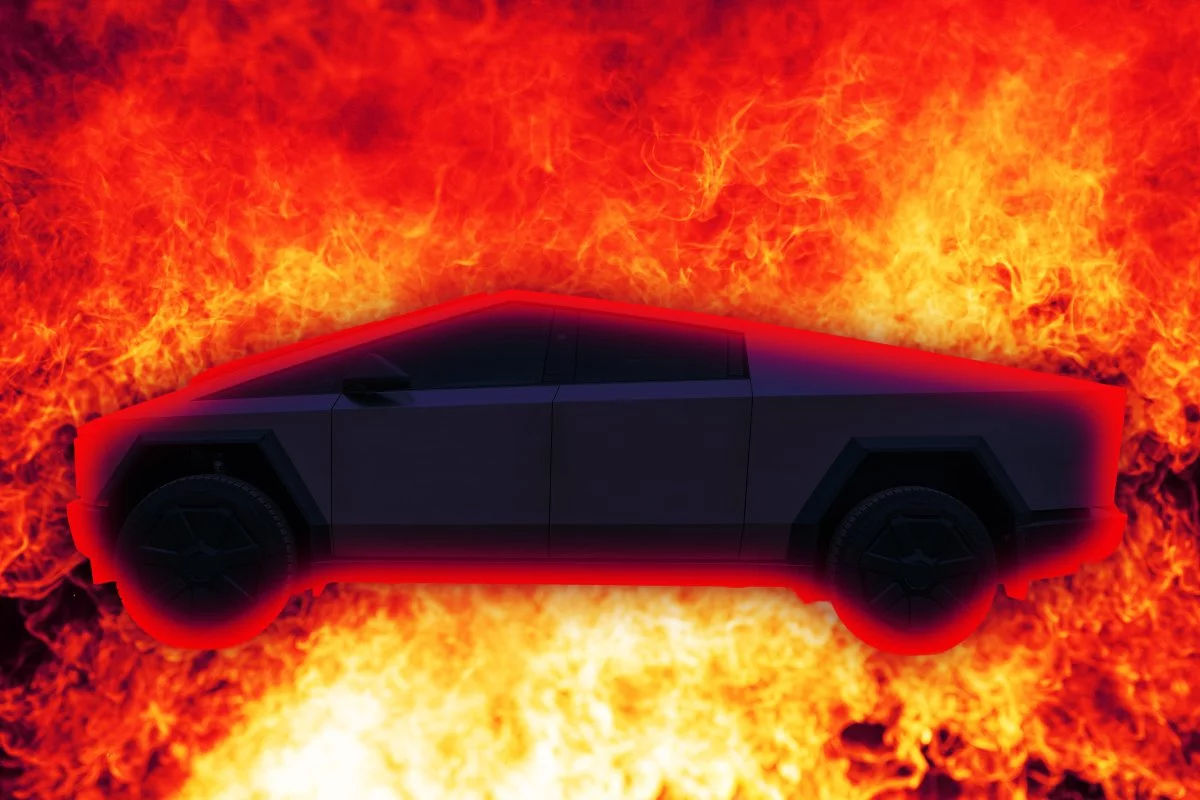
The Tesla Cybertruck, with its angular silhouette and cold-rolled stainless-steel exoskeleton, has never shied from spectacle. Yet, as a recent Washington Post investigation reveals, the same design bravado that made the Cybertruck a viral sensation now stands at the center of a harrowing debate over safety, usability, and the very ethos of Silicon Valley’s approach to automotive innovation.
Touchscreens, Hidden Cords, and the Human Factor
At the heart of the controversy lies Tesla’s relentless pursuit of a software-first, buttonless interior—a philosophy that has redefined the Human–Machine Interface (HMI) for an entire industry. In the Cybertruck, as in other recent Tesla models, the humble mechanical door latch has been subsumed by touchscreens and electronic actuators, with emergency releases tucked away out of sight.
On paper, these hidden pull-cords satisfy federal safety regulations. In practice, however, they violate a more primal rule: in moments of crisis—smoke, darkness, panic—critical safety functions must be instantly discoverable, even by the uninitiated. The tragic 2024 California fire, which claimed three lives, underscores the consequences when design purity overrides intuitive usability. Lawsuits now allege that Tesla’s approach not only confuses occupants but also stymies first responders, who report that the Cybertruck’s ultra-rigid stainless steel can triple or quadruple extrication times compared to conventional vehicles.
This is not an isolated incident. At least a dozen similar “no-egress” events across Tesla’s lineup since 2019 have drawn the scrutiny of regulators, insurers, and the firefighting community. The pattern is clear: as vehicles become more like smartphones on wheels, the stakes of software-centric design extend far beyond convenience.
Material Science: The Double-Edged Sword of Stainless Steel
Tesla’s use of 30X cold-rolled stainless steel is as much a marketing coup as an engineering feat. The material’s dent resistance and “bullet-proof” allure have become part of the Cybertruck’s legend. Yet, this same rigidity presents a formidable challenge for emergency crews. Standard hydraulic cutters, designed for traditional automotive steels and aluminum, struggle against the Cybertruck’s body panels, forcing fire departments to adapt or delay.
Moreover, the very properties that make stainless steel so robust also undermine established crash safety paradigms. With less energy absorbed in crumple zones, Tesla must rely on internal structures and software algorithms to compensate—a theoretical solution that remains largely untested in real-world, high-severity incidents. The resulting uncertainty has begun to ripple through the insurance sector, with underwriters reassessing risk models and, in some cases, imposing surcharges for vehicles with electronic-only latching systems.
The Regulatory and Legal Reckoning
The National Highway Traffic Safety Administration (NHTSA) now faces mounting pressure to treat “egress impairment” not as a fluke, but as a systemic flaw with far-reaching implications. Should regulators mandate mechanical overrides or recall affected vehicles, the financial and reputational fallout could be profound. Plaintiffs, meanwhile, are framing Tesla’s aesthetic minimalism as willful negligence, seeking punitive damages that could dwarf the Cybertruck’s projected 2024 margins.
Insurers, already wary of Tesla’s repair complexity, are recalibrating their models to account for the unique risks posed by software-defined safety systems and novel materials. For institutional investors, these developments signal a new volatility regime—one where litigation risk and regulatory overhang rival battery costs and supply-chain disruptions as determinants of enterprise value.
The Road Ahead: Lessons for the Software-Defined Vehicle Era
The Cybertruck saga is more than a cautionary tale for Tesla; it is a crucible for the entire automotive and technology ecosystem. As software-defined vehicles (SDVs) proliferate, the boundary between consumer-electronics minimalism and automotive safety doctrine grows perilously thin. Industry observers anticipate an “ISO-UX” movement, codifying the need for intuitive, physical fallbacks in all critical systems—a direct response to the lessons emerging from the Cybertruck’s design.
For automakers, the imperative is clear: balance electronic innovation with mechanical redundancy, and treat discoverability as a design constraint, not an afterthought. Technology executives must confront the “experience debt” accrued when usability lags behind ambition, instituting governance that prioritizes safety over novelty. Policymakers are already drafting new standards, mandating mechanical overrides and data transparency to safeguard public trust.
The Cybertruck’s journey from viral icon to regulatory flashpoint crystallizes a new reality: in the age of software-defined mobility, the margin between futurism and folly is vanishingly thin. Those who navigate this terrain with humility—embedding human-factor resilience alongside technological bravado—will shape not just the next generation of vehicles, but the very future of mobility itself.

 By
By
 By
By

 By
By
 By
By


 By
By







