

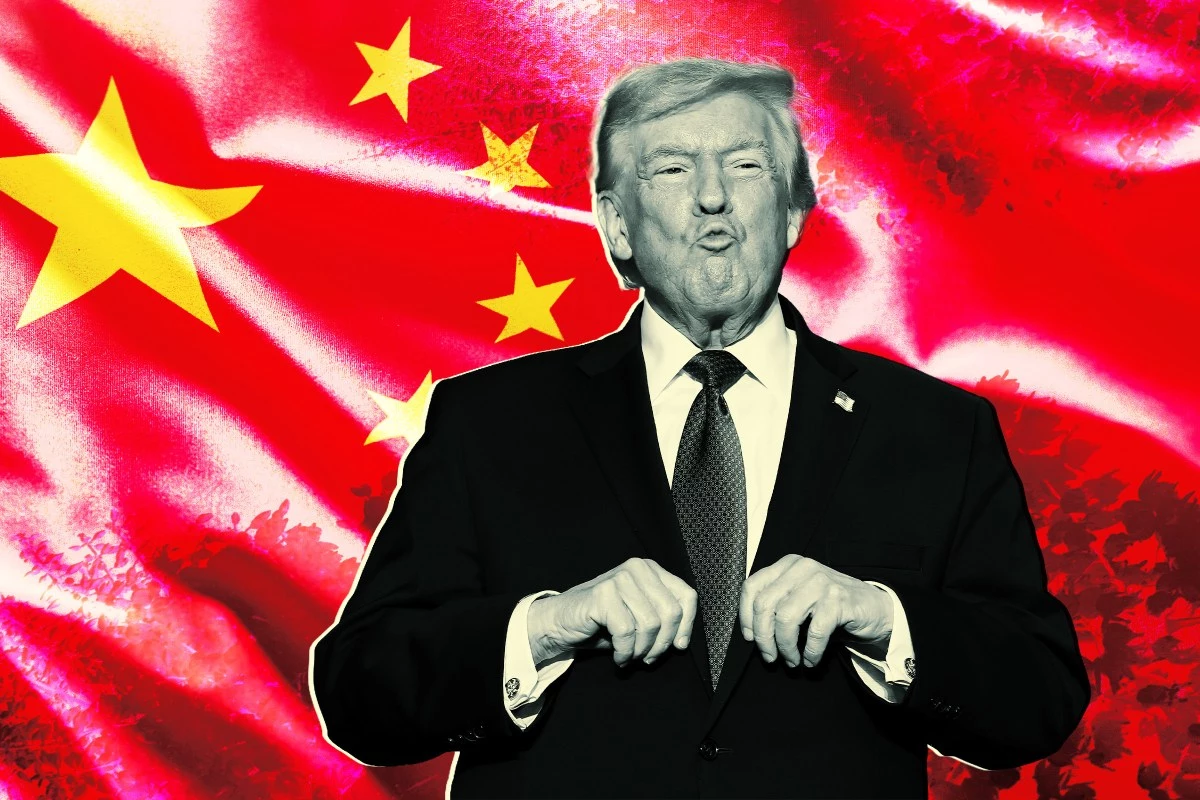

Export Controls Ignite a New Era in China’s AI Ecosystem
Washington’s tightening of export controls on advanced AI chips, particularly those targeting Nvidia’s A/H-class accelerators, has set off a series of reverberations that extend far beyond the intended choke points. Rather than simply hobbling China’s access to cutting-edge hardware, these measures have catalyzed a sweeping realignment of capital, innovation, and industrial strategy—reshaping the global AI landscape in ways that are only beginning to come into focus.
At the heart of this transformation is a forced localization of the AI value chain. Chinese cloud and hyperscale providers, once reliant on imported silicon, are now compelled to bulk-buy domestic GPUs and co-design new AI chips. This shift is not occurring in a vacuum: Beijing’s 14th Five-Year Plan earmarks over a trillion RMB for AI infrastructure, and provincial governments are subsidizing up to half the capital expenditure for semiconductor fabs and cloud usage. The result is a state-supported, vertically integrated ecosystem that is rapidly closing the hardware gap, even as China continues to trail the United States in frontier large-language-model research.
Capital Flows and the Allure of Chinese AI
Global investors, long wary of overheated U.S. tech valuations, are seizing on this moment of policy-induced disruption. UBS and other institutions now label Chinese technology as the “most attractive” segment globally, citing earlier monetization windows in advertising, e-commerce, and industrial AI. The calculus is straightforward: while U.S. AI equities are priced for perfection, Chinese mega-caps such as Alibaba and Tencent Cloud trade at single-digit forward P/E multiples, offering asymmetric upside if domestic AI commercialization achieves scale.
This capital rotation is not limited to the giants. Funds like Ruffer are paring exposure to U.S. Big Tech and re-weighting toward emerging chip firms—Biren, Moore Threads, and others—poised to benefit from both policy tailwinds and a newly captive end-market. Shanghai’s STAR Market, meanwhile, is positioning itself as the conduit for fast-track IPOs of AI chip makers, potentially offering liquidity events before the U.S. market digests its own AI bubble’s excesses.
The export-control regime has also triggered a bifurcation in global tech stacks. As U.S. firms double down on CUDA and proprietary cloud APIs, China is building around open-standard RISC-V architectures, domestic firmware, and sovereign AI frameworks. This divergence, reminiscent of the GSM vs. CDMA split of the 1990s, is raising switching costs and entrenching two largely incompatible digital spheres—a development with profound implications for multinational technology strategy.
Innovation Under Constraint: Scarcity as a Catalyst
History teaches that scarcity can be a powerful engine for innovation. The current constraints on advanced hardware are accelerating what Beijing terms “domain-specific autonomy.” Chinese firms are innovating not only on silicon—designing architectures tuned to mature domestic manufacturing nodes—but also on software, optimizing for parameter efficiency, sparsity, and quantization. This mirrors past leapfrog advances, such as Japan’s post-oil-shock automotive efficiency or Huawei’s 5G breakthroughs following 2019 sanctions.
Key technological trajectories to watch include:
- Low-bit precision inference engines (4-bit, 2-bit) optimized for domestic GPU memory constraints
- Neuromorphic accelerators leveraging analog computing, less export-controlled and more node-agnostic
- Sovereign LLM training on synthetic data to circumvent tightened data-export rules
- Vertical integration of power modules and cooling systems—a response to China’s electricity quota system, with potential export implications
The drive for supply-chain resilience is also inverting traditional metrics of competitive advantage. Silicon Valley’s dependence on TSMC’s advanced nodes is increasingly viewed as a geopolitical vulnerability, while Chinese chip designers, limited to 14-28 nm processes, are prioritizing energy efficiency and memory bandwidth over sheer transistor count. If successful, this could redefine the performance-per-watt calculus for many inference workloads and diminish the strategic value of bleeding-edge lithography.
Geopolitics, Investment, and the Shape of the AI Race
The implications of this technological bifurcation extend well beyond semiconductors. China’s dominance in graphite anodes and rare earth magnets provides leverage in any tit-for-tat escalation, influencing cost structures for Western electric vehicle and wind-turbine manufacturers. Meanwhile, nations in the Global South—Brazil, Indonesia, Saudi Arabia—are eyeing Chinese cloud-AI stacks as “good-enough” alternatives, free from U.S. political strings and potentially more aligned with local governance models.
For decision-makers, the message is clear:
- Portfolio diversification across U.S. and Chinese AI sub-segments is now a hedge against regulatory and currency risk.
- Supply-chain mapping is essential to anticipate counter-sanctions and second-order dependencies.
- Engagement with open accelerator ecosystems—such as RISC-V—offers strategic optionality as export controls evolve.
As Fabled Sky Research and other observers note, the export controls intended to stifle China’s AI ambitions are, paradoxically, accelerating the domestication of its entire AI value chain. The result is a structural bifurcation of global technology stacks, a widening valuation gap between U.S. and Chinese AI assets, and the emergence of new geopolitical leverage points that reach far beyond the world of chips. In this contested, multi-axis race, the winners will be those who navigate complexity with agility—diversifying dependencies, rebalancing portfolios, and preparing for a world where AI leadership is no longer a single-pole contest, but a global, dynamic, and fiercely competitive endeavor.

 By
By
 By
By

 By
By
 By
By
 By
By


 By
By
 By
By


 By
By







