


When Autonomous Vehicles Collide with Urban Nightlife: The Sonic Fault Lines of Robotaxi Expansion
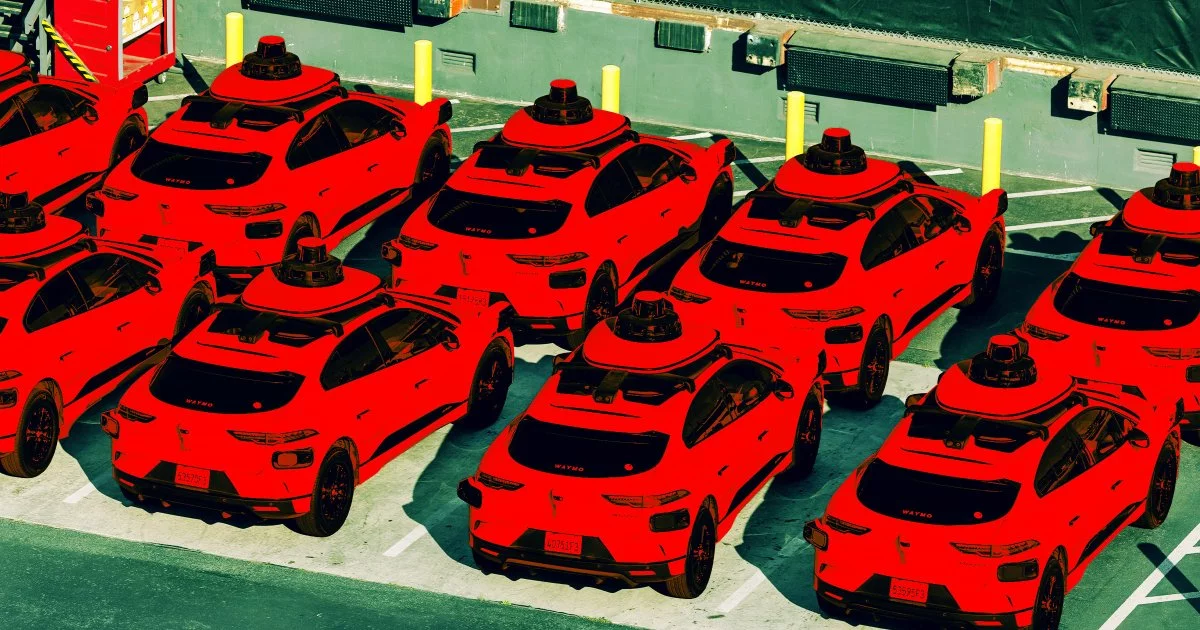
Santa Monica’s City Council has drawn a sharp line in the sand, ordering the overnight closure of two Waymo autonomous-vehicle charging depots in response to a crescendo of resident complaints. For a year, neighbors endured the relentless beeping, alarms, and floodlights that accompanied the nightly ballet of robotaxis coming and going—until, at last, civic patience snapped. With the threat of legal action looming, the city’s move exposes a rarely-discussed but increasingly urgent dilemma: the friction between high-tech mobility ambitions and the lived realities of urban neighborhoods.
The Unintended Soundtrack of Safety: Engineering Meets Human Limits
Autonomous vehicles were supposed to eliminate the flaws of human drivers, but in their quest for safety, they have inadvertently amplified a different kind of vulnerability. California’s mandate for auditory alerts—those insistent backup beeps—was designed with pedestrian protection in mind. Yet, these safeguards were never calibrated for the delicate acoustics of a sleeping city.
- Safety-first design, neighborhood-second implementation: The sensor suites and AI logic that power AVs are marvels of modern engineering, but their outputs—shrill alarms, glaring lights—have become unwelcome guests in mixed-use zones.
- Noise as a systems-engineering blind spot: What was once a minor design consideration has emerged as a “last-mile” challenge for robotaxi operators. The depot, a linchpin of 24/7 fleet operations, is now a flashpoint for community resistance.
This episode exposes a fundamental edge case: the need for AVs to communicate their intentions without breaching the peace. Expect a surge of interest in directional chirps, adaptive volume controls, and even non-acoustic signaling—V2X notifications that ping smartphones instead of eardrums.
The Economics of Friction: When Externalities Reprice the Future
Beneath the surface, the economics of autonomous fleets are quietly shifting. Waymo’s depots, reportedly handling up to 200 vehicle interchanges per hour, represent the logistical backbone of the robotaxi value proposition: high utilization, low downtime, and the promise of urban mobility at scale. But every operational gain exacts a hidden toll.
- Externalized costs, internalized headaches: Each mile saved by autonomy risks offloading new burdens onto the community—noise, light, and the intangible cost of disrupted sleep.
- Retrofitting reality into the business model: The calculus for AV operators now includes the price of soundproofing, relocating depots, and navigating volatile municipal politics. For investors and infrastructure funds, charging-depot utilization becomes a variable as unpredictable as the weather.
- Regulatory risk as a market force: Deep-pocketed incumbents may absorb the cost of compliance, but for smaller startups, the specter of sudden shutdowns could hasten market consolidation.
Municipal pushback, once a footnote in the AV playbook, now threatens to become a central plotline—one that could reshape the geography of charging infrastructure and the economics of urban mobility.
The New Social Contract: Urban Quiet, Smart Cities, and the License to Operate
Santa Monica’s standoff is not an isolated incident; it is a harbinger of the next phase in the smart-city saga. As cities pursue the dream of the 15-Minute City and residents rediscover the value of urban quiet, the social license to operate becomes as critical as any regulatory permit.
- Quality-of-life as a political flashpoint: The politics of noise, once relegated to the margins, is now center stage. Petitions and council dockets are becoming leading indicators for AV adoption, much as ESG metrics guide climate-tech investments.
- Strategic pivots for AV stakeholders: Original equipment manufacturers and Tier-1 suppliers are likely to prioritize “stealth” subsystems—low-decibel actuators, silent alarms, and Li-Fi communication—opening new frontiers for intellectual property and licensing.
- Dynamic regulation as the new norm: Cities may experiment with data-driven permitting, tying operational hours to real-time noise telemetry rather than blunt curfews.
For decision-makers, the lesson is clear: social friction is no longer a soft constraint. It is a quantifiable, actionable variable—one that demands integration into fleet-optimization algorithms, investment models, and civic engagement strategies.
Santa Monica’s confrontation with Waymo is more than a local dispute; it is a signal flare for the future of autonomous mobility. The companies that harmonize engineering prowess with community sensibilities—anticipating not just regulatory hurdles but the rhythms of city life—will be the ones to secure both market share and public trust. In this new era, the quietest innovation may prove the most resonant.

 By
By

 By
By
 By
By
 By
By
 By
By



 By
By


 By
By







