


The Playful Vanguard: How Emerging Gadgets Signal a New Era in Consumer Tech
In the saturated world of consumer electronics, novelty often masquerades as innovation. Yet, the eclectic parade of devices showcased in the “Today I’m Toying With” series—ranging from chocolate-extruding 3-D printers to self-morphing robots and dual-screen handheld consoles—suggests something more profound is afoot. These playful gadgets, while seemingly whimsical, are harbingers of deep technological and economic shifts converging at the intersection of manufacturing, nostalgia, and creator-driven commerce.
From Culinary 3-D Printing to Modular Handhelds: The Technology Beneath the Surface
What appears at first glance as mere gadgetry in fact embodies the rapid democratization of advanced manufacturing and robotics. Consider the chocolate 3-D printer: beneath its glossy surface lies a confluence of food-safe materials science and precision extrusion, propelling additive manufacturing from the prototyping lab into the home kitchen. Industry forecasts peg the culinary 3-D printing market at $1.2 billion by 2030, with a staggering 45% compound annual growth rate. This is not just about dessert; the same core technologies are poised to revolutionize nutraceuticals and even bioprinting.
Robotics, too, is shrinking in both size and cost. The self-transforming robot toy—equal parts nostalgia and engineering marvel—showcases the falling price of servos, inertial measurement units, and high-density batteries. By embedding automation in toys, manufacturers lower the psychological and practical barriers to household robotics, quietly seeding the data and user acceptance necessary for the smart homes of tomorrow.
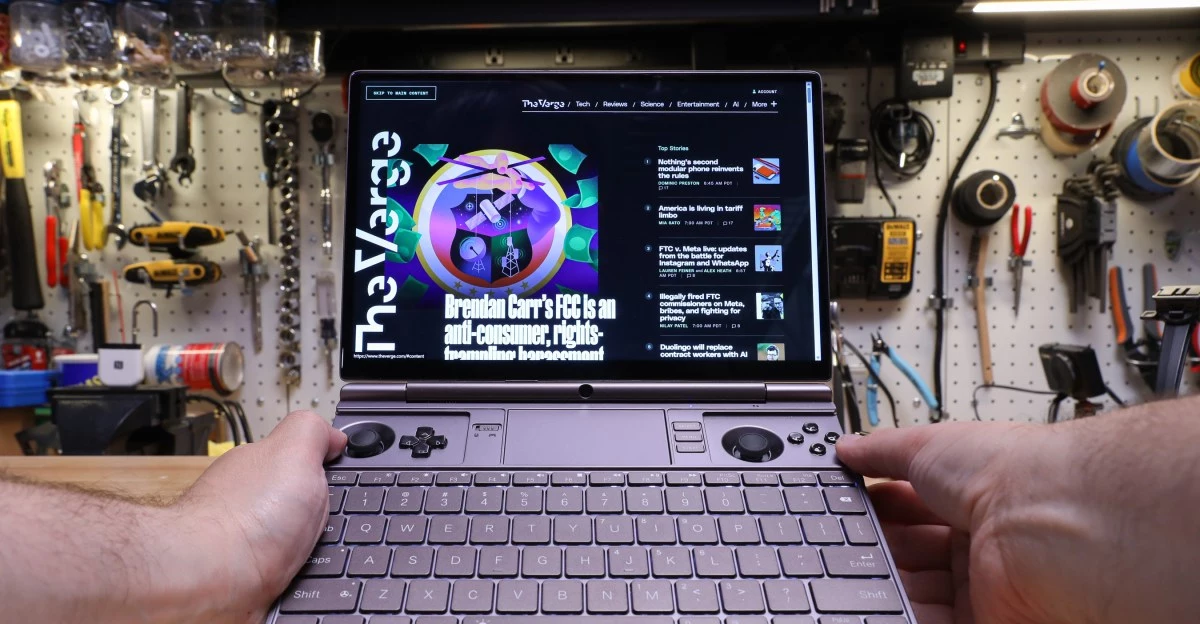
Meanwhile, the resurgence of handheld and modular form factors—exemplified by devices like the OneXSugar Sugar 1 and Lenovo Legion Go S—signals a renaissance in edge computing. These consoles, leveraging mobile GPUs and cloud streaming, blur the lines between PC, console, and mobile, positioning themselves as both gaming platforms and creative tools. Their dual-screen, dockable architectures hint at a future where handhelds serve as edge nodes in distributed spatial-computing ecosystems.
Smart accessories, once relegated to the periphery, have evolved into micro-platforms in their own right. USB-C cables that deliver firmware updates and power strips with programmable lighting are not just utility objects; they are vectors for platform lock-in and revenue expansion, embodying the principle of “utility plus user experience delight.”
Economic Realities: Nostalgia, Creator Influence, and the New Supply Chain
Beneath the surface-level fun lies a recalibration of the hardware business model. Shenzhen’s “factory-as-a-service” paradigm now enables economic production runs as small as 5,000 units, compressing the prototyping-to-market cycle and allowing brands to monetize novelty before imitators can react. For established players, this means the old playbook of fast-following is increasingly obsolete; intellectual property velocity now trumps scale.
Nostalgia, meanwhile, has become a premium currency. Miniature Game Boys and cassette-tape chargers tap into emotional reservoirs, commanding 15–30% price premiums and enjoying viral, low-cost customer acquisition. This nostalgia premium is not a fleeting trend but a durable economic lever, especially as retro-inspired SKUs continue to outperform in both engagement and margin.
Perhaps most transformative is the rise of creator-led demand generation. Series like “Today I’m Toying With” function as quasi-accelerators, with a single viral video capable of driving crowdfunding volumes that would take months to achieve through traditional retail. Hardware brands are responding by reallocating up to a quarter of launch budgets to influencer seeding, recognizing that the path from discovery to purchase increasingly runs through the creator economy.
Supply-chain resilience, too, is being reimagined through modularity. Peripherals that double as chargers and adaptors buffer against category-specific demand shocks, enabling brands to de-risk inventory and respond nimbly to shifting consumer preferences.
Competitive Dynamics: IP, Sustainability, and the Data Moat
The convergence of entertainment IP and hardware is reshaping the competitive landscape. Disney’s foray into premium robotics with Star Wars-branded droids exemplifies how cinematic universes can justify hardware premiums and presage deeper co-development between Hollywood and device makers.
Sustainability, once relegated to marketing copy, is now a hard feature. Modular handhelds and replaceable batteries are not just consumer-friendly—they align with impending right-to-repair regulations, offering early movers a channel advantage as compliance becomes mandatory.
Crucially, even playful gadgets are generating valuable data exhaust: telemetry on usage, haptic feedback, and environmental context. This data, often overlooked, is fast becoming the next competitive moat, informing both product design and AI-driven personalization.
For decision-makers, the lesson is clear: what appears as a parade of toys is in fact a preview of the next hardware-software convergence. Those who interpret these signals with the seriousness they deserve will be best positioned to lead as the boundaries between play, productivity, and platform continue to dissolve—a future glimpsed not in boardrooms, but in the hands of creators and consumers, one delightful gadget at a time.

 By
By
 By
By

 By
By
 By
By

 By
By
 By
By







